Happier host Gretchen Rubin’s advice for navigating hard times and healing after loss

When Gretchen Rubin speaks, millions listen. Born and raised in Kansas City, Rubin is the host of the uber-popular “Happier” podcast and the New York Times bestselling author of “The Happiness Project,” in addition to other notable books. Over the years, she has become a beacon for anyone seeking to make meaningful positive changes in their life.

Her advice is as practical as it is wise — delivered with a genuine candor that you might expect from your best friend. Known for exploring the simple things in life that make us happy, Rubin’s work is meant to encourage people experiencing all kinds of ups and downs, including those moments when things feel totally out of control.
Especially after the recent hurricanes in the Southeastern states — which left many people dealing with unexpected challenges on the road to recovery — Rubin’s perspective is a reminder of the internal strength we might sometimes forget we have.
She shared her thoughts on what makes it possible to feel centered amid chaos and uncertainty, as well as the small but impactful ways to care for ourselves as we heal. For her, it starts with two simple pillars: taking care of your body and staying connected.
When life feels unstable, look within
In tough times, it’s easy to let our physical needs fall to the wayside, and yet neglecting them can make everything else feel even harder.
“Physical experiences always affect emotional ones,” Rubin said.
In her characteristic down-to-earth style, she said caring for your body does not necessarily equate to heading out on a miles-long run or going for a hard-hitting gym session. Instead, she offered tips anyone can follow, regardless of changing daily circumstances.
“A 20-minute walk or yoga session, morning sunlight, every brief moment of exercise — these can all help you feel more stable,” Rubin said.
When you’re stressed, moving your body may be the last thing on your mind. But the relief of taking a few steps outside, feeling the sun on your skin and breathing fresh air is unmatched when it comes to alleviating tension — it won’t solve everything, but it will help.

Rubin also suggested paying close attention to your surroundings. “Your environment shapes your emotions, so be mindful of what surrounds you. Are there small sensory adjustments that help you feel calm?” she asked.
Simple changes, like music, scents or even rearranging your space, can help make you feel more at peace. Not everyone has the same needs, so it’s important to figure out what works for you and honor that as much as you can.
Remind yourself that you are not alone
No matter what you’re going through, Rubin believes connecting with others is essential. Her podcast emphasizes the value of community and relationships, both in times of happiness and times of struggle. “Strong relationships are a source comfort and support, and being there for others can be just as uplifting as receiving support,” she noted. Everyone needs people they can lean on, even if it’s from afar.
Rubin’s insight into coping differences is also invaluable — explaining that “people respond to stress in different ways. Some need to worry, almost like it’s a protective act, while others cope by focusing on the positives. It’s not about what’s right or wrong.”
Her words will likely resonate with anyone doing their best to keep loved ones updated while also navigating a difficult personal situation. It can be hard to feel like the sole bearer of news — good or bad — and it’s easy to become overwhelmed by everyone’s emotions on top of your own.
Rubin offered a creative solution: a simple, go-to response for everyone reaching out. For example, you could say, “Thank you so much for checking on me. I’m safe and doing well. I’ll keep you posted as I know more.” This single response can help cut down on the pressure and emotional labor of responding to each person one by one.
You might also set aside a specific time to talk to everyone all at once via video chat, email or even just a group text, when you feel ready. This way, all your loved ones know when they can expect to hear from you and it will be a bit easier to preserve your own energy.

The kindness of lowering expectations
During periods of hardship, many of us might expect ourselves to push through and accomplish just as much, if not more, as we would normally. Rubin emphasized the importance of giving yourself a break. “Lower your expectations, but don’t let go of the small habits that keep you feeling grounded”, she said.
Whether it’s Sudoku or painting, cooking or watching a favorite TV show, it’s OK to do less but still stay connected to the routines that provide comfort. She recommends leaning into activities that are restorative and enjoyable, rather than overly demanding.
“You’re not letting yourself down by adjusting; you’re actually showing up for yourself by giving yourself what you need,” she said.
When you’re stressed, it’s about protecting the things that nourish us rather than feeling urgency to do more than we need to.

Permission to feel everything all at once
Rubin also commented on processing multiple emotions at once — it is 100% normal to feel a mix of gratitude and sadness that comes in the wake of loss. The weight of grieving what you’ve lost can be heavy, but so can the gratitude for what you still have.
Rubin’s main advice was simple but profound: let yourself feel it all.
“It’s about acknowledging that both are true. You’re incredibly grateful, but you’re also sad. Sometimes, it’s about thinking of yourself as you would a small child,” she said, drawing a comparison that was instantly relatable.
“A toddler needs their basic needs met: sleep, food, down time. They can’t handle a constant stream of demands, and neither can you,” she said.
Do your best to fully feel whatever emotions arise within you without judgment or shame. There’s no need to force yourself into any specific response that you or others think you should have.
Moving forward and boldly loving yourself
With her signature warmth, Rubin provided a perspective that anyone in any tough situation can embrace. As the areas affected by the hurricanes rebuild, and as people everywhere go through their own personal storms, it’s clear that sometimes the most resilient thing you can do is intentionally care for yourself.
Her insights show that hardship isn’t the absence of joy but represents a time when the simplest acts can be the most powerful. Know that you are stronger than you think you are — if you go looking for happiness, be confident that you will find it.
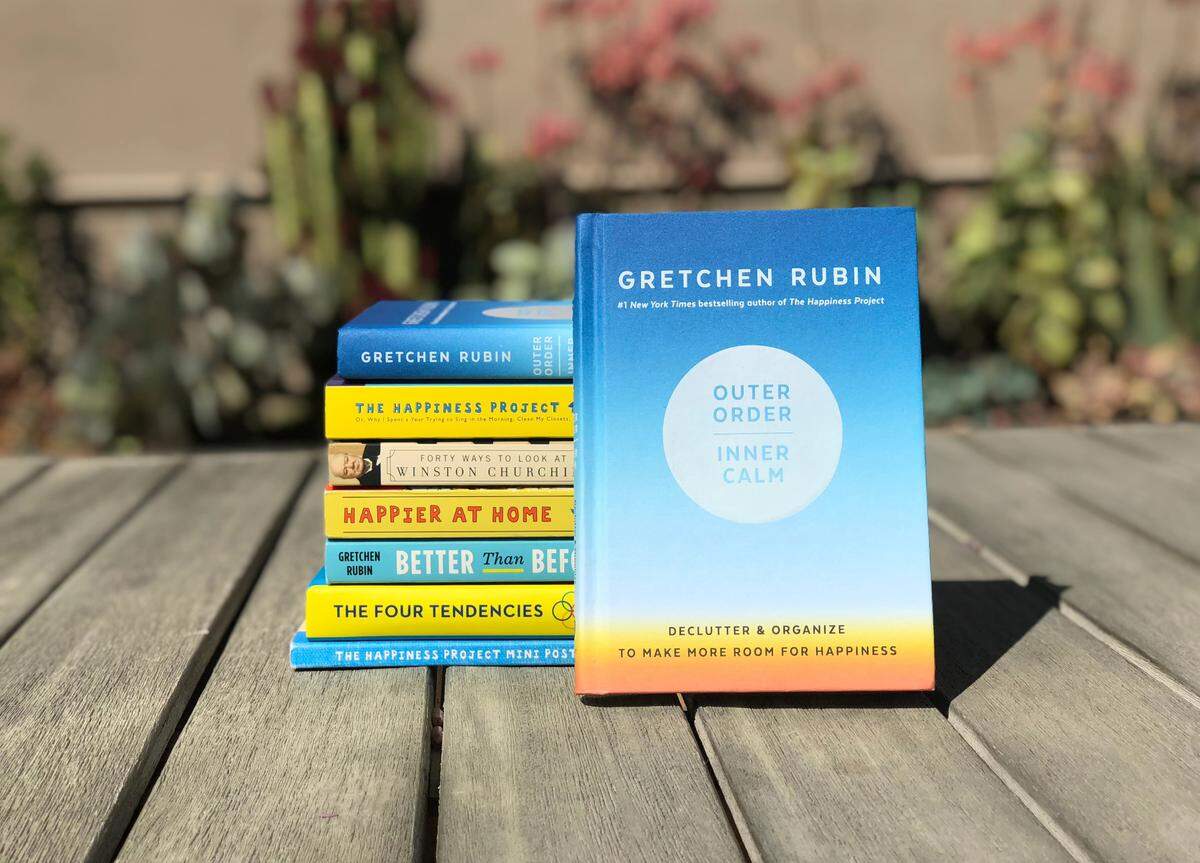
Thank you so much for Gretchen Rubin for taking the time to talk with us. We encourage you to revisit her timeless advice as often as needed.
This story was originally published November 12, 2024 at 5:27 PM.