
How to fill your landscape with edible beauty beyond the vegetable garden
Landscapes in our suburban environment are filled with beautiful ornamentals that add visual interest to your property. In your yard, you probably have some plants that produce food, and I am not just talking about your vegetable garden.
There are many landscape plants that we don’t conventionally grow for food that still make a tasty meal. There are nut trees, berry plants, and herbs we generally think of when discussing an edible landscape, but ornamental plants can be part of it too.
When I say they have edible plant parts, I mean that each of these plants can be consumed. This doesn’t mean that each one of these plants can be added to a salad. However, there are uses beyond just being a garnish. Teas, tinctures, soups, sauces, spices, flour, and jellies, or other forms of processing, may be needed to make these plants palatable.
If they aren’t palatable, why eat them? Well, even though they might not be filling, flowers offer a rich source of dietary fiber, plant proteins, vitamins, minerals, and other essential nutrients. Ever heard of adding color to your plate? It doesn’t get more colorful than adding some pretty flowers to your meal.
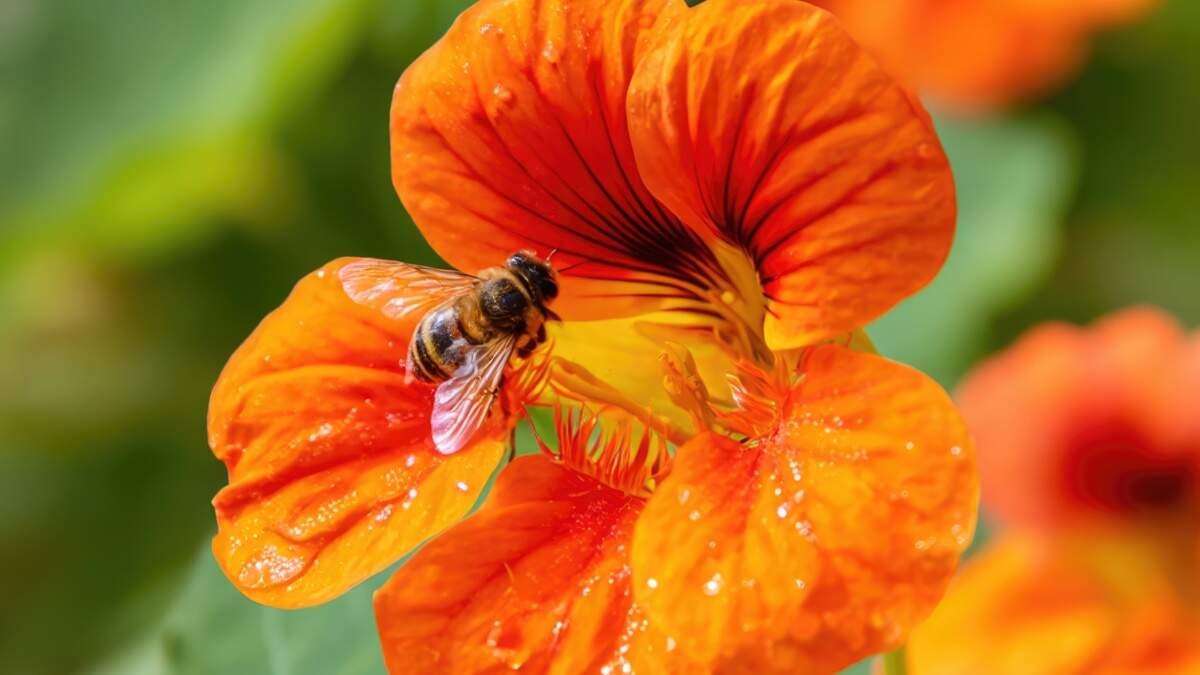
Fruit and nuts come from flowers. But some of those flowers are the real delicacy. When thinking about edible flowers, a poster child comes to mind. Nasturtiums. Not only are they a bright yellow-orange flower with interesting leaves and a sprawling habit, but they are also spicy. A similar spice to horseradish. While they are tasty, lots of other edible flowers will not have the same flavor. Pansies, tulips, sunflowers, marigolds, squash, bee balm, and even linden tree flowers are all edible, and all will taste a bit different.
What about other plant parts? Well, just like asparagus, some plants can be harvested as they emerge with new growth. Have you ever tried Solomon seal? That’s right, you can harvest the new shoots to cook them as part of your meal. Hostas, bamboo, ostrich fern, and even milkweed have edible new, emerging growth. Notice how I said, “newly emerged”? That’s because as the plant matures during the season, its internal chemistry changes, leading to bitter flavors or potentially harmful plant compounds that can cause illness.
Milling plants or seeds into usable flour may seem like a major challenge; however, the payoff could be life-changing. I have a family member who is allergic to wheat, and finding a substitute flour was difficult. Large amounts of gluten-free flour can be double or triple the price of regular all-purpose flour. If you are experiencing economic hardship, foraging for alternatives might seem appealing.
Oak tree acorns have been historically used for flour during times of famine. There is a tedious process of leaching the tannins in the seeds to make the flour less bitter. But in the end, you have a gluten-free flour. Some other ornamental plants that can be used to make flour include sunflower stalks, voodoo lily bulbs, and Solomon’s seal rhizomes.
If you do let your curiosity run wild, it is important to remember a few rules. Don’t eat anything unless you’re absolutely sure what it is. Don’t eat plants that have been treated with chemicals. Be sure to wash anything you plan to eat thoroughly. Don’t eat any plant in excess. Only introduce one new plant to your diet in small amounts in case of an allergic reaction. If you want to learn more about non-traditional edible plants, your local library will have books about foraging safely.
Markis Hill is a Johnson County, Kansas State University Extension horticulture agent. Have questions or need help? Contact the Johnson County Extension gardening hotline at 913-715-7050 or email garden.help@jocogov.org.