
Tropical vs. native: When it comes to milkweed, does it really matter what you plant?
.jpeg "Tropical milkweed is popular for its brilliant flowers and its lure to monarch butterflies. In some states, however, its long growing cycle can lead to problems.")
All milkweed plants — tropical or native — are good for butterflies and other pollinators, right?
For the most part, that’s true. However, there is much debate between policymakers and the scientific communities that research monarch butterflies.
To begin this discussion, ask yourself this: In the beautiful Great Plains, why are we planting tropical milkweed? The short answer is that the plant looks very pretty when blooming. The bright orange and red blooms can appear on the plant shortly after planting. And seeing the endangered monarch caterpillars feeding on this plant is an added benefit. Knowing all this, retail growers know the plant markets itself.

It’s important to consider the long-term effects of planting tropical milkweed. Begin by considering that plenty of beneficial pollinator and host plants in our garden are non-natives. For example, black swallow-tail butterflies like Queen Anne’s lace.
Two things about the physiology of tropical milkweed (Asclepias curassavica) should be considered. First, tropical milkweeds bloom all growing season, right up to the freeze. This is different from perennial milkweeds, which lose all their leaves, flowers and seeds during the fall and are almost unrecognizable by the first freeze.
There’s much debate as to whether this confuses the monarchs as they continue their migration south to Mexico. It is assumed that monarchs wouldn’t continue to Mexico if there was still food (nectar and leaves) for them and their offspring. Scientists who study these insects are quick to point out that migration is more influenced by photo period and temperatures than food availability.
The second thing the public should be aware of is a protozoan parasite, Ophryocystis elektroscirrha, or OE. This parasite is found on all milkweeds. However, it doesn’t survive in the foliage during the winter. In more temperate environments than our own here in the Kansas City area, tropical milkweed can perennialize and not go dormant, creating a higher concentration of OE in the leaves.
This is the case in southern Texas, California, Louisiana and Florida, where freezing temperatures are rare. In fact, California’s Department of Food and Agriculture reclassified tropical milkweed in 2022 to a Class B Noxious Weed, allowing counties to ban this plant’s sale.
While the Extension does not advocate for the ban of all tropical milkweeds, it’s important for us to inform the public about the discussions surrounding this popular plant nationwide. When given the choice of planting tropical milkweed or a native variety, your decision can make a difference.
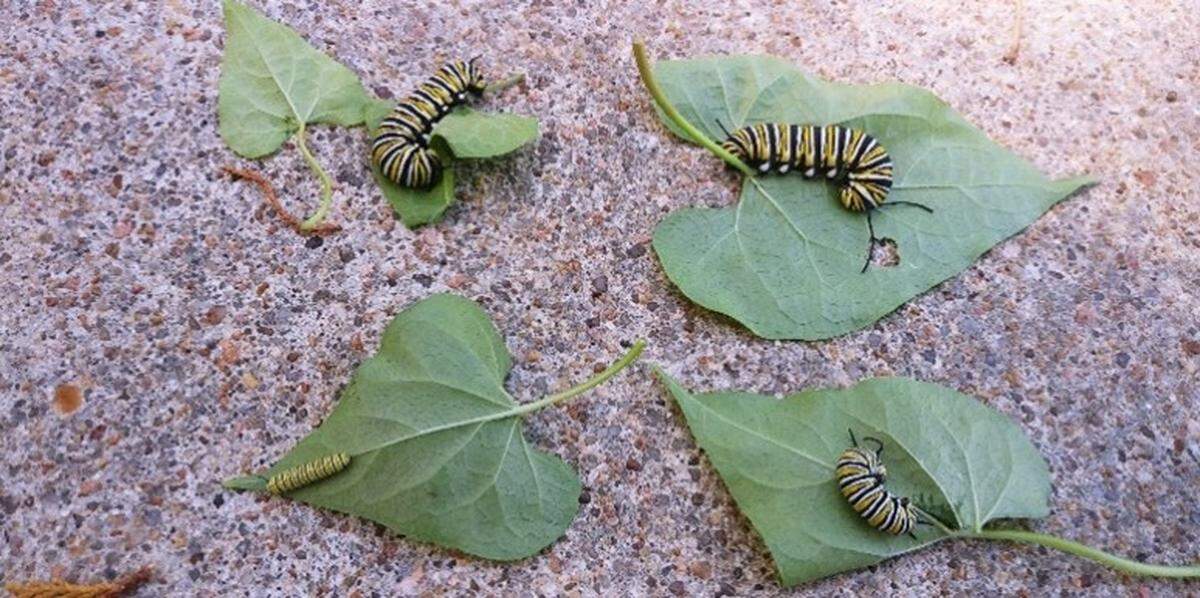
By choosing a native variety, you are not only benefiting the caterpillars who feed on them, you’re also adding to the biodiversity of your landscape. There are at least 20 species of milkweeds that will likely grow and thrive in the Kansas City area. One example of a native host plant that is prevalent in the area is honey vine milkweed.
The Johnson County Extension Master Naturalists, in association with Monarch Watch, are hosting a free, family-friendly Hasta Luego (farewell for now) Monarchs event. Families can watch butterflies get tagged and released, explore Extension master gardeners’ Caterpillar Wonders exhibit and learn from the pros about gardening for pollinators. The event also includes a native plant sale, as well as games and crafts for children. The event runs from 9 a.m. to 1 p.m. Sept. 28 at Pollinator Prairie, 320 S. Blake St., Olathe.
Markis Hill is a horticulture agent with Kansas State University Research and Extension. Need help? Contact the Johnson County Extension gardening hotline at 913-715-7050 or email garden.help@jocogov.org.