
Did the storms damage your beloved trees? Care for limbs to mitigate the worst damage
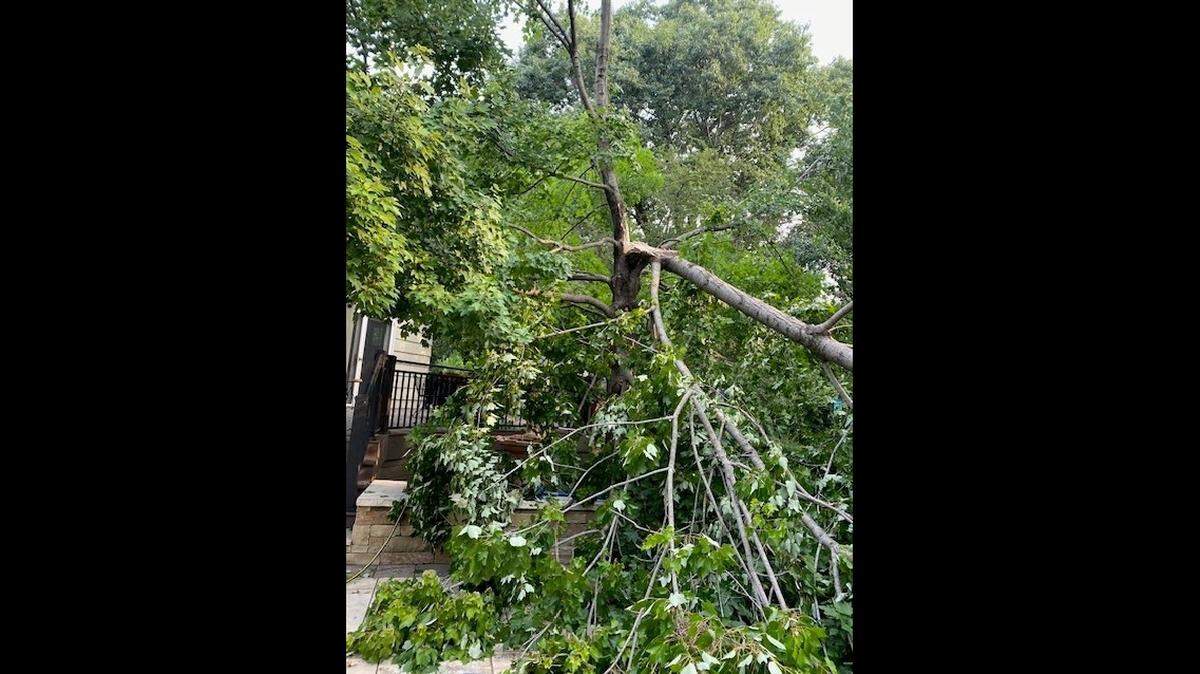
Many had to face recent storm damage in landscapes and may be asking, “Is my tree going to survive this?”
As many gardeners know, any tree’s recommended branch removal method is just above its branch bark crest or ridge. This crest appears in the wood designating where sturdy, supportive trunk wood ends and flexible limb wood begins.
We remove branches at this point as this is where a tree can most easily recover, fully growing over the wound created. Unfortunately, with storm-damaged limbs, we don’t have this luxury.
So, the question then becomes, “Is my tree going to grow out of this with a massive irregularly shaped wound on it?”
The risk with an irregularly shaped wound is that the exposed wood is highly susceptible to invasion by insect borers and general rot. Imagine building a brand-new deck in your yard using completely untreated lumber. Over time, that wood will succumb to the elements without any protection.
Termites and various boring insects will find their way in with no barrier to keep them out. Water will warp and eventually begin rotting the wood fibers. The softer or less dense the wood is, the faster it will decay. Unfortunately, the same can be said for exposed wood in a tree.
So, what can be done? Though not much of an answer, the best course of action is to make the wound as “clean” as possible, then support the tree as best as possible to protect from continuing stressors. If a limb, for example, is ripped off but still partially hanging on, the rest of the removal should be done with ample effort not to expand the size of the wound any further.
When addressing other stressors, it’s important to remember that most tree death isn’t due to one singular factor. It is due to numerous stressing factors piling up on one another until the tree can’t handle it anymore. Achieving adequate soil moisture and nutrients will be your best bet in fighting these factors.
When it comes to covering and filling the wound, there are many outlandish remedies you may have seen tried by others in the past, from paint to tar to spray foam and concrete. The unfortunate fact is that once this wound exists, decay will begin. Though it may take several years for a significant hollow or lethal amount of decay to form, external products have not been proven to stop this process. Research shows that wound dressings slow healing as they deprive the areas of oxygen needed.
Though these may not be the answers we want, time, care and patience will be the keys to your tree healing.
Anthony Reardon is a horticulture agent with Kansas State University Research and Extension. Need help? Contact the Johnson County Extension gardening hotline at 913-715-7050 or email garden.help@jocogov.org.