
Warmer days ahead? Here’s how to save your vegetable plants from one freezing night
For vegetable growers, “season extension” is the practice of prolonging the growing season of your plants by protecting them from frost or freezes. Typically in this region, we see the first frost of the season sometime between mid-October and mid-November.
However, with the signature unpredictability of Midwest weather, that frost could be followed by several more weeks of ideal growing conditions for your garden. So how do we protect the plants during that one frost event to keep them going?
The key factors to consider when practicing season extension are the outdoor temperatures, microclimate and airspace around the plants. If an area is particularly prone to harsh wind chills, the plants will feel the effects. If an area is protected from wind on all sides, with still, warmer air settling in the location, the plants will also likely be warm. Taking all these aspects into consideration can help pinpoint when and where cooler temperatures may be too much for plants to handle without mitigation.
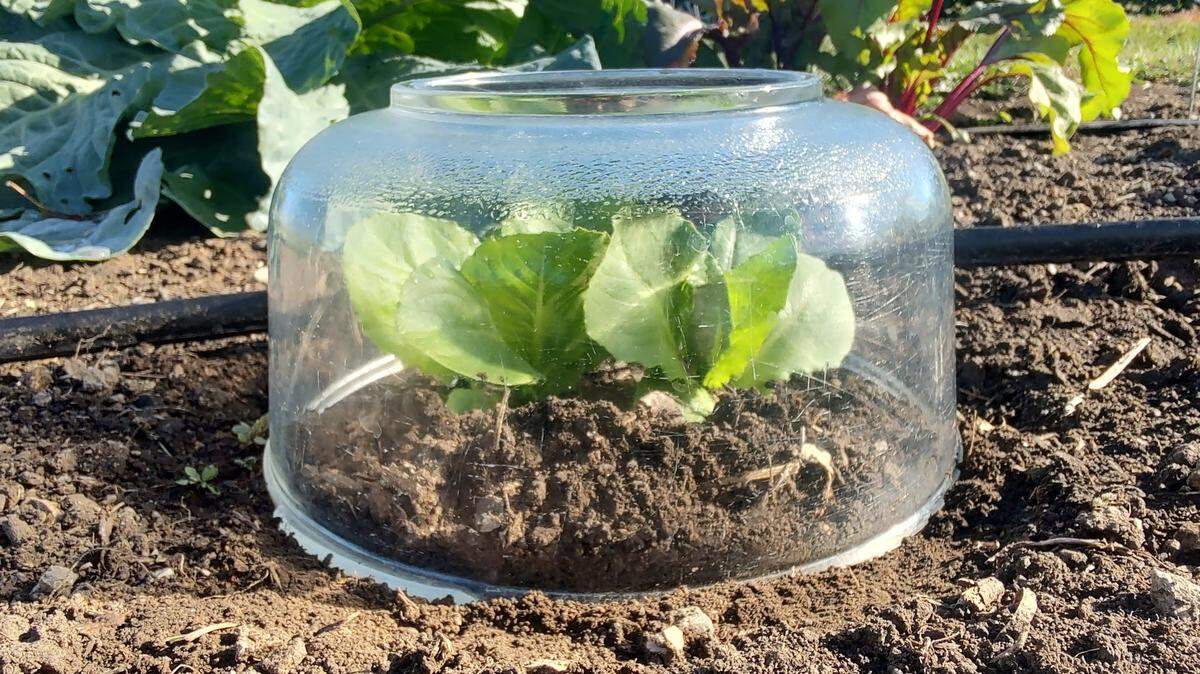
Depending on variety selection and the type of crop being worked (cool season crops will be much more cold-tolerant and less tender than warm season plants), the use of “hot caps,” cloches and garden covers can be incredibly useful for prolonging the life of your plants by protecting them from cold weather.
Often, they can be as simple as a milk jug with the bottom cut out or an overturned bucket or bowl placed over the plants being protected. The garden covers could be as simple as a sheet with its edges pinned down.
The critical component of all these tools is that they provide a microclimate for your plants to exist where one may not exist naturally. Sun is still allowed through. The inner air is kept stale and still, allowing warmth and humidity to surround the plants. This helps keep them alive, preventing windchill and frost from harming them.
However, keep some key points in mind for success in using these tools. The edges of your hot caps or cloches should not touch the plants, as the edges of the containers will still reach freezing conditions. As such, any plant material contacting the containers’ edges is also prone to damage.
If the outside temperatures drastically warm up during the day, your plants will likely wind up steamed or cooked without ventilation or completely removing the hot caps. Attention to your plants’ conditions must be consistent to make appropriate adjustments.
When season extension is done correctly while caring for the right plants, you can extend your growing season into early winter and keep your garden production going until the first hard freeze.
Anthony Reardon is a horticulture agent with Kansas State University Research and Extension. Need help? Contact the Johnson County Extension gardening hotline at 913-715-7050 or email garden.help@jocogov.org.