
They’re busy all four seasons. Here’s how to make a garden paradise for pollinators
.jpg "Native bees, which love sunflowers, are some of the most effective pollinators.")
Pollinator protection is a valuable trend in the gardening world. Pollinators can come in many sizes and shapes, including the more noticeable butterflies and moths.
However, our best pollinators in the garden are not always the showiest or most appreciated. The most effective pollinators are native bees, wasps and flies. We tend to shoo them away instead of valuing their helpful behavior.
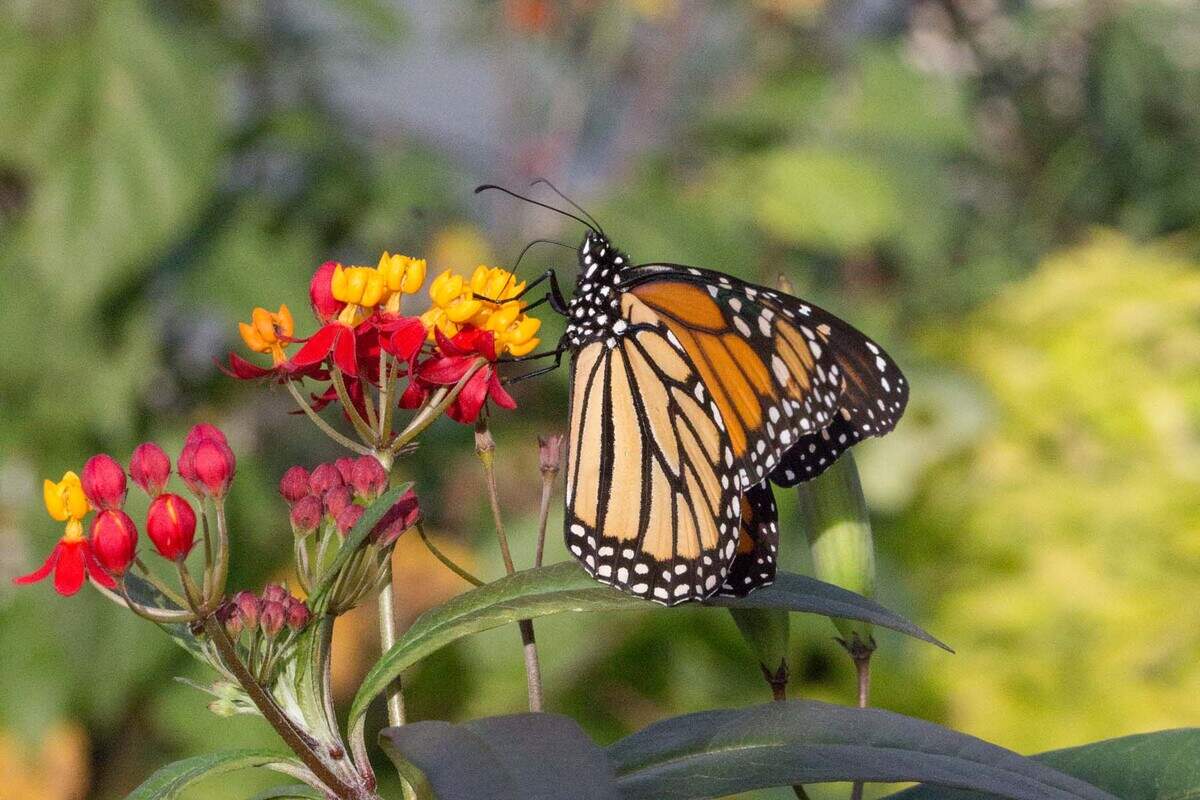
Butterflies, like the monarchs, head south for the winter. Native butterflies and moths live in our landscapes through spring, summer, fall and winter. We encourage their development by sowing larval host plants for their eggs and offering supplemental nectar sources for nourishment during the growing season. We can increase over-wintering success if we retain their wintering habitats.
Native pollinators and beneficial insects spend their winter tucked into the leaf litter, burrowed into the soil and mulch, protected in cracks and crevices in trees and decaying wood, or hiding out in hollow stems of many decaying plants.
A pristine garden is not always the healthiest place for our natives to hang out. To put it simply, natives prefer the landscape to be a little messy. Nature’s mess is home to their over-wintering eggs, larvae or adult stages of development.
The trend in beneficial gardening is to let the garden sleep in. This debris is their overwintering home. Please don’t get in a hurry to clean it up. When you pick the debris up and stuff or shred it into a waste bag to haul away, you kill off and remove the next generation before they can emerge and start the cycle over and contribute to part of a vital and healthy ecosystem.
When should we clean up the garden? It can be confusing to search for this information as you find varying opinions. One recommendation is to delay spring cleanup until the daily air temperatures are consistently above 50 degrees for at least a week.
Tracking air temperatures is easy. However, another recommendation is to delay cleanup until the soil temperatures are in the 50s for about a week. Tracking soil temperature is more challenging. Soil temperature can vary by location, soil type and sunlight. The best source for tracking soil temps in our area is the Kansas State Mesonet Weather station in west Olathe. Go to mesonet.k-state.edu/agriculture/soiltemp/
Watching for insect activity is the easiest way to know when to clean up. When you start seeing insects, the spring emergence is underway. Wait a few days to be sure and go for it. Remember, leave the garden a little messy. Old twigs, perennial stems, and leaf litter all make excellent nesting and habitat sites for the coming season.
If we all pitch in, we can save our pollinators, as our food chain and survival depend on these insects. Learn more from the experts and attend the Healthy Yards Expo on March 11 at the Shawnee Civic Centre. The Expo features informative presentations, environmentally friendly organizations, and performances by Stone Lion Puppets for the kids. This is your opportunity to ask questions and learn.
Native plants will be available for purchase. Shop and get your pollinator and beneficial insect plants. Johnson County residents may bring a soil sample for a free soil test. The Healthy Yards Expo is free and sponsored by the cities of Lenexa, Olathe, Overland Park, Shawnee; the Unified Government of Wyandotte County; and Kansas State University Research and Extension. Visit www.johnson.ksu.edu for details.
Dennis Patton is a horticulture agent with Kansas State University Research and Extension. Have a question for him or other university extension experts? Email them to garden.help@jocogov.org.
This story was originally published March 3, 2023 at 6:00 AM.