
Short days, cold temps make for unhappy houseplants. Avoid killing them with kindness
You wouldn’t think houseplants would suffer through the drab days of winter when they are cozied up with warm indoor temperatures. The reality is winter is the most stressful time for houseplants. The short days and low light levels through the winter season are the primary cause of leaf drop and sickly plants.
The light deficit creates stress. The plant must use up its stored foods as it struggles to make energy needed for growth. Growth stops or slows down as a survival strategy. When the deficit is too great, leaves turn yellow and excessive leaf drop can follow.
Often in our zeal to stop the leaf drop and help make the plants healthy, we supply additional food and water. This can create more problems than it solves. When growth slows, excess water can lead to a surplus of nutrients, which further weakens the plant by damaging the root system. Excessive nutrients build up, create salts, and can burn the roots when fertilizers stay in the soil longer. Fertilizing houseplants from fall through early spring is not recommended.
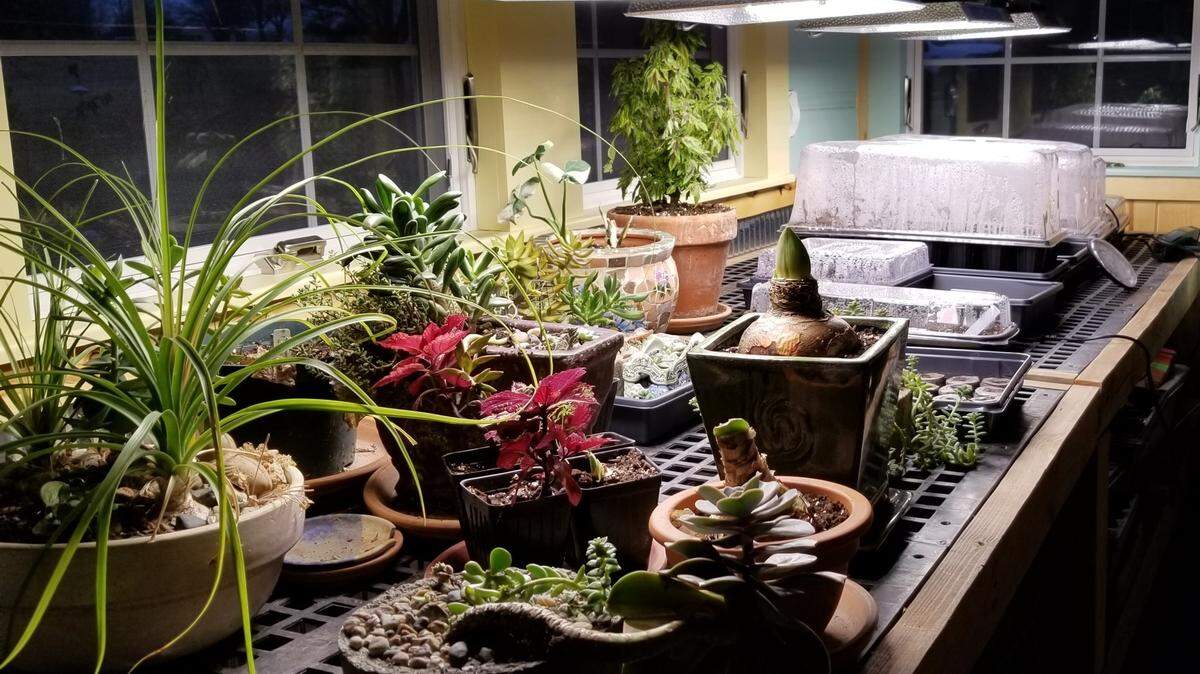
The best thing to do for ailing houseplants during the winter is to increase the light levels however possible. This could mean moving them to a sunnier window or providing a supplemental light source. If artificial light is used, there are some guidelines.
Artificial light is only beneficial if the light source is close, within a foot or so to the plant, and remains on for at least 14 to 16 hours per day. A lamp a few feet away or an overhead light will provide little advantage. Artificial light is not a practical option for most people.
.jpg "sansevieria philodendron on kitchen cabinet 121918 (2).jpg")
As better light returns in the spring, plants will start to collect more energy and grow. Fertilization is beneficial at that time. Plants that have dropped leaves may need to be pruned back to reduce legginess and promote vigorous new growth.
It is not just the shorter days that influence the plants’ growth but also the quality of light. The sun’s winter orbit is closer to the horizon, and this limits the spectrum of light that gets through. We can’t catch a break, can we?
Winter is not the ideal time to re-pot, so this is not a solution to poor growth. Transplanting adds stress to an already stressed plant. Hold off re-potting until spring arrives. The arrival of longer days and brighter light levels in spring kick-starts the plant growth and makes this the ideal time to re-pot.
One last word of caution: Don’t be tempted to boot the plants outside on warm winter days or too early in the spring. Houseplants are tropical. Temperatures below 55 can cause a chill and further stress them, which could lead to more leaf drop. Come spring, all the plants will benefit from longer days and warmer temperatures. The same could be said for most of us as well.
Dennis Patton is a horticulture agent with Kansas State University Research and Extension. Have a question for him or other university extension experts? Email them to garden.help@jocogov.org.
This story was originally published January 1, 2023 at 6:00 AM.