
Leaves of three? Here’s how to deal with poison ivy, an easy-to-overlook garden guest
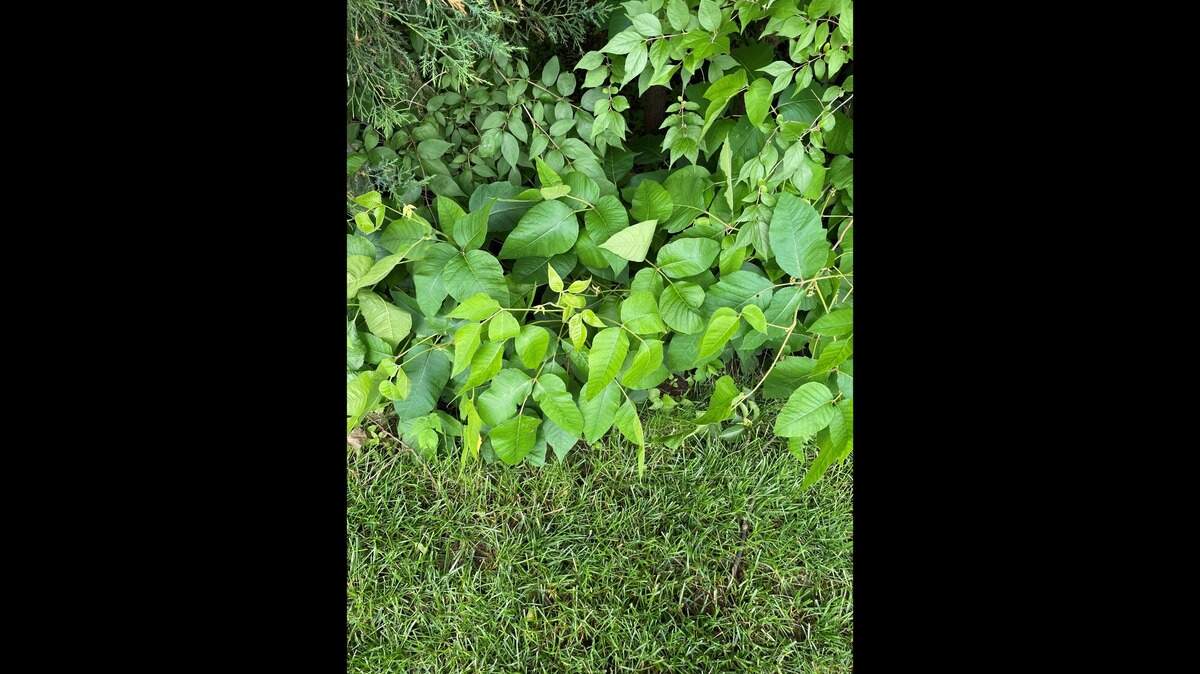
Just the mention of the words “poison ivy” may have some of you itching already. The Johnson County Extension gardening hotline receives numerous requests for identification and control each summer.
Poison ivy can be found throughout our native woodlands, waste lands and backyards across the metro.
Poison ivy has a variety of growth habits that range from a small to large shrub, a low growing groundcover, or an aggressive vine clinging to trees. Virginia creeper, another native vine, climbs trees but has five leaflets per leaf rather than three. Poison oak and poison sumac are not found in the Kansas City area.
The key identification characteristic of poison ivy is the leaf. Poison ivy has a compound leaf made up of three leaflets which can be 1 to 4 inches long. The middle leaflet is the only one with a long stalk. The other two are closely attached to the petiole (leaf stem).
Leaves can be many different shades of green and may have a glossy leaf surface or a dull surface. The edges of the leaflets are often smooth, but they can also be toothed or lobed. The same plant can have several different leaf shapes. In the autumn, the leaves develop a beautiful scarlet color.
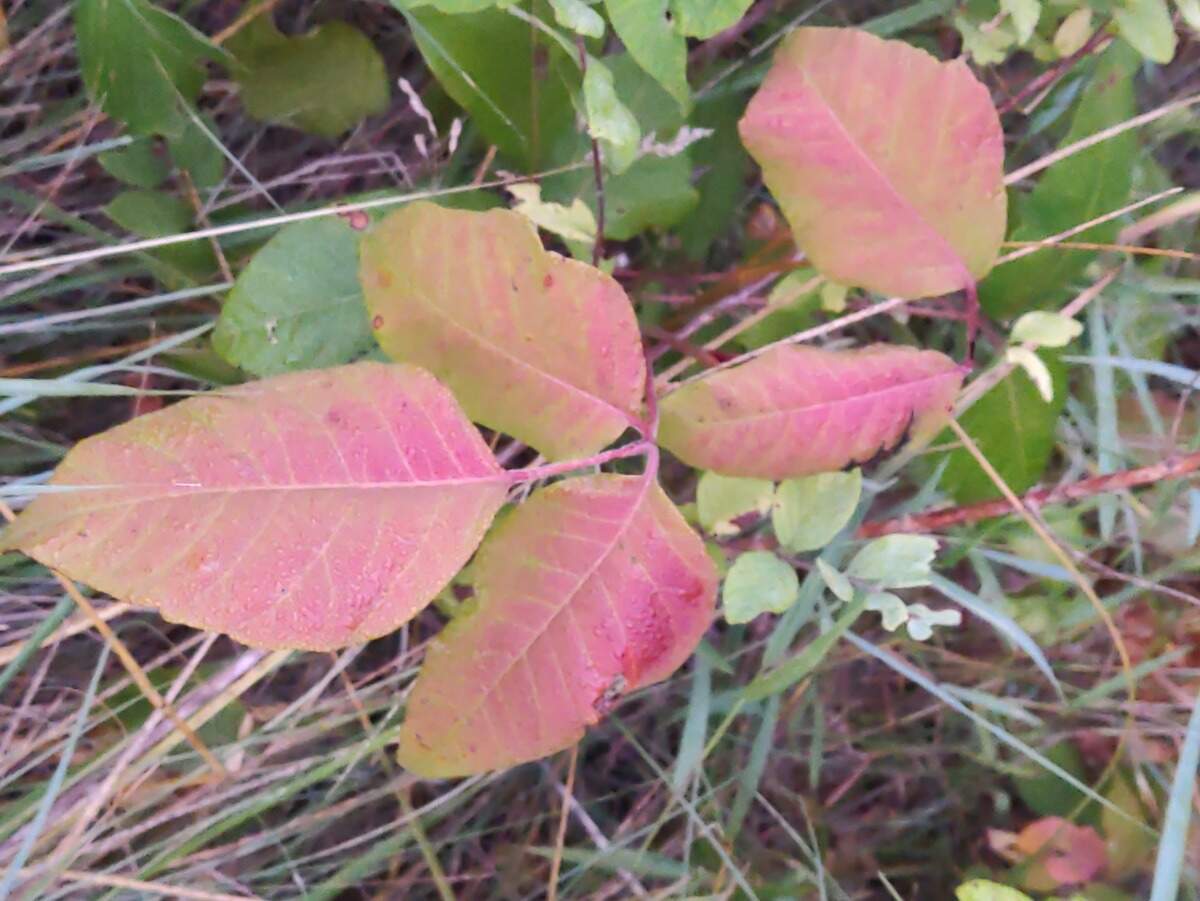
It is easy to distinguish between Virginia creeper and poison ivy. Virginia creeper, aside from the compound leaves made up of five leaflets, has berries that are blue. Virginia creeper is not poisonous.
Poison ivy should be removed from areas of the yard where people frequent. Removal should not be attempted by someone who is sensitive to poison ivy.
Using a power mower or weed eater in areas with poison ivy needs to be done with care as sap and sap covered vegetation can become airborne, land on the operator, and cause an allergic reaction. Never burn materials containing poison ivy as the irritant can become airborne and breathed into the lungs.
In areas where desirable plants also reside, hand pulling the poison ivy may be the best control. This should only be attempted when the soil is wet. Hand pulling works best on small seedlings.
Eradicating large vines growing on trees may mean injuring the roots of the trees. Cut the vine at ground level. If possible, remove from the tree. The cut stump should be carefully treated with a brush and stump herbicide.
In fence rows, grassy areas, or waste areas, herbicides are the most effective control. Several herbicides that offer good control are often labeled as Poison Ivy Killers. Many come premixed, as ready-to-use products containing the active ingredient triclopyr. Glyphosate (Round-up, Kleen-up and others), 2-4-D and dicamba also offer fair to good control of poison ivy.
Once a treatment is made, wait three to four weeks for the product to work before applying additional applications. Read and follow label directions carefully. Caution should be exercised since these chemicals cannot differentiate between poison ivy and other plants.
Need help identifying poison ivy? We are here to help. Contact our gardening hotline at 913-715-7050. Better yet, email photos to garden.help@jocogov.org. Always proceed with caution when dealing with poison ivy.
Dennis Patton is a horticulture agent with Kansas State University Research and Extension. Have a question for him or other university extension experts? Email them to garden.help@jocogov.org.
This story was originally published July 29, 2022 at 5:00 AM.