
With heavy clay soils in KC area, this stuff is the gold that can help plants grow
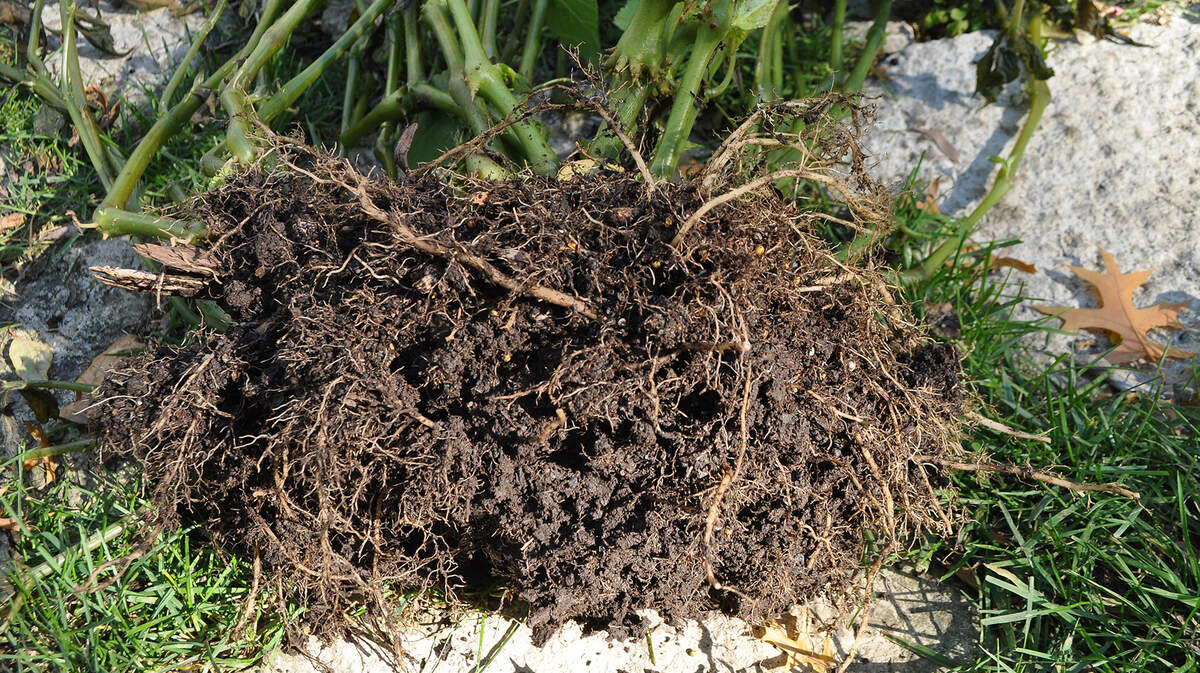
Many people view soil as inert and barren instead of teeming with life. A handful of soil contains more living organisms than humans on earth. Millions of species and billions of organisms live in the soil, creating a web of life.
The National Resources Conservation Service has identified more than 70,000 soil types in the United States alone. Each of these types has unique properties. These unique attributes support incredible biodiversity, often dependent on its chemical and physical properties. Nature has created this balance of interdependence.
Sometimes gardeners work against nature, trying to force plants to grow in soil that may not be their native preferences. Not to mention that these plants are often grown far from their original ranges. As a result of these different soil types and environmental factors, plants struggle to perform up to our high standards.
Soil is a common topic of discussion among gardeners, but usually not in a good way. Local soils contain all the nutrients needed for plant growth, but the issue is the high amount of clay in our area.
The physical or mineral parts of soil that we can touch and see are made of particles of sand, silt and clay, along with organic matter. If these particles are not balanced, their properties can have less than favorable effects on growth.
Soils with higher clay content drain poorly as the microscopic particles act like glue, holding together and excluding openings or pore space. The pore space is where water and oxygen move to enhance plant growth. Think of clay as similar to flour. Add water and the result is a glue-like substance. This mass is sticky when saturated with water and is hard as a rock when dry.
As gardeners, we struggle with how to take our native clay soils and turn them into the loamy texture we read about in books. Unfortunately, improving clay soils is not an easy task.
The only way to improve the physical properties of the soil to support a wide range of plant growth is with organic matter. Adding sand, lime, gypsum or some spray-on additives from a bottle will have no effect. In the case of sand and lime, more damage occurs with their additions.
Organic matter comes in many forms, from compost to peat moss. Compost is a renewable resource made from any form of organic material. Various forms of compost tend to be the most environmentally sustainable.
Improving our clay soils with organic matter can feel like an endless task. It takes seemingly mountains to even see subtle changes, which don’t seem to last. But have faith. Additions do help improve plant growth.
Just as important as adding organic matter to improve the soil is reducing the ways of destroying the soil. Common ways to damage soil structure are working the ground when wet, compacting or over-tilling the soil.
As we wait for spring’s arrival, take stock of your soil. It is the basis for life and is often overlooked. Focus not as much on the above ground growth but instead pay attention to what is going on underground as it is the basis for plant success.
Dennis Patton is a horticulture agent with Kansas State University Research and Extension. Have a question for him or other university extension experts? Email them to garden.help@jocogov.org.
This story was originally published January 21, 2022 at 5:00 AM.