
Plant drooping? Before you water, take this simple step to ensure it’s truly thirsty
Knowing when and how much water to apply to your plants can be one of the most baffling pieces of gardening. Too much water can cause the leaves to die. So can too little water.
Although plants cannot verbally tell you what they need, they are good about giving clues when you learn to identify them and know the solution.
Watering is difficult because we cannot see into the soil. Roots need a steady supply of moisture to carry on processes within the plant. Without water, they decline and lose production or beauty. Learning how to properly water requires us to look and think not only about what’s above ground but also underground.
Early signs of moisture stress are wilting of the leaves. Plants with little to no moisture will fade. The confusing part with wilting is the same symptoms appear when there is an excess of moisture. Waterlogged soil depletes oxygen causing the plants to suffer.
Stop and think before watering a wilted plant. Did it recently rain? Does the soil drain poorly? Watering under these conditions will cause more stress.
Newly established plants with limited roots or plants with inadequate systems can wilt on a warm, sunny day. Wilting occurs on hot days when a plant loses water more rapidly than it can pull through its system.
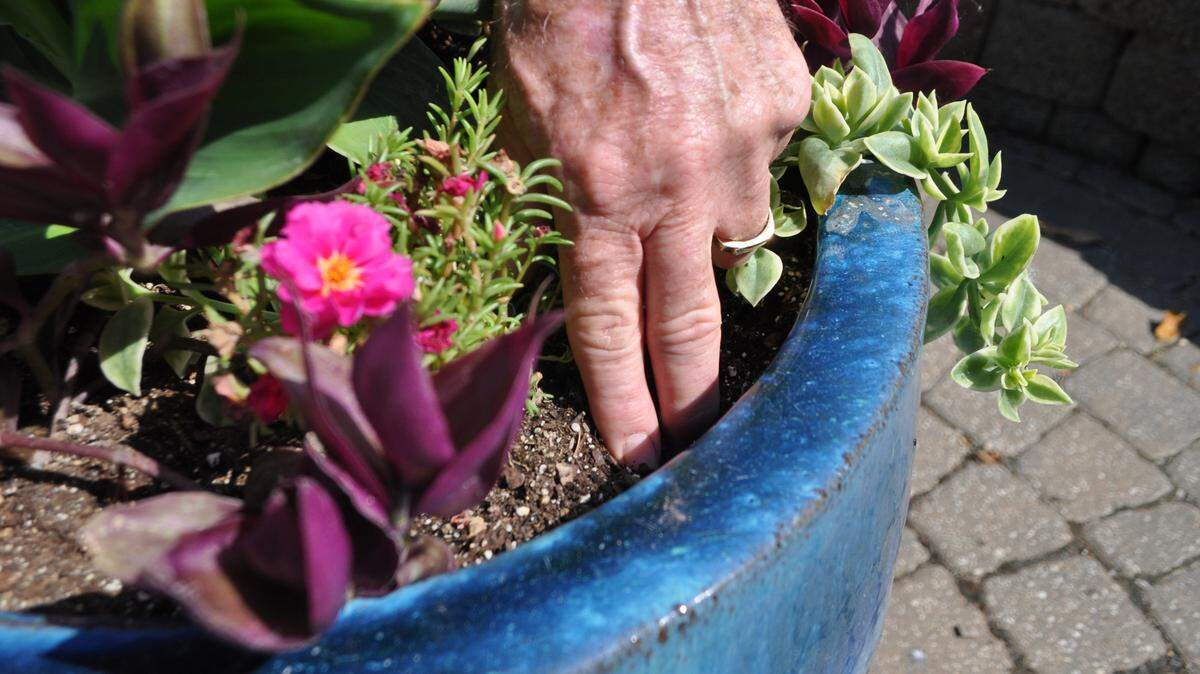
Your fingers and eyes are the best tools for determining the need for water. They are better than any moisture meter you can purchase.
Using your finger only requires you to bend down, look at the soil and get it dirty. Dry soil is hard, warm to the touch and appears parched. Moist soil is cooler, darker in color and a little mud will stick to your finger moisture meter.
Over time you learn more about the plant and the soil needs when it comes to watering. Then, we simply figure out a routine for how long it takes this area to dry out and when the soil requires supplemental water.
The length of time between watering depends on numerous factors. Sunnier areas heat up more rapidly, resulting in increased evaporation and transpiration. Shady locations are more of a challenge, depending on what causes the shade.
Shady soil under trees can be very dry. Trees suck up available water or their canopy acts like a tarp, excluding rainfall from reaching the ground.
Shaded soils from structures can be either wetter or drier. Depending on the structure, they can block rainfall, making it dry or keep out the sun, holding more moisture.
The solution is your finger meter. First, bend down, dig around in the soil to determine if it is wet or dry. Do this for a few weeks. Then based on our summer conditions, you discover your answer.
Plants have different water needs. Newer plants have a root ball or clump and are not yet established in the landscape with an extensive root system. Plants that have been planted in the last year or two, even drought-tolerant plants, need to be watered more often.
Well-established plants vary in their moisture requirements. Learning to water is really a two-part equation: learning the soil requirements as well as the plant’s needs.
Start with your soil needs, which is the most challenging task. The needs of the plants can then be matched to your soil conditions and level of maintenance. Your finger is your tool for success.
Dennis Patton is a horticulture agent with Kansas State University Research and Extension. Have a question for him or other university extension experts? Email them to garden.help@jocogov.org.