
Want that young tree to thrive? This common gardening mistake is easy to avoid
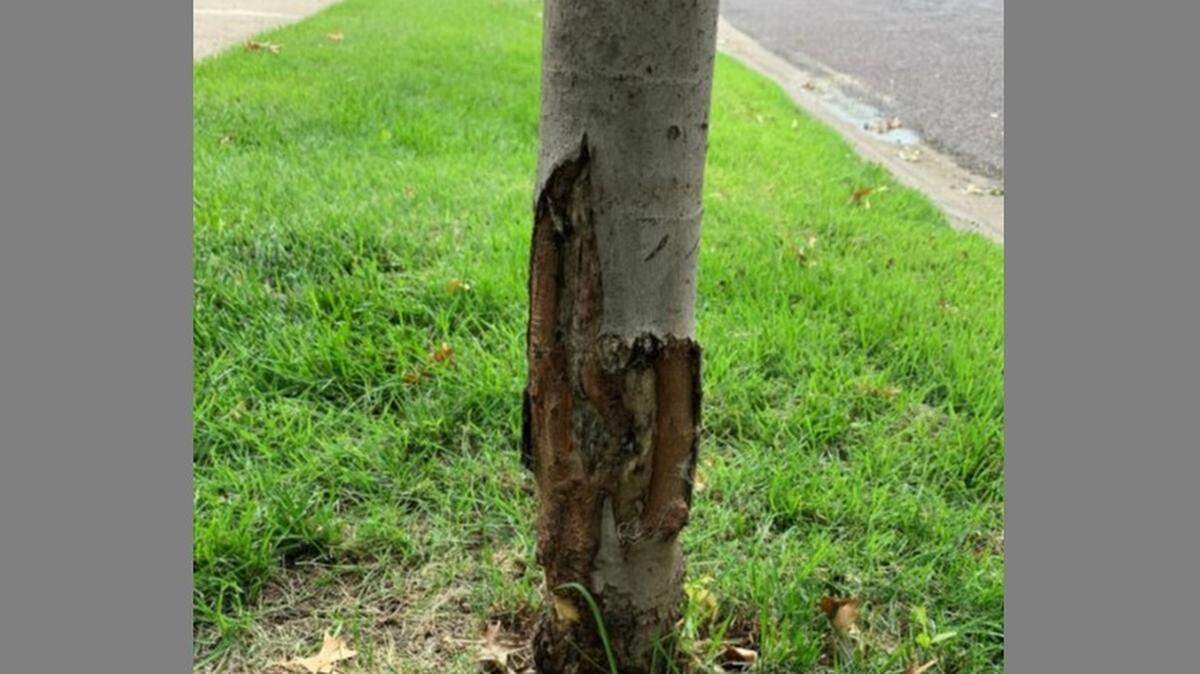
Our Extension gardening hotline frequently receives questions regarding why a homeowner’s tree is in decline. People attach photos of young trees in stress or dying. In looking closely at the images, it quickly becomes apparent.
The source of the problem is not a disease or lack of nutrients in the soil but improper care of the new tree. How do you tactfully say to concerned owners that they are killing their beloved tree?
How can you kill a tree? It’s easier than you think. The cause is not something obvious, like improper watering, fertilizing or one of the many other practices that help a tree to grow strong and healthy.
The problem is one that is easy to correct, requiring little or no effort. You can stop killing your tree with two simple actions: Remove the grass from around the base and add a ring of mulch.
Can it be any easier than that?
The grass that grows up and around the trunk of a young establishing tree presents a problem for two simple reasons. Let me share with you the dangerous reason first.
Young trees have thin and tender bark. As the years go by, the bark matures, thickens and becomes more wood-like. Think of young tree bark as your skin that gets a scratch and bleeds.
Unlike your skin, which can quickly grow and recover from wounds, a tree does not have this ability.
The bark is the lifeline for trees, carrying water and nutrients to support growth. Damage to the trunk is frequently caused by the gardener’s zeal to remove every blade of grass growing next to the trunk. The passing lawn mower or string trimmer gouges the young tree trunk, ripping away the tree’s protective covering.
Once the bark layer is damaged, it’s a lifelong inflection. Unlike people with the ability to heal wounds, trees can only seal off the damaged area. The damage will always be inside the tree. If the damage is minor, the tree can slowly grow new bark, only to cover, not to heal the wound.
In some cases, the wound is repeatedly occurring, increasing the amount of damage. This creates a larger wound, preventing it from sealing off, and allows rot and decay to develop. Eventually, the tree declines or dies.
Even if a tree survives from damage, it should be removed. As it grows, it could decay internally and lead to a weak structure that cannot support the top growth. The result is tree failure.
The solution is to keep all grass 3 feet away from the base of young trees and cover the soil with 3 inches of mulch. Leave the mulch ring in place for the first 10 or 20 years of age to adequately protect the tree trunk lifeline. Go ahead and beat the mulch up with the mower or trimmer.
As mentioned, there is a second reason to remove grass competition and replace it with mulch.
On average over 10 years, the tree’s growth rate can double by removing the grass and adding mulch.
I have never heard anyone say they want a slow-growing tree. Everyone wants a big tree tomorrow. Now you know a mulch ring is your best tool for a faster-growing tree.
Remove the grass to protect your tree for a long, happy life. It’s that simple.
Dennis Patton is a horticulture agent with Kansas State University Research and Extension. Have a question for him or other university extension experts? Email them to garden.help@jocogov.org.