
Vegetable are quite at home in the landscape
It seems this global crisis has many of us returning to our agrarian roots. World War II brought us Victory Gardens. During the 2008 financial crisis, there was an uptick in growing fresh produce for personal consumption. Vegetable gardening is trending once again due to the new coronavirus.
Wartime gardens required large plots of land. Not only were people gardening for fresh food but preserving food for the winter months. Now we have a dependable supply of fresh produce year-round so the recent gardening boom focuses more on supplemental vegetables for meals.
Vegetable gardens are smaller this time, with raised beds being popular. A typical raised bed is 8-feet-by 4 feet. and constructed from three pieces of lumber each 2-by-10-by-8 feet. Fill beds with a mix of topsoil and generous amounts of compost to create good soil.
Victory gardens were planted in long straight rows 3feet apart. While picturesque, these gardens took a lot of space. Raised beds are compact. Gone are rows of neatly spaced vegetables. Instead, the crops are intensely planted using every square inch of soil.
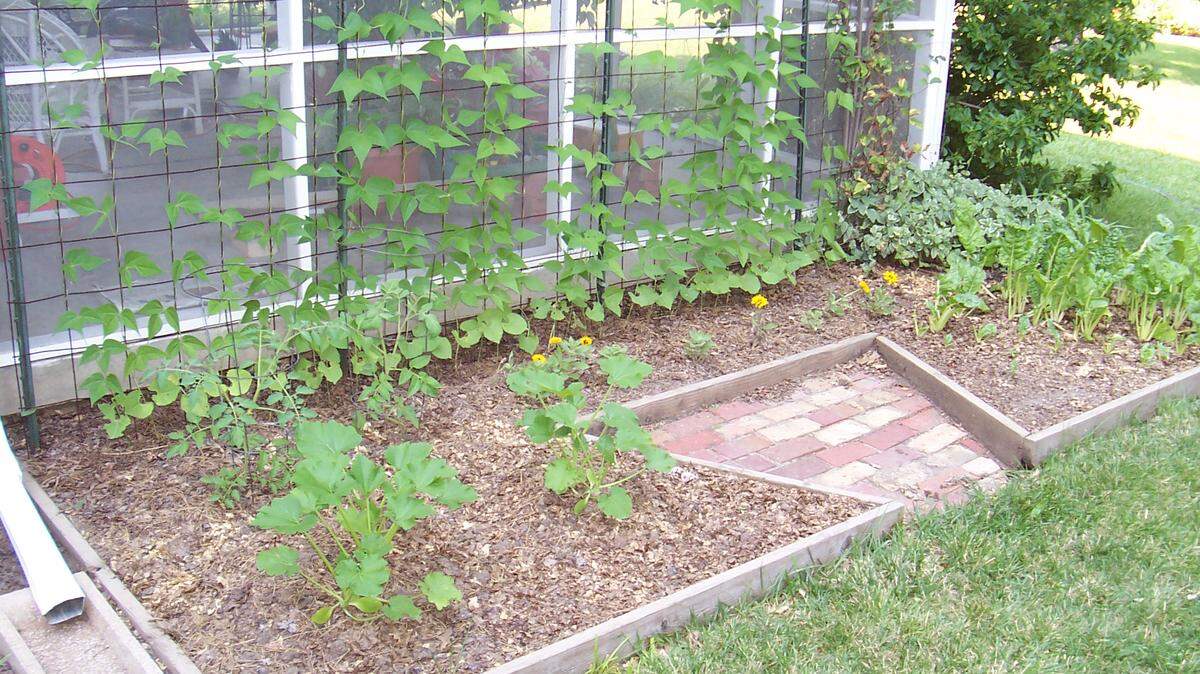
Today’s garden doesn’t need a plot of land in your backyard. The simplest way to grow fresh vegetables is to incorporate them into your existing landscape. Vegetables can be tucked into open areas in shrub beds. Rip out any old, overgrown shrub past its prime to create an open space. Enlarge the depth of the bed to make way for your crops.
Vegetables don’t care whether they are planted in straight rows, circles, patches or plopped into an open area. Incorporating them into the landscape is more about creativity than the photo op.
Tomatoes, the number one home garden crop, requires about a 3-foot circle of space per plant. This will encourage growth for those large, slicing tomatoes great for a meal. Tomatoes are best grown when caged as they take up less space. Peppers need about a 2-foot circle per plant. Cucumbers can be grown on a trellis in the same amount of space. Green beans, lettuce or spinach seeds planted a few inches apart would overflow this space.
Vegetables, especially those producing a fruit like tomatoes and peppers, do have one main requirement when it comes to location. Fruit producing vegetables require at least 6 hours of good sunlight each day. Lower light levels will reduce yields. Spring leafy green salad crops require less sun for a good crop, around 4 hours per day. Sunlight may be a limiting factor in many home landscapes due to mature trees. Think creatively to find space in the sunniest spot on your porch or property.
Besides sunshine, vegetable requires well-drained soil and an even supply of water. Generally, soils have an adequate pH and nutrition to grow without a lot of supplemental fertilizer and other inputs. Serious gardeners will want to soil test through your local Extension office. It provides nutritional information for better growth.
New to gardening and don’t know where to turn? Check out K-State Extension’s Kansas Vegetable Gardening Guide, publication S51. Just search “Kansas Garden Guide S51.” This easy read leads you step by step to successfully grow your own vegetables during the COVID-19 crisis.
Dennis Patton is a horticulture agent with Kansas State University Research and Extension. Have a question for him or other university extension experts? Email them to garden.help@jocogov.org.
This story was originally published April 20, 2020 at 12:00 AM.