
Beautiful and nutritious: Here’s how to grow food in your landscape
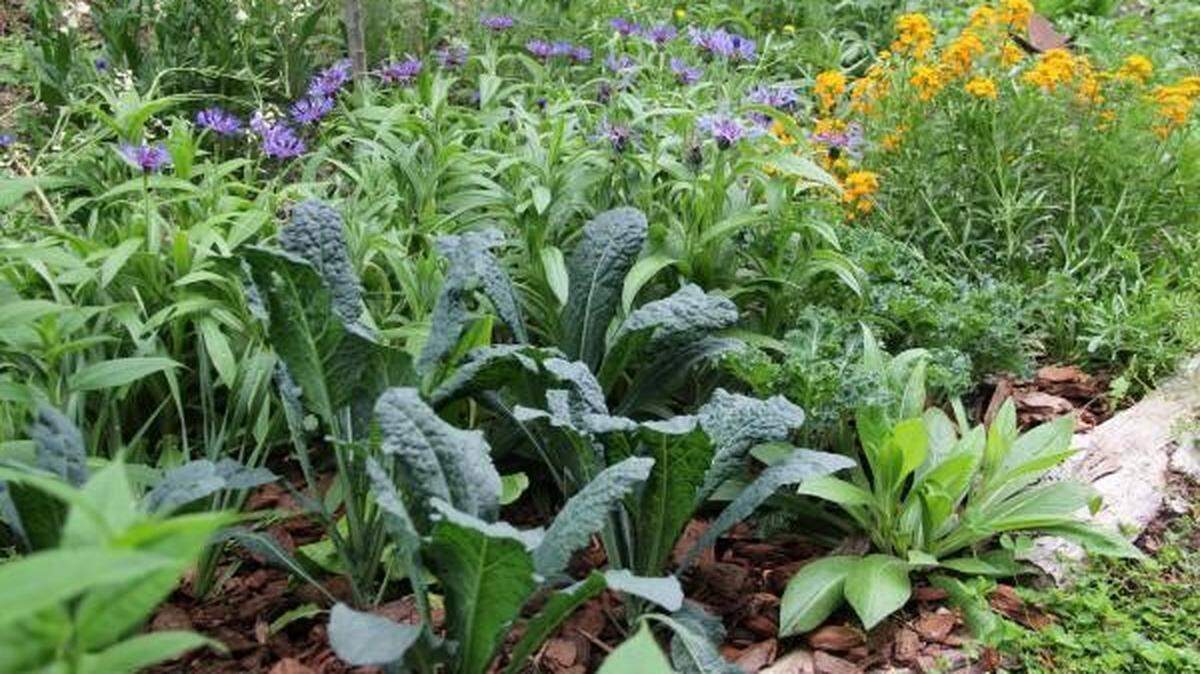
Think a vegetable garden only belongs in its own plot of land? Think again.
The standard practice of where we grow vegetables is changing. Foodscaping is the buzzword for incorporating vegetables into the landscape. The same areas where shrubs and flowers are planted can be filled with tasty food for our dinner plates.
Foodscape follows the basic principles of vegetable gardening, such as when to plant and how to maintain. Gone is the traditional notion of straight rows and uniform spacing. Instead, the veggies dot the landscape, taking advantage of gaps in planned areas.
Fully embracing this concept might find you removing a shrub or pruning it back, to make room for more pockets of tasty goodness. Properly placed vegetables don’t have to be tucked in the back or side yard. Many vegetables, like carrots, have beautiful foliage, adding interest to the landscape.
Front of the bed
Borders in landscape beds are traditionally reserved for low-growing annuals or a line of liriope. Consider switching these out for small stature vegetables. When mixed among other plants, vegetables play nicely in creating a pleasing landscape.
The front of the bed is ideal for spring and fall-planted salad crops, lettuce, spinach, beets, carrots and radishes. Green beans and bush varieties of cucumbers work well when planted in May or June. Plant these as the salad crops are harvested. Need a ground cover to fill an area? Sweet potato is a possible solution.
Middle of the bed
Further back in the landscape is the perfect spot for vegetables reaching a couple of feet. Potatoes, broccoli, cauliflower or cabbage are planted in late-March and harvested in May and June, delivering tasty family meals. Summer squash, zucchini and peppers make a pleasing addition tucked around other plants in the shrub border. Onions and garlic can be inserted in openings as well.
Back of the bed
Deep inside the landscape bed is the perfect spot for taller vegetables. Caged tomatoes or an artfully placed arrangement of okra add another dimension. The back is a place to be creative. Instead of clematis or annual vine on an obelisk, think outside the box. The obelisk could hold a vining cucumber, snow peas or cantaloupe.
Sunlight requirements
The most essential requirement when growing vegetables is to think about the required amount of sunlight. Vegetables producing fruit, like tomatoes, peppers, cucumbers and squash, require the most amount of sunlight. Six to eight hours is needed for a good harvest. Depending on the bed orientation, some vegetables may not be possible.
Not all vegetables require as much sunlight. Leafy crops, lettuce and spinach, as well as the quicker growing spring crops, can get by on a few hours of sunlight. Sometimes you have to give it a try and see what works.
Homegrown tastes better and what could be more rewarding than stepping out into the landscape, or rather the foodscape, to pick tomatoes and crispy lettuce for a mouthwatering BLT.
Dennis Patton is a horticulture agent with Kansas State University Research and Extension. Got a question for him or other university extension experts? Email them to garden.help@jocogov.org.
This story was originally published February 4, 2020 at 6:44 PM.