
When planning garden next spring, consider low-lying perennials for pop of fall color
The spectacular hues of autumn are one of the pleasures of the season. We see the vivid shades of yellow, orange and red all around us in the beautiful trees and shrubs.
Fall color doesn’t only come from woody plants. Many of our garden-worthy perennials also shine in the fall. This additional layer of color is easy to achieve.
Depending on the species, perennials are at home in many locations. Sun, shade and everywhere in between, there are plants to spice up the fall landscape. Here are a few plants you might consider adding to your garden next spring.
A trip through the Flint Hills in the fall reveals our native grasses have shades of bronze and yellow that can be spectacular. Two native grass species are garden-worthy and put on a beautiful fall display.
Little Bluestem, the state grass of Kansas, is the right size for most gardens. Less than 3 feet tall, this clumping plant turns into a rich rust-bronze to a reddish hue in the fall. It tolerates full sun and can withstand a drought. There are many varieties on the market, including Prairie Blues and Standing Ovation.
Native switchgrass makes an upright statement in the garden. There are numerous varieties on the market. Some can get quite tall, around 5 feet, while others stand about 3 feet or less. I prefer these smaller, slower-growing forms for a mixed perennial garden. Popular varieties include Shenandoah and Cheyenne Spirit. Each of these has tinges of purples during the summer, but then as the cooler air arrives, they develop more vibrant tones.
Amsonia is a southern native that thrives in our area with several common names, including Blue Star, for its pale blue spring flowers. Come fall, the ferny, willow-like foliage turns a bright, golden yellow that pops in the garden. Reaching a bushy 3 feet, this plant makes a beautiful backdrop.
Non-native species shine in the fall. Hostas are frequently overlooked. Many species turn a bright yellow as they fade away for winter. Peony, which graces many gardens, develops a beautiful yellow tone before frost ends the season.
Smaller, border perennials are ablaze with color as well. Hardy geraniums turn from summer green to a red-purple display in the fall. Hardy geraniums tolerate shade to full sun, depending on the variety. Similar in size, location and fall color is Bergenia – a plant with a funny common name, pig squeak.
The obscure Epimedium, or barronwort, has dainty early spring flowers and interesting green heart-shaped summer foliage. As the weather cools, the foliage develops shades of red to purple.
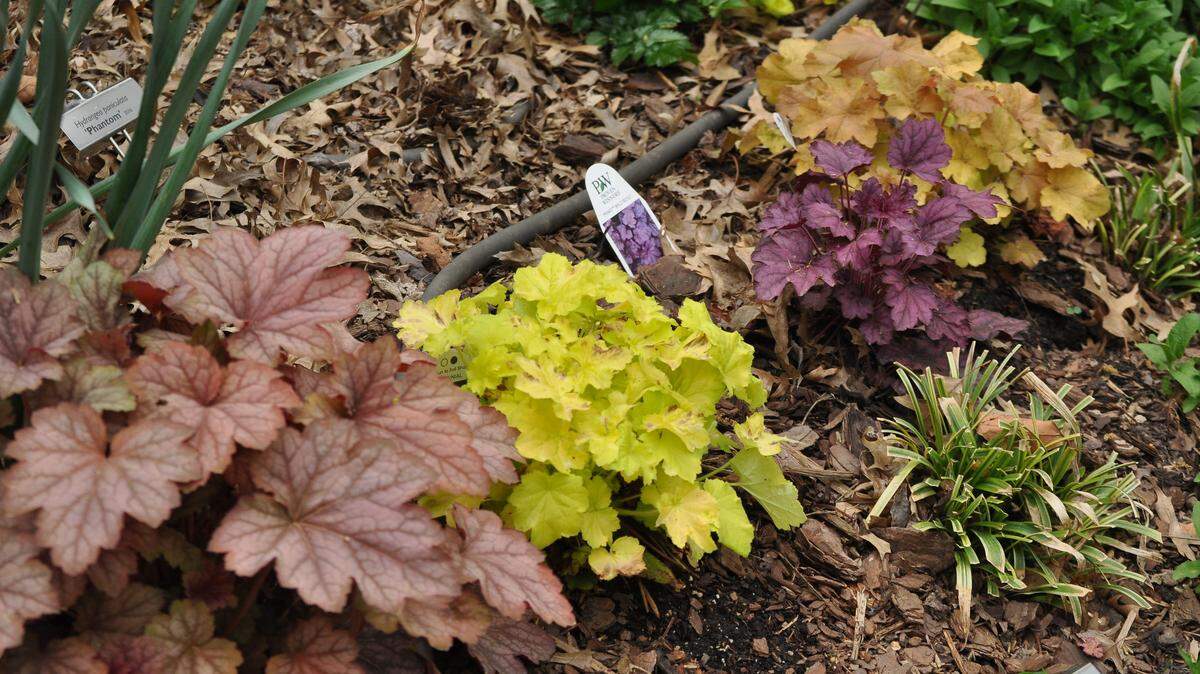
Prized for summer color Heuchera, or coral bells, shines well into the fall. Many times the reds, purples and amber tones lost during the heat of summer return in the cool of the fall.
We all prize fall color, but don’t just look up at the trees. Sometimes that color can be found underfoot in our perennial gardens.
Dennis Patton is a horticulture agent with Kansas State University Research and Extension. Got a question for him or other university extension experts? Email them to garden.help@jocogov.org.