
Cactuses pricked the interest of collector Mark Raduziner of Mission
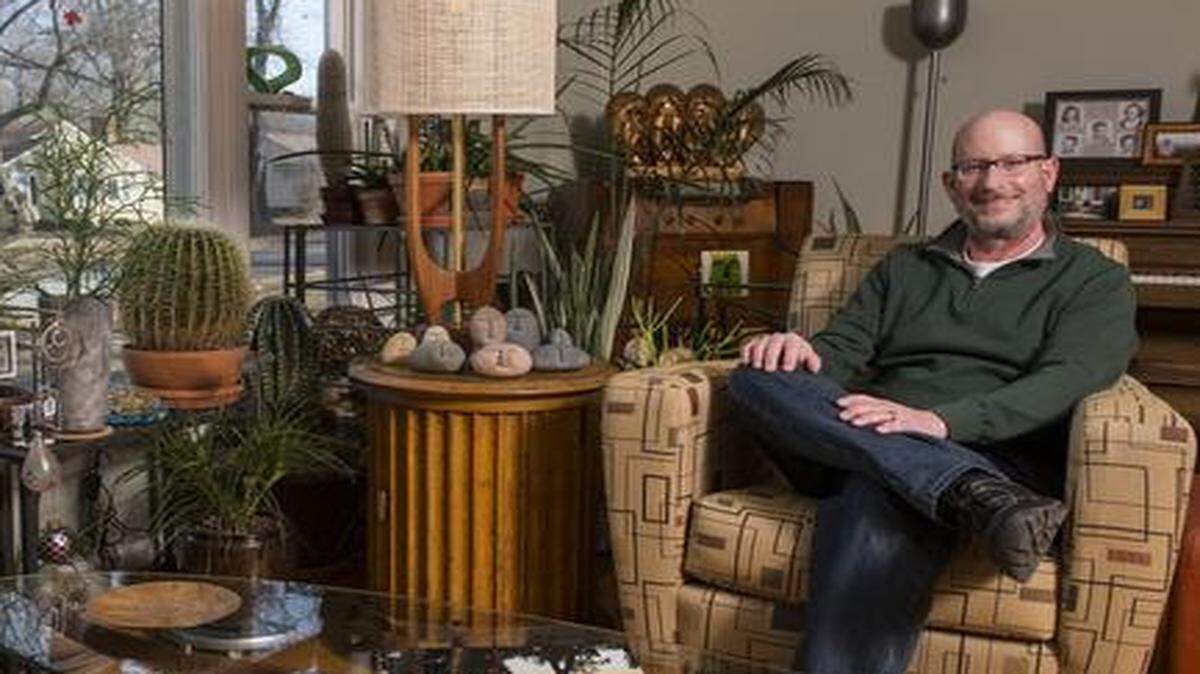
Mark Raduziner has been teaching journalism at Johnson County Community College since 1982. But well before that, he embarked on a hobby that has come to equally define his identity: collecting cactuses. Every sunny window in Raduziner’s Mission ranch house is filled with different varieties of cactus — short and squat, tall and bulbous, fur-covered, wavy-edged, strappy — and there are more out in the garden, waiting for spring in specially prepared beds. People call him “the cactus guy.”
What sparked your interest in cactus?
When I graduated from college in the mid-’70s, my mom and a friend each gave me a plant for my new apartment. I got into it, and before I knew it, I had 50 plants. In 2002 I saw an ad in The Kansas City Star for the Kansas City Cactus & Succulent Society show and sale. I went and I was in heaven. These are my people. I joined the group and we meet once a month at Loose Park.
How many cactuses do you have?
I have more than 200 potted cacti. Everything goes outside in the summer — on the front porch, the back porch, around the trees. Normally I take 40 to school for the winter, but I’m on sabbatical this spring, so they’re all in the house now. I also have two beds of 25 different types outdoors.
I’m surprised you can grow them outside here.
There are more than 100 types of cactuses that will survive over the winter. You have to have really good drainage. I make my own mix from potting soil, sand, gravel and turface, which is made of tiny bits of clay pots. The mixture is very porous so the water can drain. It’s the same mixture I use in the pots.
Tell me about some of the varieties here in the front room.
A couple of those big ones are barrel cactuses, but I’ve given a lot of the big ones away because they’re too heavy to move in and out of the house. The Saguaro cactus had beautiful blooms this year. It’s 40 years old. The key to getting a cactus plant to flower is to put it outside when the nights are cool. I usually start in early May.
And you’ve done some remodeling to accommodate your collection?
We didn’t need three bedrooms, so in 2008 we gutted a bedroom and built a family room adjoining the kitchen. The bay window was designed with cactuses in mind, and it gives a view of the cactus bed in the yard.
I love the one here with the wavy edges.
It’s called a crested Euphorbia because it has all these crests. The beauty is in the curvature. I usually enter it in contests. The more sun, the more reddish pink it turns, but too much sun can scald it. I have several Euphorbias. That is a grafted one that I’ve had for 20 years. It was 2 inches high and 4 inches wide when I bought it. The one next to it with white fuzz is called a senile plant. It’s very old. The fuzz protects the plant from the sun.
And you have a lot more in this sun room.
It used to be a screen porch. That metal shelf is all agaves. They’re succulents. All cacti are succulents, but not all succulents are cacti. This one with the long pronglike leaves is a Stricta agave. That tall one is a Senecio succulent. It’s a big fat fun interesting plant. When I entered it in a contest, a judge said, “I’ve never seen anything like it.” I also have a little aloe collection in here. They’re really winter growers.
How do you care for cactuses?
The key to survival is to leave them alone and rarely water. They just want sun, and if you don’t have sun, give them bright light. I like to use plain clay pots. They allow water to evaporate and the plant to breathe. I mix them up with a few cool pots, fun and whimsical art, and glass faces.
There are more cactus plants in the basement. I have them under grow lights, and I run fans down there. Cactus plants need airflow to keep them from getting diseases or bugs. Many of the ones I have down there drop their leaves in the winter. Right now they want to be dormant; in May they start growing again.
Where do you find your plants?
A lot of people go to to other countries and look for hidden gems. I buy from professionals, and I want unusual plants. I’ve also grown some from seeds. You can buy them, or the plants produce seeds when they flower.
I understand some of your collection is going to be included in an art installation at the Nerman Museum.
The artist (Amir H. Fallah) emailed me samples of his work and explained how he wants to use my plants in a terrarium installation. He also wants to come to my home and pick something out — it could be wallpaper, fabric or the angle of a piece of furniture — to include in his concept.
Cactuses are not the only thing you collect.
I’m into collecting clocks and I really love glass. I also collect a lot of face art. Another hobby is lamps. I bought this Ohm meter that used to help run an elevator in Chicago and had it turned into a lamp. I also have 20 lava lamps, and in the summer I put 10 or 12 of them in the front window. I think everyone should have a hobby; it takes you away from the stress of life, and it’s very therapeutic for me. What I like about growing cactuses is that it’s unique and different and something that most people don’t do.
This story was originally published January 10, 2015 at 6:00 AM.