
This nationally recognized KC restaurant is unlike anything in the metro
During dinner service one evening at Crossroads restaurant Anjin, chef de cuisine Sam Edelson cranked the sound system as the Backstreet Boys began to sing. The voices of cooks and customers arose to harmonize with Nick Carter.
Soon enough, the entire restaurant was trilling the same line in whiny tones: “Tell me why!”
“It was absolutely hilarious and so ridiculous at the same time,” owner Leslie Newsam Goellner recalled recently.
Shared jokes between customers and staff are typical at the Japanese-style restaurant. Any amount of singing or jesting will be heard by all. Anjin is one 1,200-square-foot room.
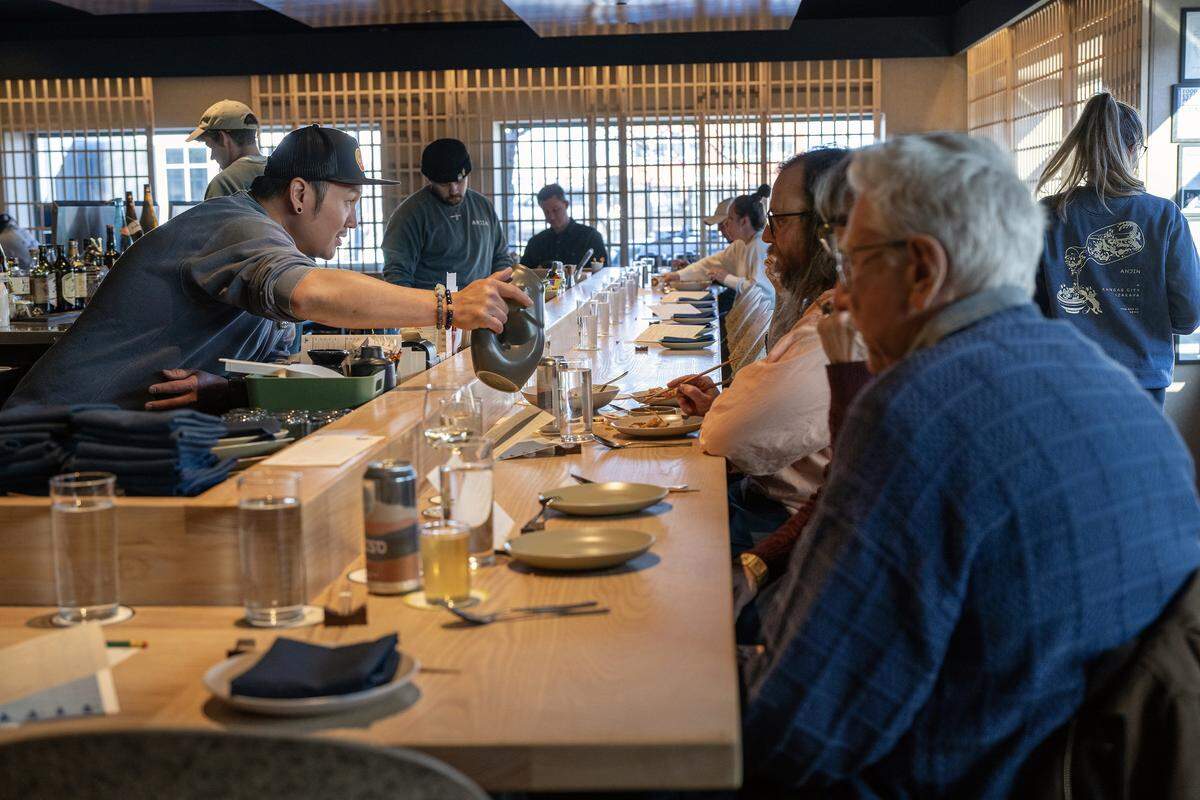
And that’s it. There’s a bathroom, of course, but there’s no hidden storage area, no back room, no walk-in freezer. The faces that smile at customers and the hands that mince vegetables belong to the same bodies. Each of Anjin’s 20 seats wrap around the kitchen. Chefs are eye-to-eye with customers, who curiously watch fish being sliced and sizzled.
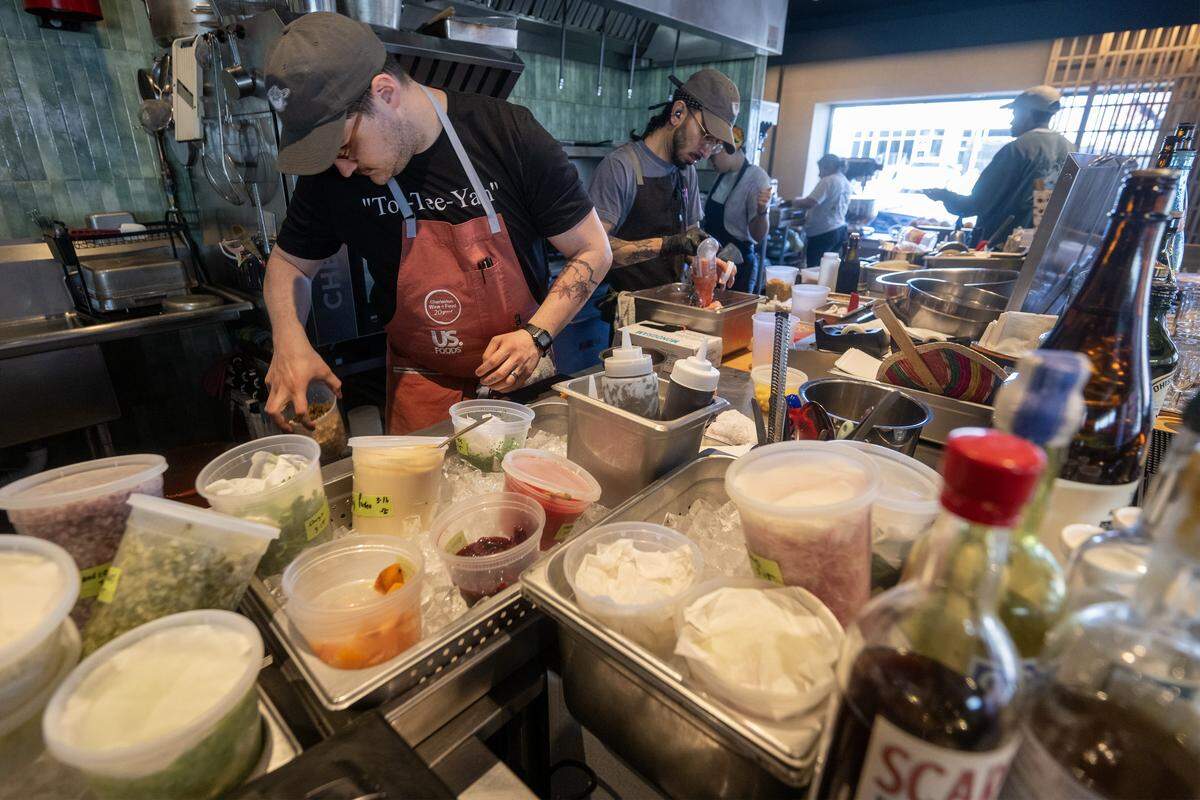
To Leslie’s knowledge, there’s nothing in the Kansas City metro with exactly the same setup. It’s the only restaurant inspired by izakayas, Japanese-style bars, too. Perhaps the unconventional atmosphere is partly why Anjin is up for the prestigious James Beard Award — the restaurant world’s Oscar equivalent.
Leslie and her husband, Nick Goellner, are in the running for Best New Restaurant. They’re competing against restaurants in Seattle, D.C., LA, New York, etc., and they’ll find out at the end of the month whether they’re finalists.
If they are, they’ll head to the awards ceremony at the Lyric Opera House in Chicago this June. There, the winners will be announced.
Leslie said she received the news this January after the air conditioner at one of their restaurants failed, forcing her to shell out $14,000. A text from a friend alerting her of the semifinals list improved her mood.
“It felt really nice,” Leslie said. “When people are validating what you’re doing, it feels nice.”
This isn’t the first time the couple has been praised for their work.
Nick received past nominations for Best Chef: Midwest in 2019, 2020 and 2023 for his work at the couple’s other restaurant, The Antler Room.
But Anjin is different. It feels like an experiment of sorts. A test into what would happen if you stripped back the concept of a restaurant and left the most important thing: The customers seated around the table.
It’s as close as one could get to a home-cooked meal at a restaurant. Guests from all walks of life gather around one long table by the kitchen, the sights of hands whisking and the smells of bread baking.
The Antler Room, which opened in 2016, is also fairly intimate. It has about 30 seats, though those are spread throughout the room.
Leslie said the couple has grown tremendously, both as business partners and people, since they first opened their original concept. Running it during a pandemic refined them.
“We’ve learned a lot about relationships, people, trends, what we want more,” she said. “COVID kind of did that for us. We really said, ‘What are we doing, and why are we doing this?’”
So, when they opened Anjin at 1708 Oak St. — just down the street from The Antler Room — they wanted a spot that was even more communal. The pair intentionally sought a space that would seat guests elbow to elbow.
It flips the world of no-contact service on its head.
“So many things are pulling away from having that interaction,” she said. “We’re really diving in.”
It’s not strictly a Japanese restaurant, but it certainly has those influences. The couple loves to travel and has an affinity for izakayas, aka casual Japanese bars that are social but intimate.
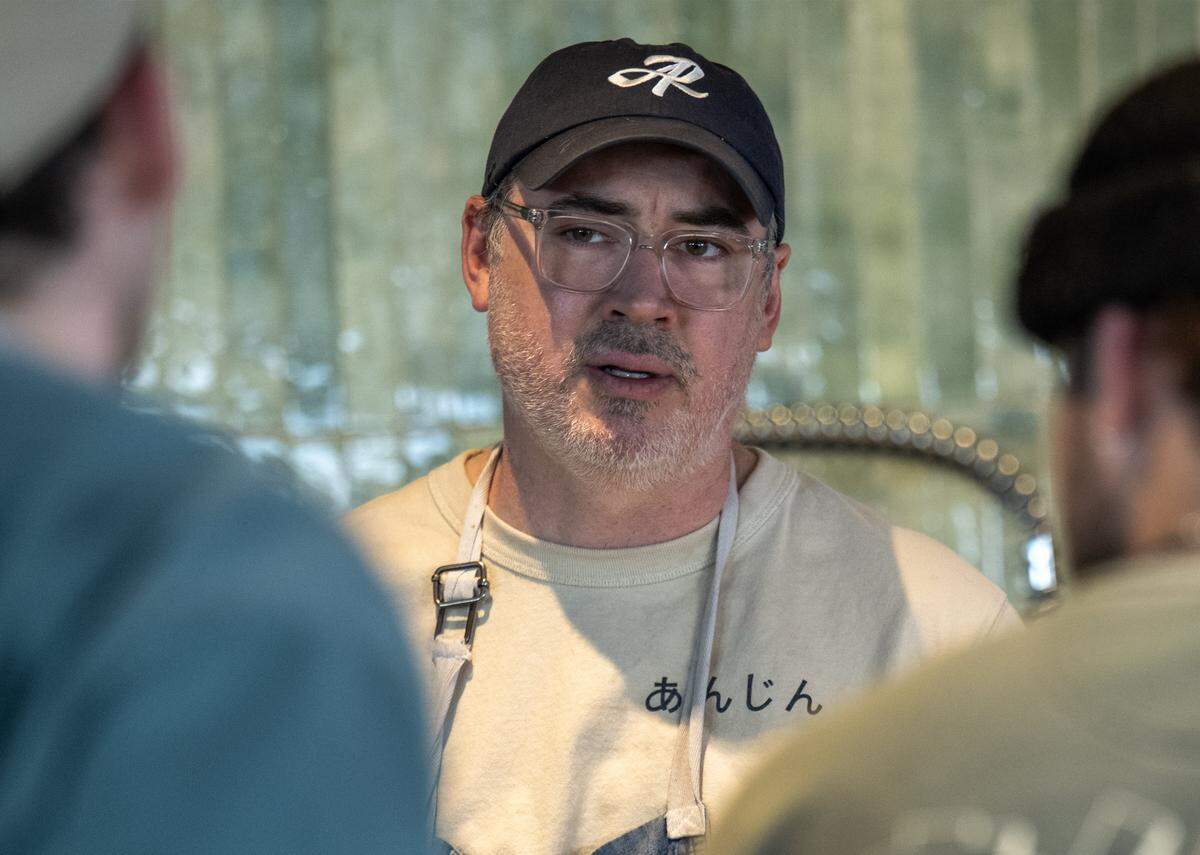
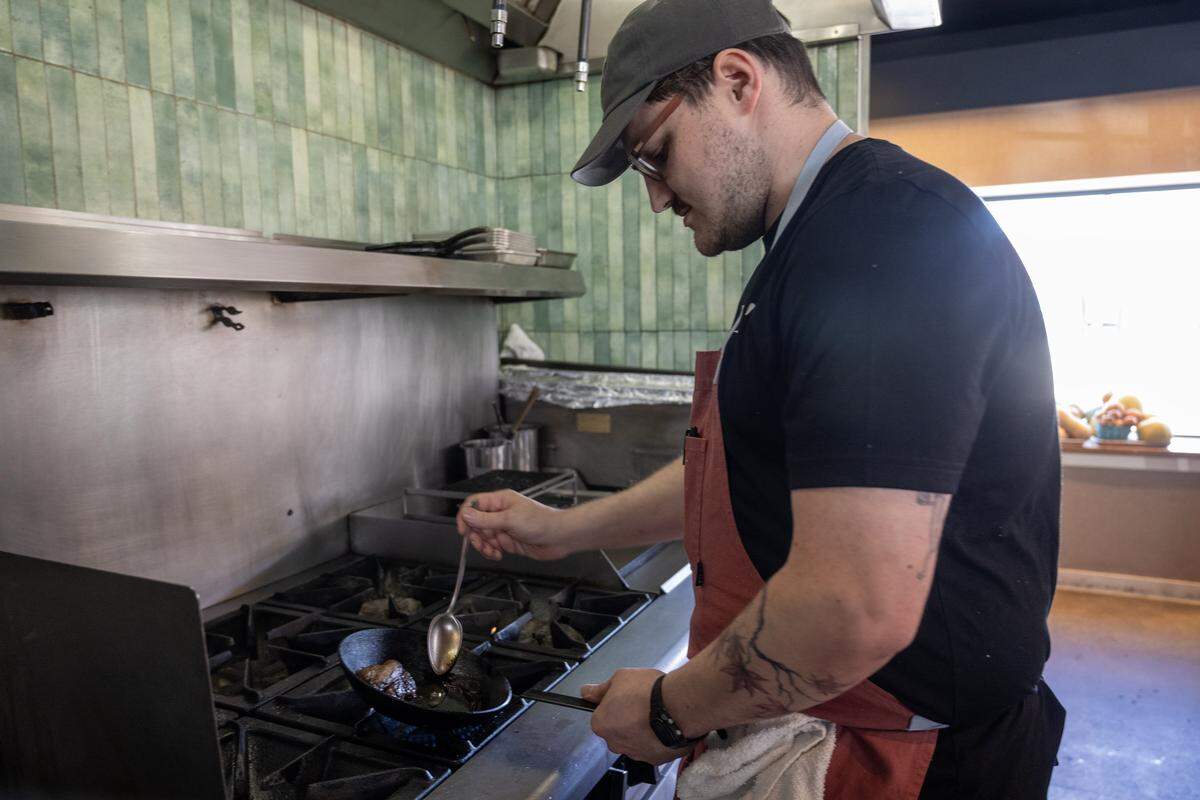
The menu at Anjin is constantly rotating, with Nick basing each dish on either an idea or a product they want to use. Whatever is fresh or in season is what ends up on the customer’s plate.
They pickle, can and dehydrate ingredients they want to use in the future.
But Nick, a French Culinary Institute graduate, wants to credit his team for helping contribute to the dishes. He leans on the feedback
“The best thing I do is edit other people’s stuff,” he said. “I have more fun if I’m with one person or multiple people, and we’re bouncing ideas off of each other.”
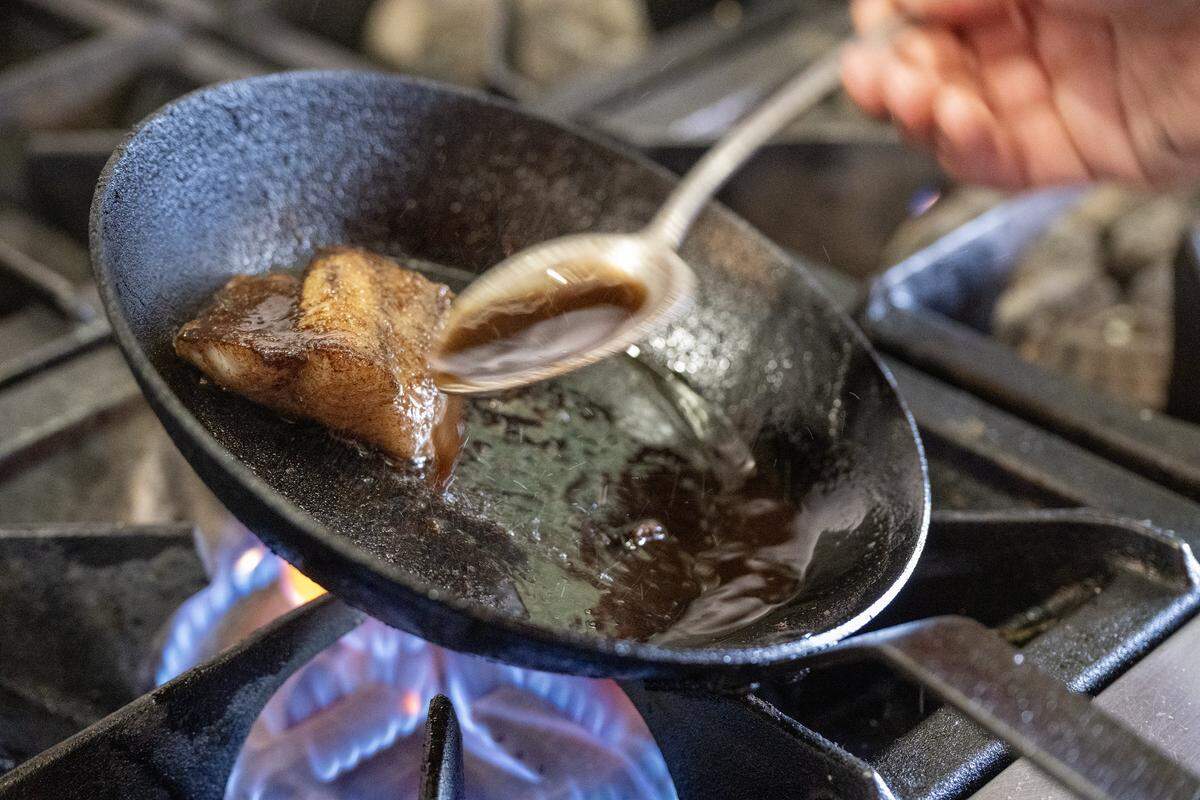
Leslie bragged on the shokupan, or a spongy Japanese milk bread, used to make the fried sakura pork collar sandwich ($20).
“It’s like the best version of white bread that you could have,” she said. “I don’t even need it toasted, I just sit there and put butter on it … It feels like a hug when you bite into it.”
The sandwich is one of the restaurant’s most popular dishes and is made with white miso egg salad, Taiwanese shredded cabbage, and Carolina gold tonkatsu sauce.
The couple wants to reduce the amount of butter and sugar that goes into their food, so they lean heavily on texture and umami to keep the flavors full and pronounced.
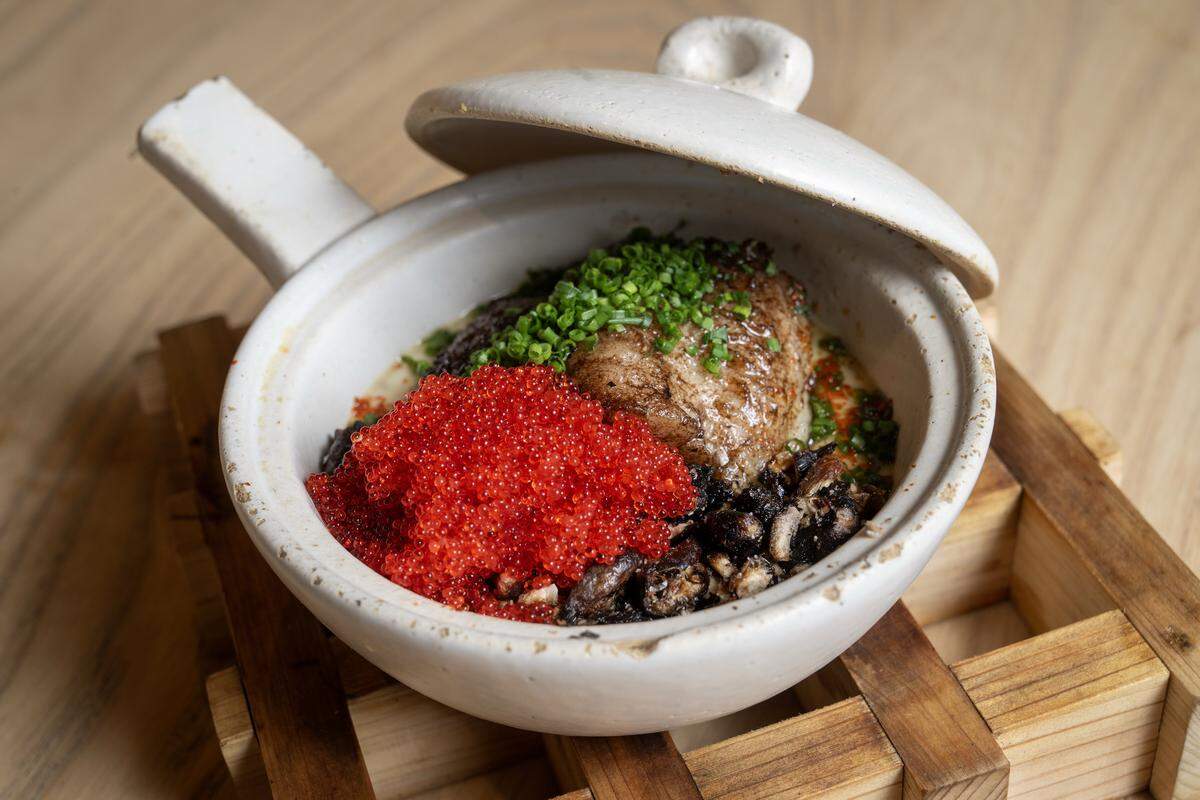
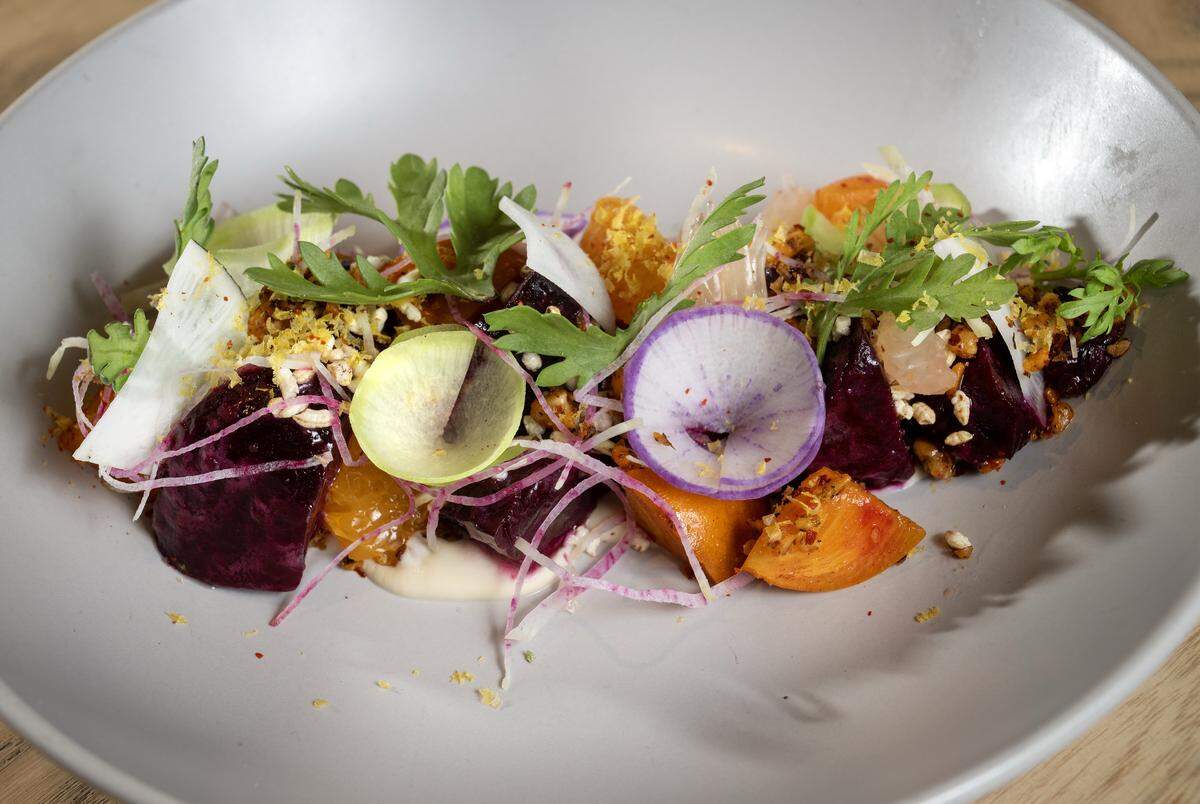
A beet salad is intricately arranged on the customers plate and contains koji tofu puree, seaweed spiced walnuts, miso dressing, tangerine, watermelon radish, puffed rice, chrysanthemum and grated cured egg yolk ($15). Chawanmushi is served in a large, teacup-shaped dish. Pull off the ceramic top, and customers will find Missouri catfish, black olive oil, trout roe, chives and heirloom corn ($19).
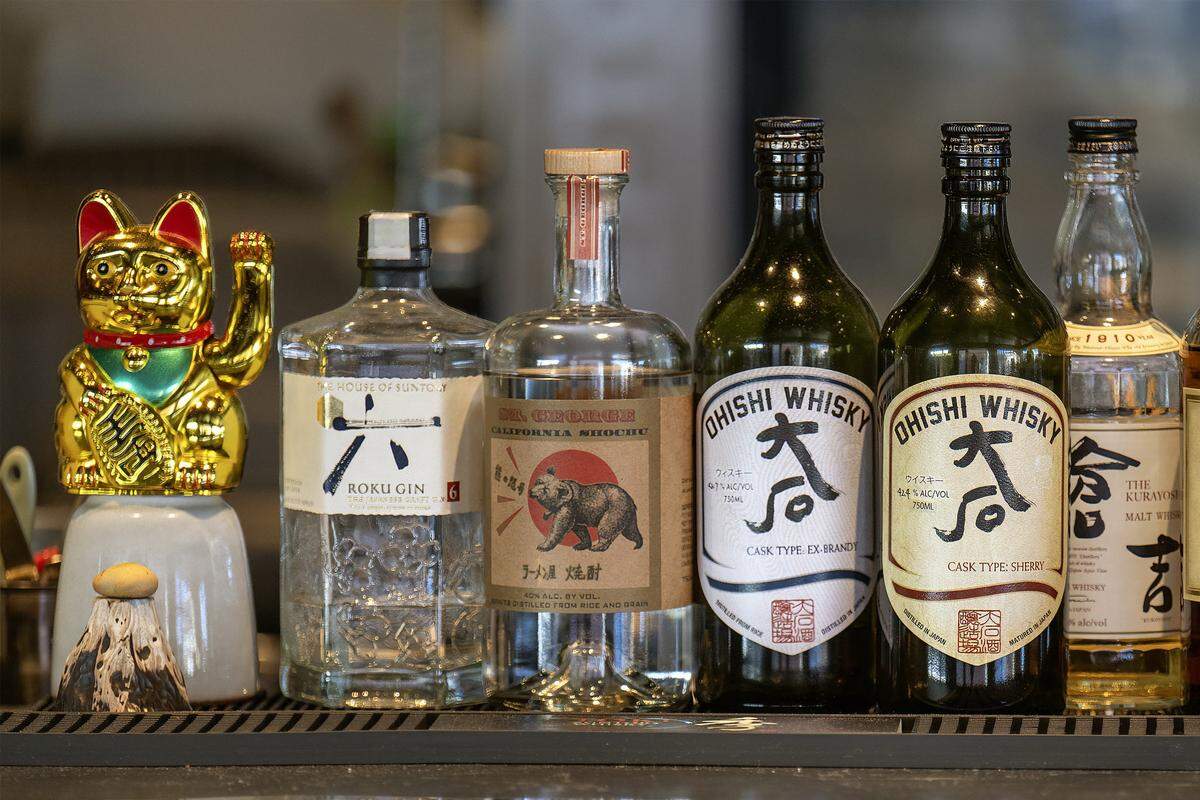
If customers want a drink, they can sip sake or cocktails like a Togarashi negroni ($15) or Anjin Manhattan (toki whiskey, sweet vermouth, sake vermouth, Meletti amaro and angostura bitters for $15).
Nick isn’t sure what he’d do without cooking. Something creative, no doubt. There’s plenty of industries that you can fake your way through, but cooking is not one of them.
“I like the fact that I am judged for something that I make. That’s huge for me,” Nick said. “Cooking is a meritocracy for the most part. Either you can do it, or you can’t.”
During an interview with The Star inside Anjin, an employee pulled a T-shirt out of a box and handed it to a co-worker. The phrase on the front led the group to burst into a bellyaching laughter.
An inside joke, Leslie explained. The crew of about 10 has many of those. They’re close, and they make a point to include customers in the nightly fun.
“Say that we’re laughing about something, I’ll tell the guests, ‘This is what this is about,’” she said. “People get so excited about feeling like they’re involved in the process of their experience.”
Pablo Munoz concurs. He’s been cooking at the restaurant since it opened last year, tossing jokes at customers in between chopping.
The French-trained chef has worked in a variety of restaurants, some of which are open concepts. But nothing has been quite like this.
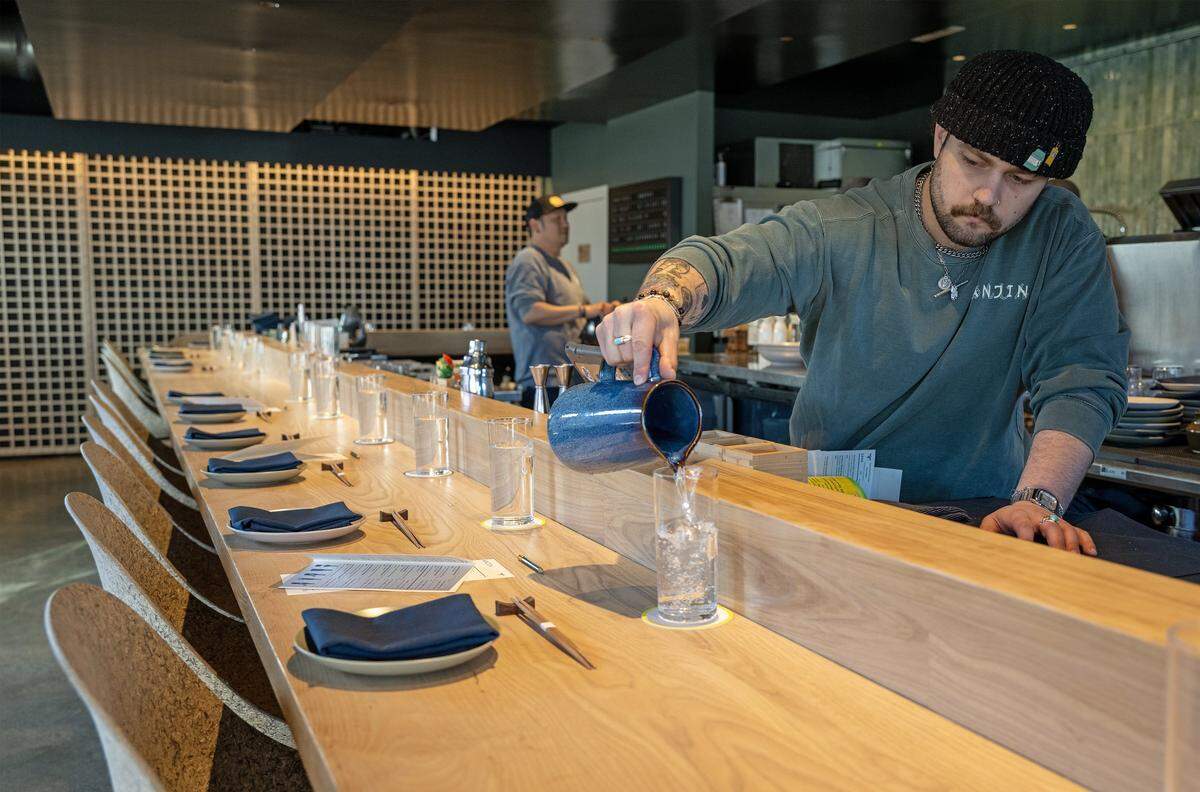
“It’s almost like a fish in a tank,” Munoz said of other open kitchens. “But here, it’s like, you’re in the tank with us.”
It’s strange for him to claim the James Beard Award. He said when he learned about the semifinals, he was happy for the owners. Then it hit him: Each of the 10 employees had a part to play.
Greeting customers, curating the playlist, cleaning the bar. One could not exist without the other. Remove one card and the house crumbles.
“Everyone just all around cares to push the food to the quality chef has,” Munoz said. “This is the first restaurant as a whole where I see everybody have the same mindset and goal to just kill it. …
“We did this as a team.”
Leslie and Nick, a team in more ways than one, similarly experienced feelings of gratitude and humility.
Who knew that their longing glances inside The Rieger years ago would lead to them co-running two nationally recognized restaurants? Working as husband-and-wife in the industry can be challenging, as can juggling life and business. But they don’t want to lose the forest in the trees.
It’s still for fun, and for the people.
“People have been so kind and so wonderful, and I think just really excited to have a new style of dining for Kansas City,” Leslie said. “Being able to have such an intimate interaction with guests, where you’re sitting here, and people can see everything that’s happening since this space we have nowhere to hide.
“We’re just trying to have a good time, and hopefully some day we’ll make some money.”
This story was originally published March 24, 2026 at 5:00 AM.