Why Broadway’s Tony-Eligible Stages, Intimate Off-Broadway Rooms and Touring Shows Serve Different Audiences
Planning a trip to see a play or musical and getting tangled up in the terminology? The word “Broadway” gets attached to everything from a Times Square blockbuster to a touring production rolling through a hometown theater, and the differences shape what you pay, what you see and even which awards a show can win. Here’s how the tiers actually break down, so you know what you’re buying a ticket to before you spend your money.
This guide draws on some of the key differences outlined by the New York Film Academy and industry sources to walk through each category.
What “Broadway” actually means
Broadway refers to a specific set of 41 professional theaters clustered in the Theater District near Times Square in New York City. Those venues are certified by The Broadway League, the trade association for the Broadway industry, and each one has a minimum of 500 seats. This is the tier with the highest budgets, the biggest stars and the most elaborate production values in American commercial theater.
Ticket prices reflect that scale, typically $100 to $300 or more for popular shows. Runs are open-ended and driven by demand, which is why hits like “Chicago” and “The Lion King” have stayed on stage for years or even decades. Tony Award eligibility is tied specifically to Broadway theaters, so if a show is competing for a Tony, it’s playing on Broadway.
Off-Broadway and off-off-Broadway explained
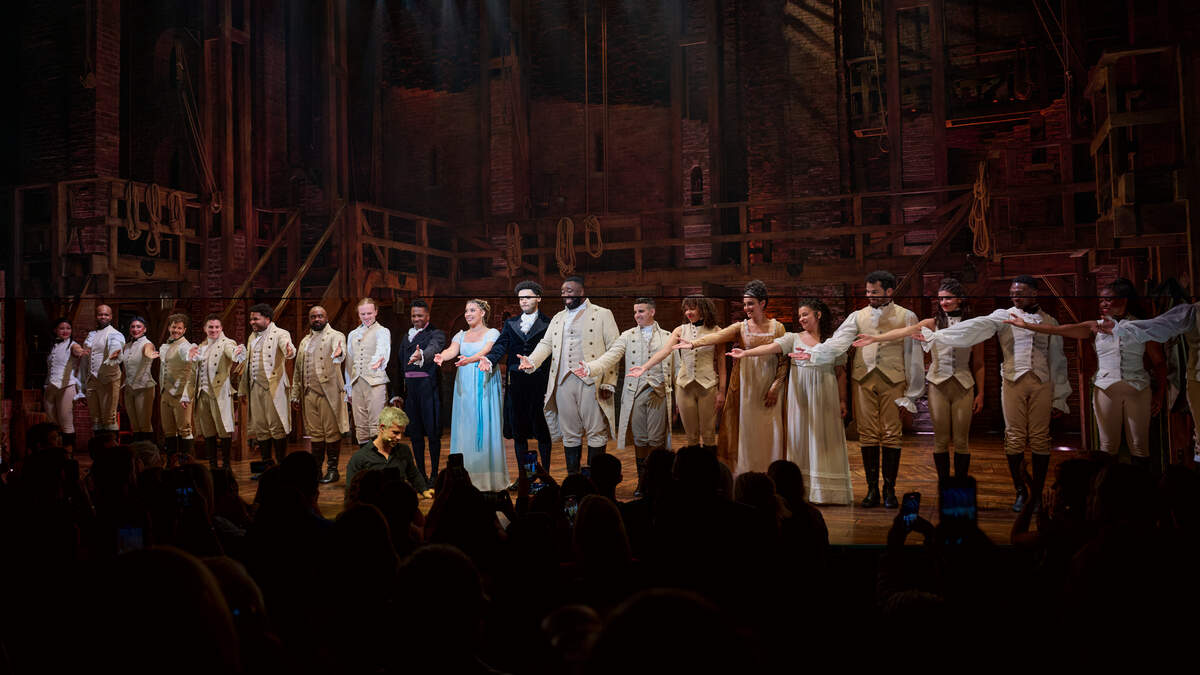
Off-Broadway covers New York City theaters with 100 to 499 seats. These venues aren’t necessarily in the Theater District, and many are scattered across Manhattan neighborhoods like the East Village and Chelsea. Budgets are smaller, the work is often more experimental or intimate, and off-Broadway has a long history of launching shows that later transfer to Broadway. “Hamilton,” “Rent” and “Avenue Q” all started off-Broadway before making the jump. Ticket prices generally run $50 to $100.
Off-off-Broadway is the smallest tier, meaning New York theaters with fewer than 100 seats. It’s the most experimental and indie level, with minimal budgets and often non-union productions. Because small productions require the least financial commitment, off-off-Broadway is where a lot of new playwrights get their start.
Off-Broadway and off-off Broadway shows aren’t eligible for the Tony Awards, but they have their own recognition through the Obie Awards and the Lucille Lortel Awards.
How Broadway touring shows work
Broadway touring shows are full-scale replicas of a Broadway production that travel to cities across the U.S. and sometimes internationally. They typically carry over the same choreography, sets and costumes as the original, and sometimes even the same direction. The cast is usually not the original Broadway cast, though occasionally a recognizable name joins the tour.
The logistics behind these tours are enormous. “Every touring production has a schedule that’s put together 12, 18, sometimes 24 months in advance, keeping in mind they have to go from city to city. It can be like 3-D chess,” Jeff Loeb, general manager of Los Angeles’s Hollywood Pantages Theatre and Broadway in Hollywood, said in an interview with Broadway Direct.
A show’s “first national tour” usually launches shortly after, or even during, its initial Broadway run, and it gets the closest replica of the original production. Later tours or “non-equity” tours may travel with scaled-down sets and smaller orchestras. The main goal here is a broader audience, since touring productions let audiences outside New York see hit shows without traveling to Manhattan.
What this means for ticket buyers
Knowing which tier you’re buying into helps set expectations before you spend. A Broadway ticket in New York generally means the flagship production, the highest prices and the original creative vision at full scale. Off-Broadway and off-off-Broadway offer smaller rooms, lower prices and a better chance of catching a show before it breaks big. Broadway touring shows bring a close-to-original experience to your city, with the caveat that first national tours tend to hew closer to the original than later legs.
If you’re shopping for tickets, look at the venue, the seat count and whether the production is billed as a first national tour. Those details tell you more about what you’ll see on stage than the marketing does.
This article was created by content specialists using various tools, including AI.