Wearing a CGM? Here Are Some Helpful Tips to Prevent the Device From Falling Off
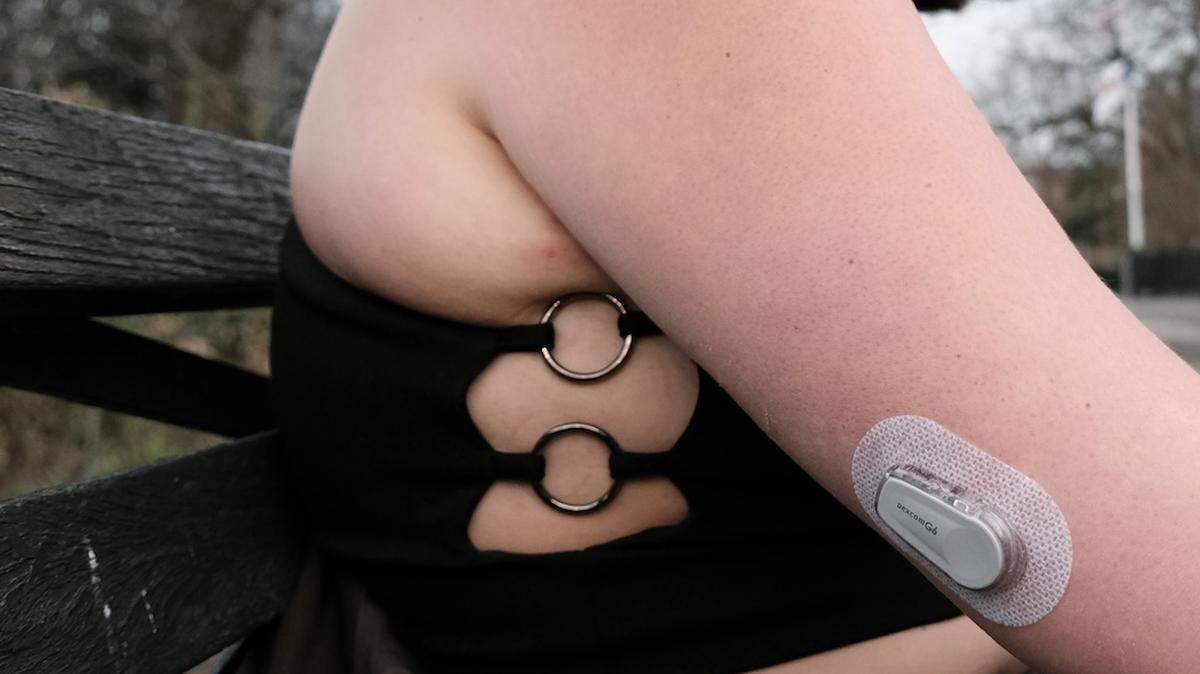
Continuous glucose monitors have become a daily fixture for millions managing diabetes, weight-loss medications and metabolic health — but a CGM is only useful if it stays put for the full wear period. Here is how to apply, place and protect your sensor so you get accurate readings until it is time to swap it out.
How Do You Keep a CGM From Falling off Your Skin?
The fastest way to make a CGM last the full wear period is to prep the application site carefully and press the adhesive down firmly.
Dexcom advises, “Make sure the site is clean, dry and free of lotions or oils before inserting your sensor. Moisture is the enemy of good adhesion!” Lingo adds that you should “Let your skin fully dry in the air – especially if you’re applying a CGM after a shower or swim,” and recommends cleaning the site with an alcohol wipe “to help prevent any irritations or infections.”
If you are swapping an old sensor for a new one, the leftover adhesive matters. Lingo recommends removing “any adhesive residue from previous sensors. Consider using a skin-safe adhesive remover like Uni-solve, Detachol or Tac Away to start fresh.” A clean surface gives the new sensor something to grip.
Once the sensor is on, give the edges a push. According to Smiles Medical Supply, “Once you have placed your CGM onto your skin, use gentle pressure around the edges of the device to ensure a secure fit. This will help keep it in place longer and reduce any irritation caused by movement of the device against your skin.”
For wearers whose sensors regularly peel up early, adhesive overpatches can extend wear time. The American Diabetes Association published a list of patches and adhesive removers on the market. “Adhesive removers (wipes, sprays or solutions) dissolve strong medical-grade adhesives on CGMs and insulin pump patches, easing removal, reducing pain, preventing skin irritation, and clearing residue buildup,” the ADA says.
Where Is the Best Place to Put a CGM on Your Body?
The most common placements for a CGM are the back of the upper arm, the abdomen and the buttocks. The right spot is one you are unlikely to bump into and where your skin does not bend or fold much during daily movement.
Smiles Medical Supply puts it plainly: “Sensor Placement is important. Look for a location where you are less likely to bump the sensor and you are minimizing the bending of skin under the sensor.” A sensor sitting on a frequently flexed area — the soft edge of your stomach when you sit, the underside of your arm — is more likely to lift at the edges or read inconsistently.
Sleep position matters too. Side sleepers often choose the opposite arm so they are not lying on the sensor for hours each night. People who play contact sports, carry a backpack on one shoulder or wear a tight uniform may want to avoid that side altogether.
When you are applying a CGM, give yourself room to work. The hardware itself is small. The American Diabetes Association says the sensor “is about the size of two stacked quarters, is painless to apply, comfortable to wear and easy to use. And you can scan the transmitter through your clothes, a real benefit when you want to be discreet.”
That discretion is part of why upper-arm placement is so popular. Short sleeves cover it, long sleeves hide it entirely and you can still sync the reading through fabric without lifting your shirt. Abdomen and buttock placement work well for people who wear sleeveless clothing often or want the device fully out of sight.
What Are the Best CGM Application Tips for First-Time Users?
The most important CGM application tips are simple: wash your hands and the site, let everything air-dry, then trust the applicator. Most CGMs handle insertion in a single press, with very little to feel.
Lingo describes how the hardware works: “Most CGMs come with an easy-to-use applicator you push down on the site until the biosensor attaches in place. This process inserts a sensor filament less than 0.4 millimeters (mm) in diameter, 5 mm under the surface of the skin to measure glucose in your interstitial fluid. The CGM stays on the skin with an adhesive and connects to your phone or receiver wirelessly, allowing it to be used with no charge.”
Skin prep is the part most new users underestimate. The CDC says, “Before applying the CGM, wash your hands and the sensor site with soap and water, and let them dry completely. Lotion or moisturized soap often makes it hard for your CGM to stick to your skin. Inserting the CGM may feel like a quick pinch, similar to a fingerstick, but most people don’t feel it once it’s in place.”
The ADA notes that the sensor itself is small and applying it is painless. From there, the device handles the work — measuring glucose continuously and sending readings to a paired phone or receiver.
Manufacturer differences matter. Dexcom, Lingo, Abbott’s Libre and other brands have slightly different insertion angles, approved wear sites and wear durations. The CDC advises following the manufacturer’s instructions exactly, because what works for one device may not work for another. If a sensor reads unexpectedly high or low immediately after insertion, give it the warm-up period the manufacturer recommends before troubleshooting.
A final tip: have the applicator, alcohol wipe and any overpatch ready before you start. Once the site is clean and dry, you want to move quickly so dust, lotion or sweat does not interfere with adhesion.
Can You Shower, Swim or Travel With a CGM?
Yes — most CGMs are water-resistant and some are fully waterproof, so showering, swimming and bathing are generally fine. Air travel and certain medical scans are where wearers have to be careful, according to the CDC.
“Most CGMs are water-resistant, and some are fully waterproof. You can use an extra adhesive patch over your CGM to protect it while bathing or swimming. Adhesive patches can also help secure your CGM in humid weather or if you frequently bump it,” the CDC says. Long pool sessions, hot tubs and saunas put extra stress on the adhesive, so an overpatch is worth considering before a beach day or vacation.
Medical procedures are a bigger concern. “Certain medical procedures like X-rays, CT scans, angiograms and radiation therapy can damage a CGM,” the CDC notes. If you have imaging scheduled, ask the ordering provider whether you should remove the sensor first and apply a fresh one afterward.
Airports add another wrinkle. “If you’re traveling through airport security, your CGM won’t set off a metal detector, but it can be damaged from a full body scan or if your bag is scanned. Be sure to let the TSA agent know if you’re traveling with a CGM,” the CDC says. Many travelers request a pat-down or visual inspection instead of stepping into a full-body scanner, and pack extra sensors in a carry-on rather than checked luggage.
Day-to-day, sweat, humidity and friction are the routine wear-and-tear concerns. A backpack strap rubbing on an upper-arm sensor, a fitted shirt catching on the edge of an abdomen sensor or a workout that soaks the adhesive can all shorten wear time. An overpatch can buy you several extra days in those conditions — and at minimum, gives you peace of mind that a $40 to $100 sensor is not about to slide off in the middle of a run.
For more information: Choosing Between Stelo, Lingo and Levels for Diabetes: Everything to Know About OTC CGMs
This article was created by content specialists using various tools, including AI.