
Hyperbaric Oxygen Therapy Promises to Heal You From the Inside Out. What the Science Says
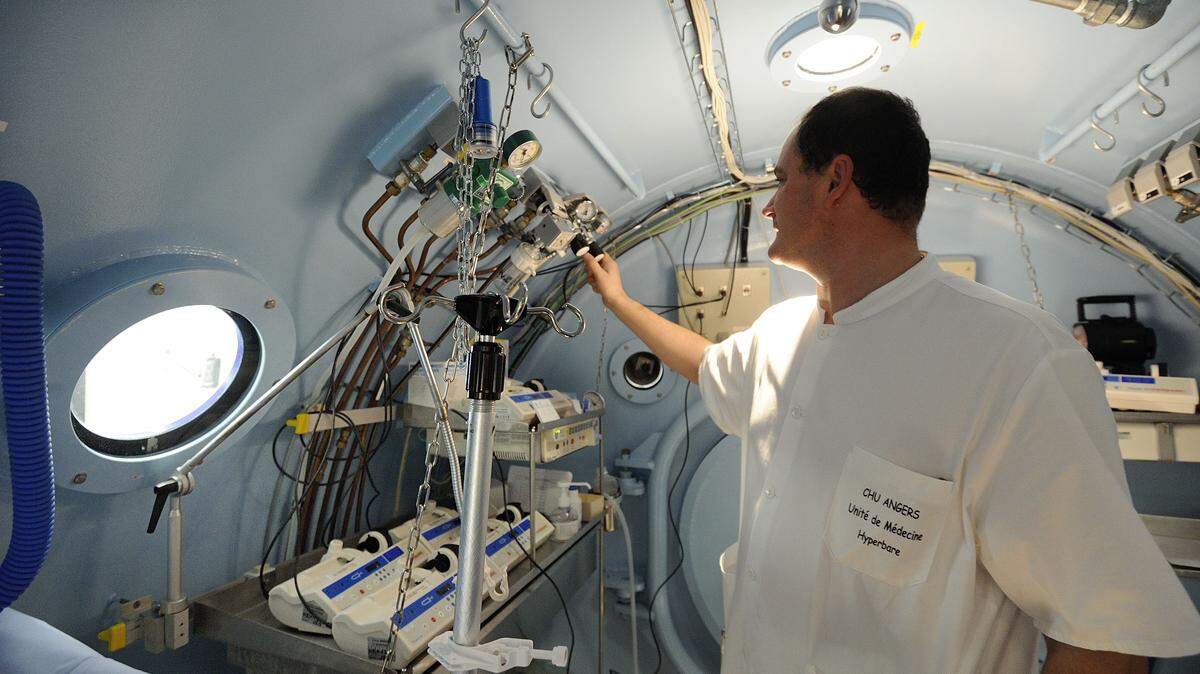
Hyperbaric oxygen therapy — pitched by celebrities, podcasters and even the U.S. health secretary as a cure-all — is exploding in popularity. A treatment once reserved for hospital burn units is now being sold in strip-mall wellness studios, and federal regulators are taking notice. The science behind it is much narrower than the marketing.
How Hyperbaric Oxygen Therapy Works
The treatment, known as HBOT, involves breathing 100% oxygen inside a pressurized chamber at up to two and a half times normal air pressure. Ordinary air is about 21% oxygen. The increased pressure helps the lungs absorb more oxygen and deliver it more efficiently to organs and tissues.
Sessions typically last 90 minutes to two hours. Some conditions require a single visit; others demand repeated sessions over days or weeks. The FDA began regulating hyperbaric chambers in 1976 and adopted formal rules for their use in 1979, according to Harvard Health Publishing.
What Hyperbaric Oxygen Therapy Is FDA-Approved to Treat
The FDA has approved HBOT for a defined set of serious medical conditions. They include wounds that resist healing, such as diabetic foot ulcers; severe infections and swelling; severe burns; frostbite; gas gangrene; carbon monoxide poisoning; decompression sickness; sudden unexplained hearing loss; severe anemia when transfusions cannot be used; and tissue damage from radiation treatment.
That list does not include most of what HBOT is now being marketed for: Alzheimer’s, autism, cancer, Lyme disease, anti-aging, ADHD or sleep apnea.
Why Hyperbaric Oxygen Therapy Is Suddenly Everywhere
The treatment is increasingly being offered in wellness businesses staffed by people without medical degrees — chiropractors, physical therapists and alternative-medicine practitioners — and promoted as a fix for everything from wrinkles to neurological disease, The Guardian reported in December 2025.
“It’s absolute anarchy and chaos,” John S. Peters, executive director of the Undersea and Hyperbaric Medical Society, told The Guardian. The professional group runs the U.S. accreditation program for hyperbaric facilities. Peters estimated unsafe chambers may now number in the tens of thousands nationwide.
The American Medical Association has recommended that every state require HBOT facilities to be UHMS-accredited. None currently do.
For more information: How to Tell if a Wellness Retreat Is Legit Before You Spend Thousands and Some Red Flags
Celebrity endorsements have poured fuel on the trend. Justin Bieber and Kendall Jenner have installed chambers in their homes. Joe Rogan has called the treatment “phenomenal for everything.” U.S. Health Secretary Robert F. Kennedy Jr. has also recommended it.
What the Safety Risks Really Are
In properly regulated medical settings, HBOT is considered safe. Complications are uncommon but can include ear and sinus pain, ruptured eardrums, temporary vision changes and, rarely, lung collapse. The therapy is not appropriate for people with a collapsed lung, certain lung diseases like COPD or emphysema, a fever or cold, or recent ear injuries.
Fire is the more catastrophic danger in unregulated settings. The Undersea and Hyperbaric Medical Society estimates seven people have died since 2009 from fires, suffocation or other adverse events inside HBOT chambers — a count experts expect to climb.
On Jan. 31, 5-year-old Thomas Cooper was killed when a fire ignited inside a chamber where he was being treated at the Oxford Center in Troy, Michigan. Family attorney James Harrington told NBC News that Thomas’ mother, Annie Cooper, burned her arm trying to reach her son as he died in front of her.
The Michigan attorney general alleges that on the day Thomas died, the facility had no physician or safety coordinator on site, and the HBOT technician was not properly trained, The Guardian reported.
“In the Michigan incident there was no physician oversight when they oriented the parents,” Peters told The Guardian. “There was no mention of risks and benefits and consent … the risk is death. It’s a total failure.”
In July, Walter Foxcroft, a physical therapist, was killed in a fire inside his own chamber.
What Alternatives Exist
Oxygen concentrators, medical devices that separate nitrogen from ambient air to deliver up to 95% pure oxygen, are portable and widely accessible for home use, though they are less effective than HBOT for specific approved conditions. Exercise With Oxygen Therapy, or EWOT, combines cardiovascular exercise with oxygen-enriched air, with mixed results.
Breathing techniques such as Pranayama, Buteyko or the Wim Hof method can improve oxygen utilization without equipment, though benefits are subtle and require consistent practice.
Oxygen feels intuitive — we need it to live, so more seems like it should be better. But hyperbaric chambers are complex medical devices, and in untrained hands, the consequences can be deadly.
Information regarding health and well-being is provided for awareness, education and general information. Health benefits of various medicines, diets, weight-loss strategies and foods are the opinions of the authors and/or those they interviewed, and there may be differing views on many of the topics covered, including evolving research, opinions, benefits and efficacy. This article is meant to inform the general reader and is not a substitute for medical advice from a physician or nutritional advice from a dietitian and/or nutritionist. Please refrain from starting, stopping or consuming any medication or regimen without the supervision of a trained physician. Please beware that in this emerging field of research, medications could cause adverse effects and problems not reported here. Please consult a doctor if you have chronic ailments or feel adverse side effects after starting a drug, nutrition or weight-loss regimen, and do not ingest, inject or otherwise use items to which you have sensitivities or may be allergic. Readers should consult a licensed health care professional who knows their personal medical history on matters relating to their health and well-being, including being aware of potential interactions with medications they are taking and conflicts with other wellness-related goals. Patients seeking treatment for weight loss should consult a physician trained in management of overweight or obesity.
This article was created by content specialists using various tools, including AI.