
Turn Your Patio Seating Area Into a Lush, Green Retreat You’ll Never Want to Leave
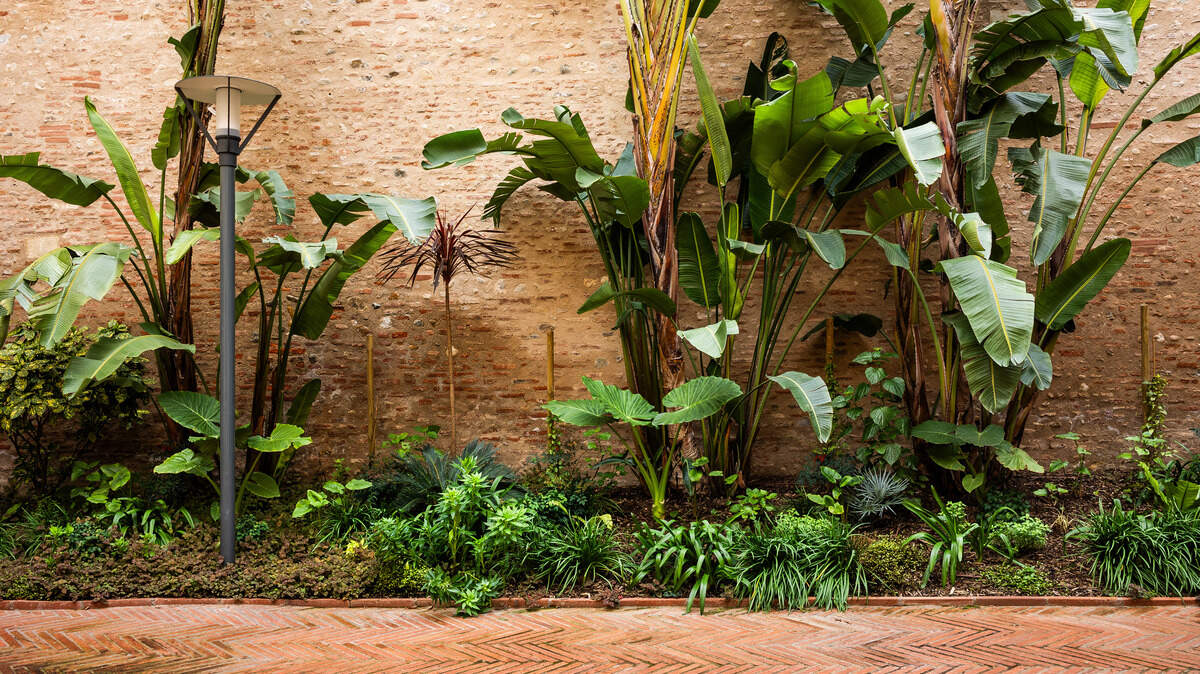
Your patio doesn’t have to be a slab of concrete with a couple of chairs on it. With a weekend’s worth of planning and the right mix of plants, lighting and structure, even a modest outdoor space can feel like a series of distinct rooms — a place to lounge, a place to dine and a quiet corner to disappear into with a book. The trick is borrowing the same layering principles designers use indoors and applying them outside.
Here are seven approaches worth stealing for your own backyard.
Use container groupings to build a garden room
Instead of scattering single pots around the patio, group plants in clusters of varying heights. Mix large statement pots — small trees or tall ornamental grasses work well — with medium plants and trailing varieties that spill over the edges. The result reads as a layered garden bed rather than a collection of containers, and it instantly defines the edges of a seating area.
Think of each cluster as a wall of a room. A tall planter at the corner of your sectional becomes a soft architectural anchor; a row of medium pots along the patio’s open edge starts to feel like a hedge.
Carve out a dedicated lounge area
Once the perimeter is defined, the next move is giving the space a clear purpose. Jessica Bennett with Better Homes & Gardens says: “Creating designated areas for relaxing is just as important as dining and entertaining spaces. Hang a hammock between trees or sturdy posts for the perfect nap spot. Consider adding a chaise lounge, a classic choice for sunbathing or reading. Increase comfort with a mix of outdoor pillows and cushions to invite relaxation and leisurely lounging.”
The point is that a backyard works hardest when it’s zoned. A dining table is one room. A hammock tucked between two posts is another. Treat them as separate spaces and the whole yard feels bigger.
Add vertical greenery to save floor space
Fences, walls and railings are some of the most underused real estate in any backyard. Trellises, wall planters and hanging pots turn those flat surfaces into planting zones, freeing up floor space for furniture. Climbing plants like jasmine or ivy soften hard patio edges quickly and create a more enclosed, garden-like feel without crowding the seating area.
Mix edible plants with ornamentals
There’s no rule that says your decorative containers can’t also be productive. Tucking herbs like basil, rosemary and mint into the same pots as ornamentals adds fragrance and texture, and small vegetables — cherry tomatoes, peppers, leaf lettuces — slot neatly into a layered design. The patio earns its keep as both a relaxing retreat and a working kitchen garden.
Layer your lighting
Lighting is where a lot of patios fall short. A single overhead fixture flattens the space; layered lighting transforms it. String lights, lanterns and solar path lights woven through plants change the mood entirely after dark, highlighting the texture of leaves and turning the patio into something that feels closer to a garden retreat than a backyard.
Bennett writes: “For dining and conversation areas, candlelight, wall-mounted downlights, or dimmable electric lamps create a cozy atmosphere. Illuminate steps and pathways for safety and use solar-powered or low-voltage lights to add visual interest and highlight pathways. Blend various lighting sources to transform your backyard into a captivating retreat at night.”
The takeaway: aim for three layers — ambient (string lights, lanterns), task (downlights over the dining area) and accent (uplighting in planters, path lights along edges).
Build privacy with panels and a hidden retreat
If your patio looks straight into a neighbor’s window, no amount of furniture is going to make it feel like an escape. That’s where privacy structures come in.
Kim Thibodeau of Paradise Restored in Portland, Oregon, tells The Spruce: “We always like to add a private retreat in the landscape as an escape for people to have some downtime. The pathway in front of the privacy screens leads to the retreat.”
A panel doesn’t have to be a fortress. Even a single decorative screen, paired with a small chair and a planter, can carve out a quiet corner that feels separate from the rest of the yard.
Use climbing plants as a living screen
For a softer privacy solution, train vines along trellises, pergolas or railings. The result is a natural screen that filters sightlines without the boxed-in feeling of a tall fence. It’s especially effective for patios that face streets or sit close to neighboring windows.
Create a green corner — and bring greenery overhead
Dedicate one corner of the patio to a dense cluster of plants. That gives the space a lush focal zone without overwhelming the rest of the layout, and it’s an easy weekend project: pick a corner, layer three to five containers, done.
Finally, look up. Hanging plants above seating areas or along a pergola pulls the eye upward and makes the patio feel more enclosed — the final wall of your outdoor room.
This article was created by content specialists using various tools, including AI.