This Giant Finned Octopus Ruled Cretaceous Oceans as Apex Predator. It’s a New Species
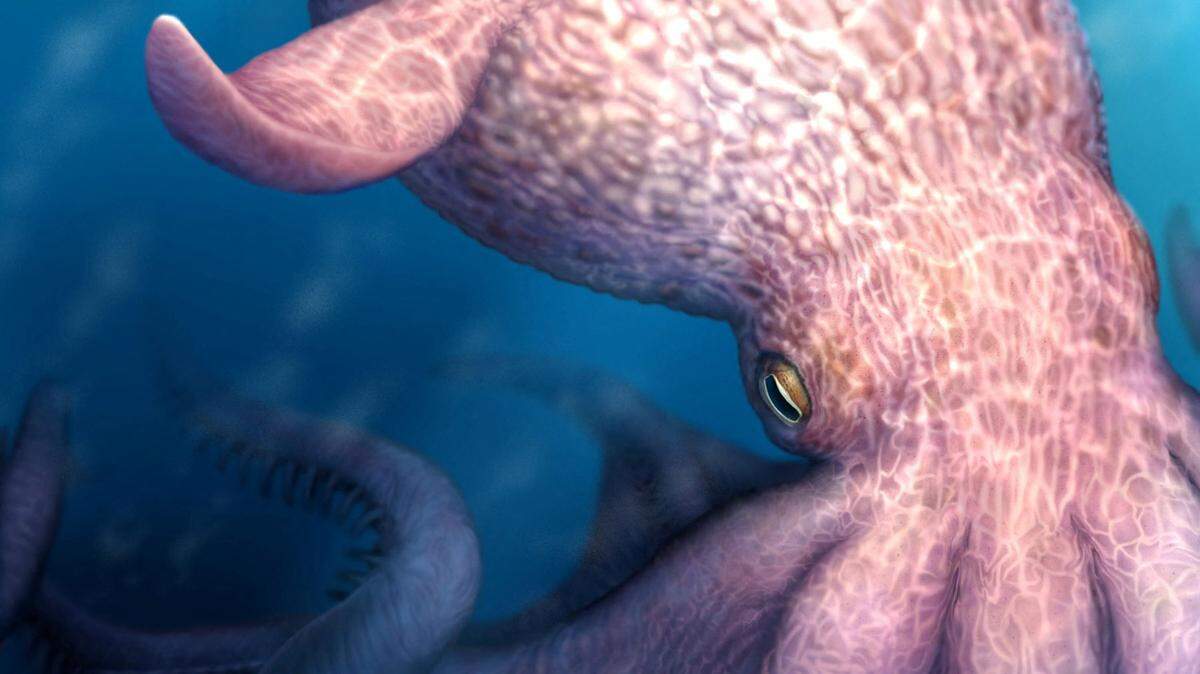
A newly identified finned octopus species is forcing scientists to rethink who really ruled the oceans during the age of dinosaurs.
Based on fossilized jaws uncovered in Japan and Canada, researchers have described a new species of massive octopus that may have acted as an apex predator in the Cretaceous seas — earning comparisons to a real-life kraken.
The findings were published Thursday, April 23 in the journal Science.
A Giant Octopus Unlike Anything Alive Today
The species, Nanaimoteuthis haggarti, is estimated to have reached lengths between 22 and 62 feet — making it larger than modern giant squid and among the biggest invertebrates ever discovered.
A related species, Nanaimoteuthis jeletzkyi, was smaller but still formidable, measuring up to 25 feet long.
Both species are part of what scientists now believe were enormous, finned octopuses that used paddle-like appendages on their heads to move through ancient oceans.
“These animals were remarkable… they represent what could be described as a real ‘Cretaceous Kraken,’” lead researcher Yasuhiro Iba told Reuters.
This Giant Octopus Didn’t Just Survive — It Dominated
These giant octopuses lived between roughly 100 million and 72 million years ago, sharing the seas with massive predators like mosasaurs, plesiosaurs and large sharks.
Until now, scientists believed those oceans were dominated almost entirely by vertebrate predators — fish, reptiles and eventually marine mammals.
This discovery challenges that idea.
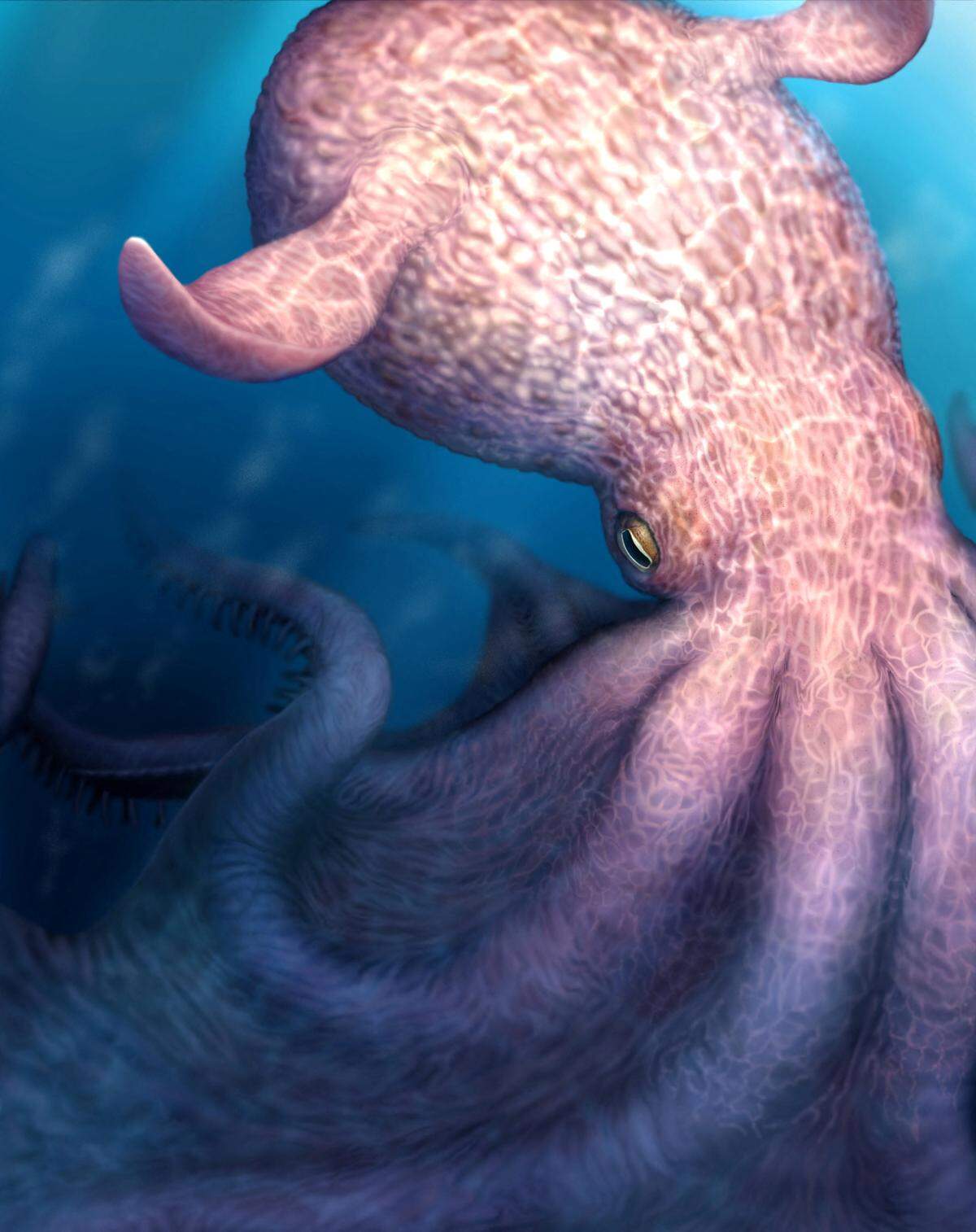
“Their existence changes how we view ancient oceans,” Iba said. “Instead of ecosystems dominated solely by vertebrate predators, we now see that giant invertebrates such as octopuses also occupied the very top of the food web.”
In other words, this wasn’t just a giant finned octopus — it may have been competing directly with the most feared hunters of its time.
The Giant Octopus Fossil That Unlocked Everything
The discovery is based on giant octopus fossil evidence — specifically, fossilized beaks (jaws), which are the only hard parts of an octopus’s body and the only parts likely to survive over millions of years.
Researchers reanalyzed 15 previously known specimens and identified 12 additional fossilized jaws embedded in rock. Those beaks told a powerful story.
They showed extreme wear — in some cases, about 10% of the jaw had been worn down — suggesting these animals were regularly crushing hard prey like shells and even bone.
“In the largest specimens, about 10% of the total jaw length appears to have been lost due to wear,” Iba said. “This is more severe than what is typically seen in modern octopuses… that feed on hard prey.”
That level of wear points to a predator built for powerful, repeated feeding on tough, sizable prey.
Intelligence Played a Role, Too
Like modern octopuses, these ancient giants were likely highly intelligent.
Scientists found uneven wear patterns on the fossilized jaws — suggesting lateralized behavior, similar to “handedness” in humans.
That kind of asymmetry hints at advanced hunting strategies, not just brute force. Combined with their size, flexible arms and crushing beaks, these octopuses were likely highly adaptable predators.
A Rare Glimpse Into a Hidden Past
Octopus fossils are notoriously rare because their bodies are mostly soft tissue. That’s what makes this discovery so significant.
Researchers used advanced 3D imaging techniques — including grinding tomography and AI-assisted reconstruction — to analyze the fossils, a process the team refers to as “digital fossil mining.”
“We were surprised. The fossil record of octopuses is extremely limited, so finding animals this large… was beyond our expectations,” Iba told CNN.
Rewriting the Story of Ancient Cretaceous Oceans
For decades, the narrative of prehistoric oceans has centered on massive vertebrates as the dominant predators.
This new species of finned octopus suggests a more complex picture — one where giant, intelligent invertebrates also held power at the top of the food chain.
And if one Cretaceous kraken has been uncovered, there may be more waiting to be found.
“Our goal is to reveal the hidden players of ancient ecosystems,” Iba said, “and build a much more complete picture of how past ecosystems really worked.”
This article was created by content specialists using various tools, including AI.
This story was originally published April 24, 2026 at 10:00 AM.