Inky the Octopus Pulled Off the Most Daring Aquarium Escape You’ve Probably Ever Heard
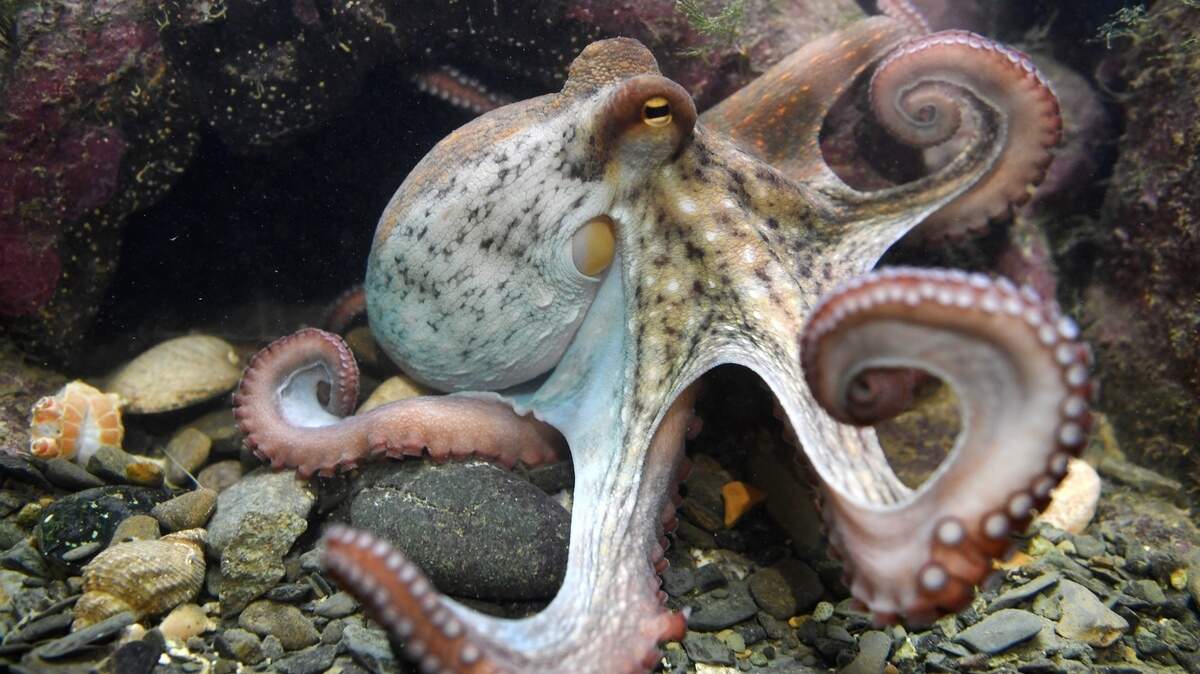
In 2016, a common New Zealand octopus named Inky became an unlikely global sensation — not for a trick or a viral video, but for breaking out of his tank at the National Aquarium of New Zealand and making a run (well, a crawl) for the ocean. His escape route was wild, his execution was flawless and he was never seen again. Nearly a decade later, Inky’s great getaway still has scientists buzzing about just how smart octopuses really are.
Inky the Octopus’ Nighttime Aquarium Escape in New Zealand
The whole thing started with one small mistake: someone left the lid of Inky’s tank slightly ajar. That was all the crafty cephalopod needed. Under the cover of darkness at the aquarium in Napier, Inky climbed out of his enclosure, crossed the aquarium floor and found a narrow drainpipe. He squeezed through it, traveling roughly 50 meters before reaching the waters of Hawke’s Bay on the east coast of New Zealand’s North Island.
Another theory suggested he squeezed into an open pipe at the top of his tank that led under the floor to the drain. Either way, the result was the same — by morning, Inky was gone, leaving behind his tankmate, Blotchy.
“When we came in the next morning and his tank was empty, I was really surprised,” said Rob Yarrell, national manager of the National Aquarium of New Zealand, per The Guardian. “The staff and I have been pretty sad. But then, this is Inky, and he’s always been a bit of a surprise octopus.”
“He managed to make his way to one of the drain holes that go back to the ocean, and off he went,” Yarrell said. “Didn’t even leave us a message.”
Why Inky the Octopus’ Brain Fascinates Cognitive Scientists
What makes Inky’s breakout so remarkable from a scientific perspective is the sheer chain of decisions it required. Recognizing an opening, navigating unfamiliar terrain outside the tank, identifying a viable route to the ocean and then physically compressing through a drainpipe — that is not a simple reflex. Researchers say it suggests spatial reasoning and real-time adaptability, which challenges longstanding assumptions about intelligence in invertebrates.
Alix Harvey, an aquarist at Britain’s Marine Biological Association, told The New York Times, “Octopuses are fantastic escape artists.”
“They have a complex brain, excellent eyesight, and research suggests they have an ability to learn and form mental maps,” she added.
Inky the Octopus’ Boneless Body Made the Impossible Possible
Inky’s escape was not just a mental achievement — it was a physical one. Octopuses have no bones at all, relying instead on a soft, muscular structure supported by an internal hydrostatic system. That means they can squeeze through openings sometimes no larger than their own eye. Their boneless design also allows them to crawl along the ocean floor, jet through water by expelling it rapidly from their bodies and reach into tight crevices to catch prey.
Jennifer Mather, a professor in the department of psychology at the University of Lethbridge who studies the behavior of octopus and squid, put it plainly per CBC News: “Octopuses are smart, highly exploratory, very strong and their body is completely compressible because they have no fixed bones. So the result is if they want to go someplace, they will.”
What Inky the Octopus’ Escape Reveals About Keeping Smart Animals in Captivity
Mather’s observations also raise a tougher question: what does it mean to confine an animal this intelligent and curious?
“Octopuses get bored,” said Mather. “I mean, here’s an animal that explores everything in its environment and takes everything apart if you give it a chance. A tank can be a pretty boring place.”
Aquarium officials admitted they were not completely shocked by the escape entirely.
“Octopuses are famous escape artists,” Yarrell said. “But Inky really tested the waters here. I don’t think he was unhappy with us, or lonely, as octopus are solitary creatures. But he is such a curious boy. He would want to know what’s happening on the outside. That’s just his personality.”
This article was created by content specialists using various tools, including AI.