New Spider Species Named After Pink Floyd Isn’t the Band’s First Animal Tribute
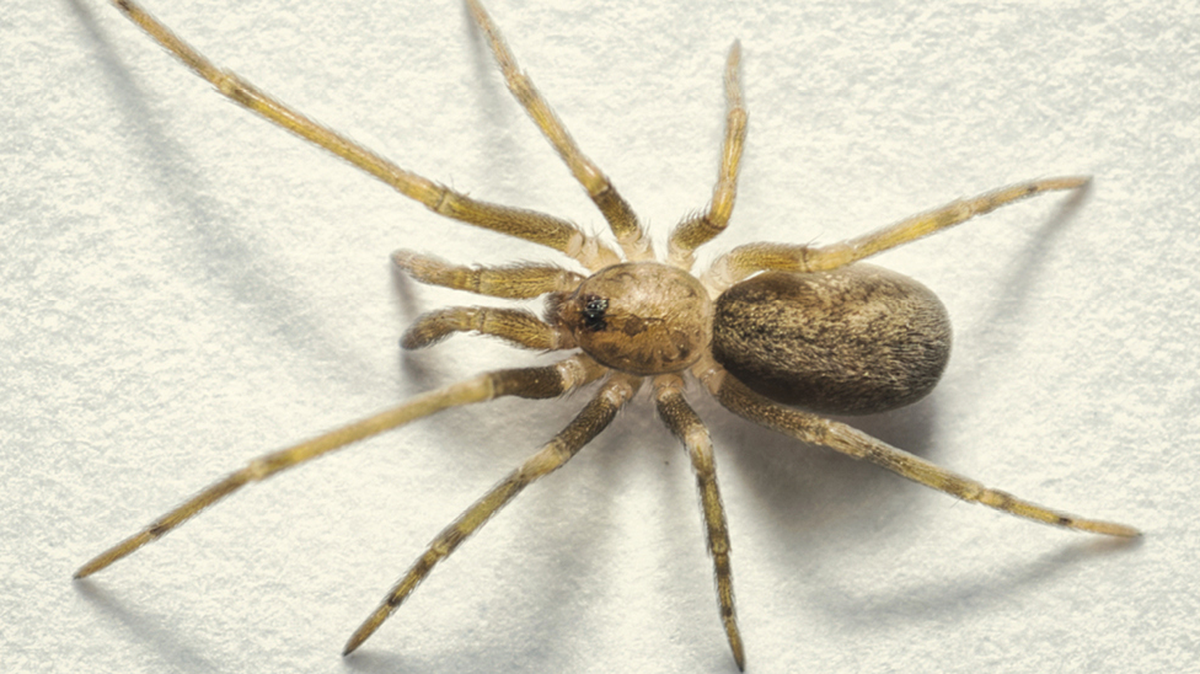
If you thought Pink Floyd’s The Wall had only just made its way into the animal kingdom, think again. The newly discovered spider Pikelinia floydmuraria may be the latest tribute to the legendary band — but it’s far from the first.
Long before this wall-dwelling arachnid showed up in Colombia, scientists had already honored Pink Floyd with another unforgettable creature: a snapping shrimp with a bright pink claw and a seriously loud personality.
Another Brick in the (Animal) Wall
The tiny spider, officially named Pikelinia floydmuraria, is a crevice weaver species discovered by researchers from South American institutions. Their study, published in the journal Zoosystematics and Evolution, reads like a love letter to classic rock.
The name itself is a perfect fit. “Muraria” comes from the Latin word for “wall,” referencing the spider’s tendency to live on building surfaces. Pair that with “Floyd,” and you’ve got a direct nod to The Wall — the band’s iconic 1979 album later adapted into a live-action/animated film directed by Alan Parker in 1982.
In a way, the spider has become the fourth rendition of “Another Brick on the Wall,” the three-part song series from the 1979 album.
Meet the Pink Floyd Shrimp
But the spider isn’t alone in carrying the Floyd legacy.
Back in 2017, scientists described a pistol shrimp species named Synalpheus pinkfloydi, and the inspiration was just as fitting. The shrimp sports an unusually large, bright pink claw — known as a “pistol” — which it uses to create powerful snapping sounds.
That vivid pink coloration immediately brought the band to mind. But for one of the study’s co-authors, the name was also deeply personal.
“I have been listening to Floyd since The Wall was released in 1979, when I was 14 years old,” researcher Sammy De Grave said in a statement, per the Washington Post.
“I’ve seen them play live several times since, including the Hyde Park reunion gig for Live 8 in 2005. The description of this new species of pistol shrimp was the perfect opportunity to finally give a nod to my favorite band,” he added.
The shrimp was formally described in the journal Zootaxa, making it one of the most colorful tributes — in more ways than one — to Pink Floyd in the natural world.
What Do We Know About the New Spider Species?
As for the spider, its discovery feels almost too on-the-nose.
Researchers found Pikelinia floydmuraria in Colombia, including in urban areas on building walls — and even clinging to a colorful mural in Quindío. A wall-dwelling spider named after The Wall, discovered on an actual piece of wall art.
Sometimes nature really does write its own punchlines.
The species is classified as synanthropic, meaning it thrives in human-made environments. It typically lives in cracks and crevices around buildings, quietly blending into urban spaces.
But don’t let its size fool you. At just 3–4 millimeters long, this sandy-brown spider is an efficient predator. It builds its webs near artificial light sources like streetlights, taking advantage of insects drawn to the glow.
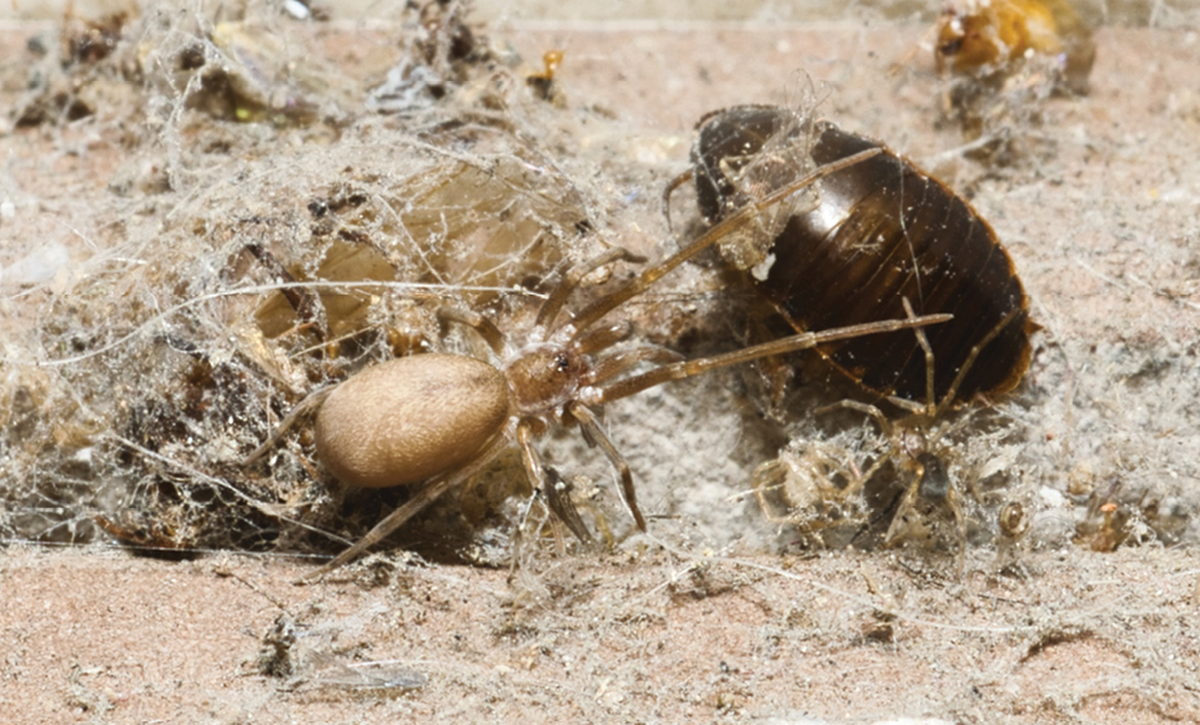
That strategy allows it to catch ants, flies, mosquitoes and beetles — sometimes capturing prey up to six times its own size. In doing so, it plays a small but meaningful role in controlling pest populations, including disease-carrying insects.
An Evolutionary Mystery Worthy of a Concept Album
Beyond its rock-inspired name, Pikelinia floydmuraria presents a real scientific puzzle.
It’s closely related to Pikelinia fasciata, a species found on the Galápagos Islands. The two share nearly identical morphology and matching male reproductive structures — despite being separated by more than 1,000 miles, the Pacific Ocean and the Andes Mountains.
How two nearly identical species ended up so far apart remains a mystery — the kind of sprawling, unanswered question that feels fitting for a band known for concept albums.
The discovery also helped scientists fully describe and illustrate the female genitalia of P. fasciata for the first time, expanding knowledge of the genus as a whole.
Researchers recommend further DNA barcoding, molecular studies and dietary analysis to better understand the spider’s origins and ecological role.
For now, though, one thing is clear: from a pink-clawed pistol shrimp to a wall-dwelling spider, Pink Floyd’s influence has officially crossed into the natural world — one species at a time.
This article was created by content specialists using various tools, including AI.