Why Do Some Cockroaches Eat Each Other’s Wings? Everything You Need to Know About the Ritual
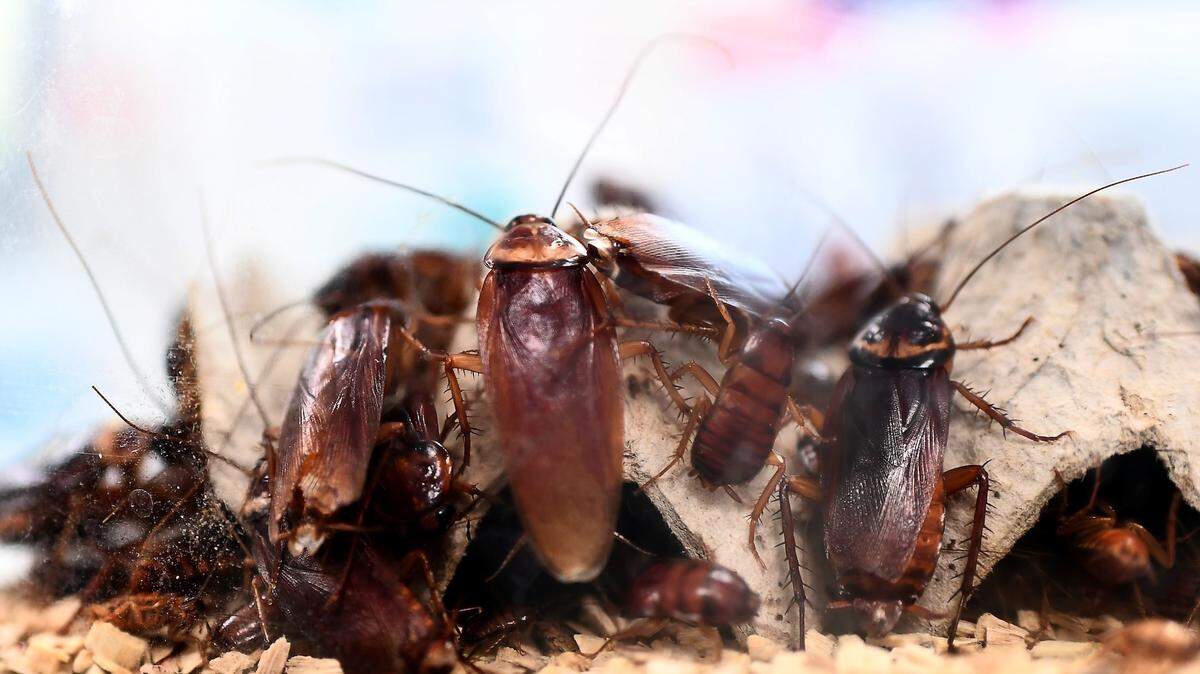
Pair bonding — two animals forming an exclusive, long-term partnership — is almost unheard of in insects. Now scientists say they may have found it in a cockroach, and the way these roaches seal the deal involves eating each other’s wings.
A study published in Royal Society Open Science reports that Salganea taiwanensis, a wood-eating cockroach, forms what researchers describe as pair bonds after the male and female consume each other’s wings — then fiercely defends the partnership against outsiders.
How Cockroach Pair Bonding Works
It starts when a male and female burrow into rotting wood and carve out a small chamber. “The male and the female will burrow into the rotting wood and form a little gallery,” explained Nate Lo, an evolutionary biologist at the University of Sydney and an author of the study.
Over the course of a few hours, the two chew off and eat each other’s wings.
“The female eat[s] the male’s wings and the male eats [the] female’s wings,” said Haruka Osaki, a behavioral ecologist at the Museum of Nature and Human Activities in Hyogo, Japan, per NPR. “And when this one-time meal is complete, it means they formed a pair.”
Only then do the cockroaches begin nesting and mating.
“The wings, they’re a protein source,” Lo said, “and this seems to set them up for some kind of romance into the future.”
Pair bonding “just means that two individual organisms will spend an extended period of time with each other and will exclude other individuals from the bond,” Lo said. “The two individuals know that the other member has their back.”
“But we very rarely see it in invertebrates, so things like insects or crustaceans or other creepy crawlies,” he added.
Why Bonded Cockroaches Attack Intruders
To study the behavior further, researchers collected roaches from Okinawa. “Just go to forest and find a log on the ground and chop it with my hatchet,” Osaki said. “So I destroy their house.”
They paired off the roaches in artificial nest boxes. Not all pairs ate each other’s wings. Then an intruder cockroach was introduced to each pair.
The results surprised the researchers. Roaches that still had their wings showed no aggression toward the intruder. But the roaches that had eaten each other’s wings attacked.
“Both the male and the female attack,” Lo said. “They also wiggle their butts and hit them with their butts. They’re quite aggressive little creatures.”
Lo said the intruder was “very worried” and was “trying to escape.”
“So that suggests they don’t want to have a third wheel. It’s like they’ve got this pact,” he continued.
After consuming each other’s wings, the cockroaches become hostile toward other roaches while remaining accepting only of their specific partner. Being able to recognize and treat individuals differently can improve their chances of surviving and successfully reproducing.
What This Reveals About Insect Intelligence
The discovery points to something scientists did not expect from creatures with such small brains.
“Invertebrates probably are more complex and have some form of cognition, more than we might expect,” Lo said. “Even though they’ve got tiny brains, they can develop quite human-like characteristics.”
Lo also noted that the pairs forming bonds had spent an extra 24 hours together before the experiment — during which they ate each other’s wings — compared to pairs that had not bonded. However, he said, “We’re not sure about how important that is,” and added that more experiments are planned.
These cockroaches survive on decaying wood — a tough, low-nutrient food source. About 20 percent of their wood-digesting enzyme activity happens in the hindgut, often with help from symbiotic microbes that break down cellulose. The cooperative bond between partners may help them thrive on such a demanding diet.
This article was created by content specialists using various tools, including AI.