Meet Fatou, the World’s Oldest Gorilla, Celebrating Her 69th Birthday at Berlin Zoo
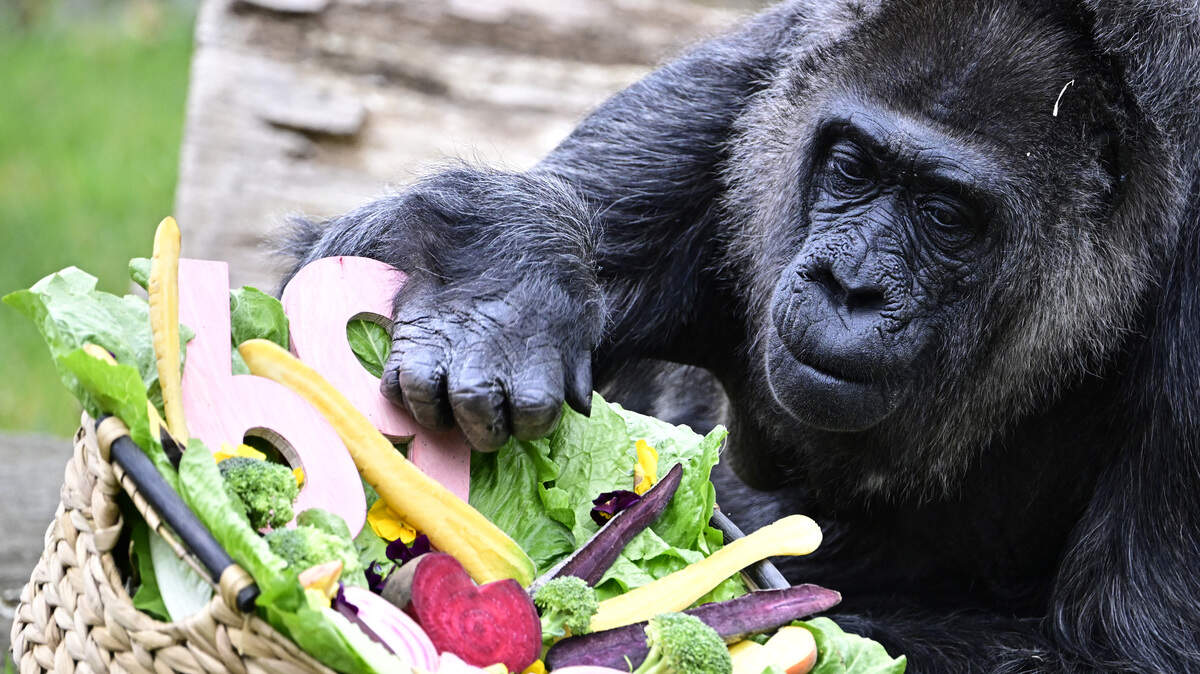
Fatou, the world’s oldest gorilla living in captivity, rang in her 69th birthday with a celebratory spread fit for a beloved elder — no cake required.
Staff at the Berlin Zoo marked the occasion on April 13 with a special meal tailored to Fatou’s dietary needs, including cherry tomatoes, beets, leeks and lettuce, per AP. Cake was off the table due to health considerations for the aging primate.
At 69, Fatou has far outlived most members of her species. In the wild, western lowland gorillas typically live 35 to 40 years, while individuals in captivity can live longer. Her remarkable longevity has made her not just a record holder but a cherished figure at one of Europe’s most well-known zoos.
A Life That Spans Decades
Fatou is a western lowland gorilla believed to have been born in 1957 in West Africa. Her exact birthdate is unknown, but April 13 has been designated as her official birthday — a tradition the zoo has maintained to honor its most senior resident.
Her path to Berlin is a story rooted in a very different era of wildlife handling. According to Guinness World Records, Fatou arrived in Europe in 1959 via Marseille, France, after reportedly being taken from the wild by a French sailor and later sold to the zoo.
She has lived at the Berlin Zoo ever since, making her its longest-residing animal. That distinction grew even more notable in 2024, when Fatou became the zoo’s oldest resident following the death of Ingo the flamingo, which had lived at the zoo since 1955 and was believed to be at least 75 years old.
A Matriarch With a Living Legacy
Fatou’s story extends well beyond her own survival. She gave birth to a daughter, Dufte, in 1974 — the first gorilla born at the Berlin Zoo. Although Dufte died in 2001, Fatou’s family line has endured. She has living descendants, including her granddaughter M’penzi and at least three great-great-great-grandchildren as of 2026.
That multi-generational legacy adds another layer to Fatou’s significance. She is not only the world’s oldest captive gorilla but also a matriarch whose lineage continues to thrive.
Aging Gracefully With Dedicated Care
The years have taken their toll, as they do on any living creature approaching seven decades. Fatou has lost her teeth and experiences arthritis and hearing loss. She generally avoids interaction with other gorillas.
Due to her age, Fatou lives in a separate enclosure and receives dedicated care from zoo staff. Her daily routine is managed with attention to her comfort and well-being, reflecting the close bond between the gorilla and the team that looks after her.
Zoo director Andreas Knieriem said in a previous statement:
“We are very proud to have been able to accommodate an animal with us now for more than half a century. We are pleased that Fatou is in such good health despite her age.”
A Living Piece of History
Fatou’s presence at the Berlin Zoo stretches back more than 65 years, making her a living connection to a bygone era. She arrived the same decade the Berlin Wall went up and has remained a constant through generations of visitors, caregivers and change.
Her birthday celebration, modest as it may seem — a plate of vegetables rather than a towering cake — reflects the thoughtful care that has helped her reach an age few gorillas ever see. For the staff at the Berlin Zoo, each year with Fatou is one worth marking.
And for the millions of people who have visited her over the decades, she remains a quiet reminder of how extraordinary a single life can be.
This article was created by content specialists using various tools, including AI.