
Two Giant Pandas at Smithsonian’s National Zoo Are Showing Signs of a Budding Romance
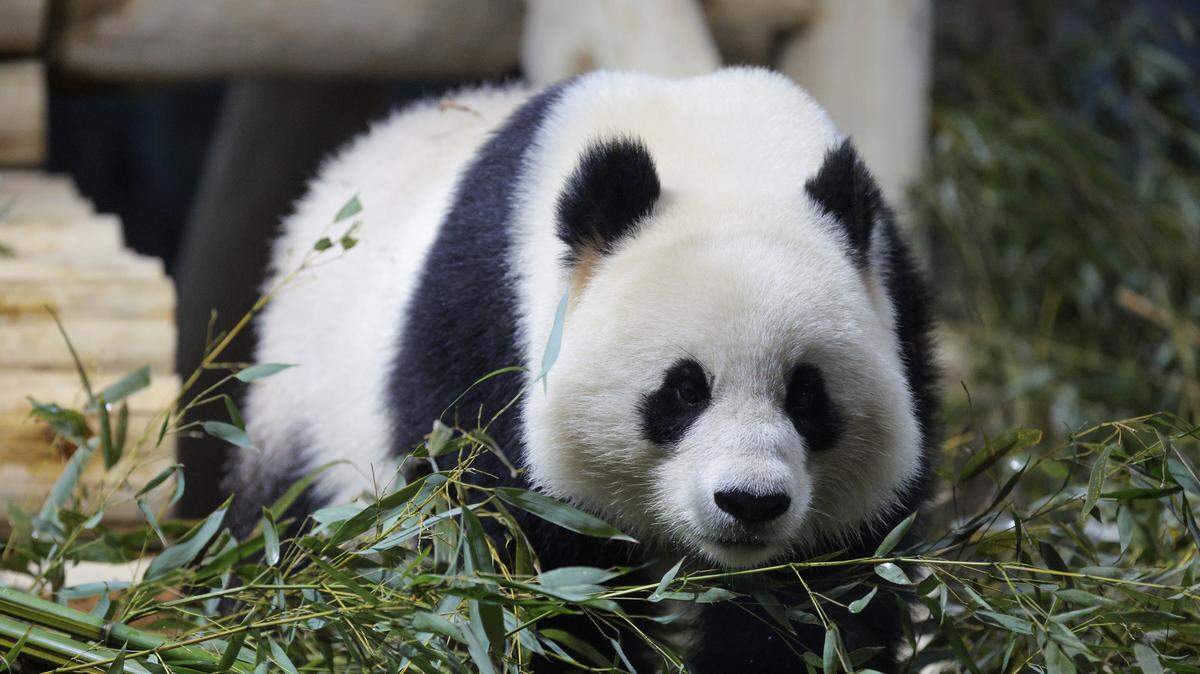
Of all the challenges in wildlife conservation, few are as biologically dramatic as breeding giant pandas.
The entire endeavor hinges on a vanishingly small window — just 48 to 72 hours of fertility per year for females — making every behavioral signal, every hormone spike and every scent mark a data point that could determine whether a new cub enters the world.
At the Smithsonian’s National Zoo in Washington, D.C., zookeepers and scientists are closely monitoring two young giant pandas, Bao Li and Qing Bao, who are displaying early courtship behaviors that could eventually lead to something the zoo hasn’t achieved in decades: a naturally conceived panda birth.
Giant Pandas Giving Birth Naturally Is a Rare Event
The stakes behind that goal are grounded in hard data. A 2017 study published in Biological Conservation found that natural mating yields a 60.7% birth rate, compared to just 18.5% for artificial insemination alone.
All of the Smithsonian zoo’s panda cubs were born through artificial insemination, making a natural conception a significant scientific milestone if it happens.
But Bao Li and Qing Bao have not reached breeding age yet.
Both pandas are 4 years old — roughly equivalent to early human teens. Giant pandas reach adulthood and begin breeding between ages 5 and 7, with females maturing faster than males.
Zookeepers are not rushing to put them together.
What Does Flirting Look Like for Giant Pandas?
Even so, the behavioral signs are promising.
Bao Li is currently in “rut,” the male breeding period, which typically lasts November through May. During this time, he power-walks, scent marks frequently, rolls around in front of a shared “howdy” window and vocalizes loudly to get Qing Bao’s attention.
Giant pandas are naturally solitary and prefer to live alone, so Bao Li and Qing Bao occupy separate but neighboring habitats. They interact through the “howdy” windows — mesh screens built into a shared fenceline that allow them to see, smell and vocalize with each other.
Qing Bao has become increasingly active in return, wandering her habitat, scent marking, climbing trees and vocalizing back at Bao Li.
“There’s a lot of flirting going on right now,” Mariel Lally, one of the giant pandas’ zookeepers, told TODAY.
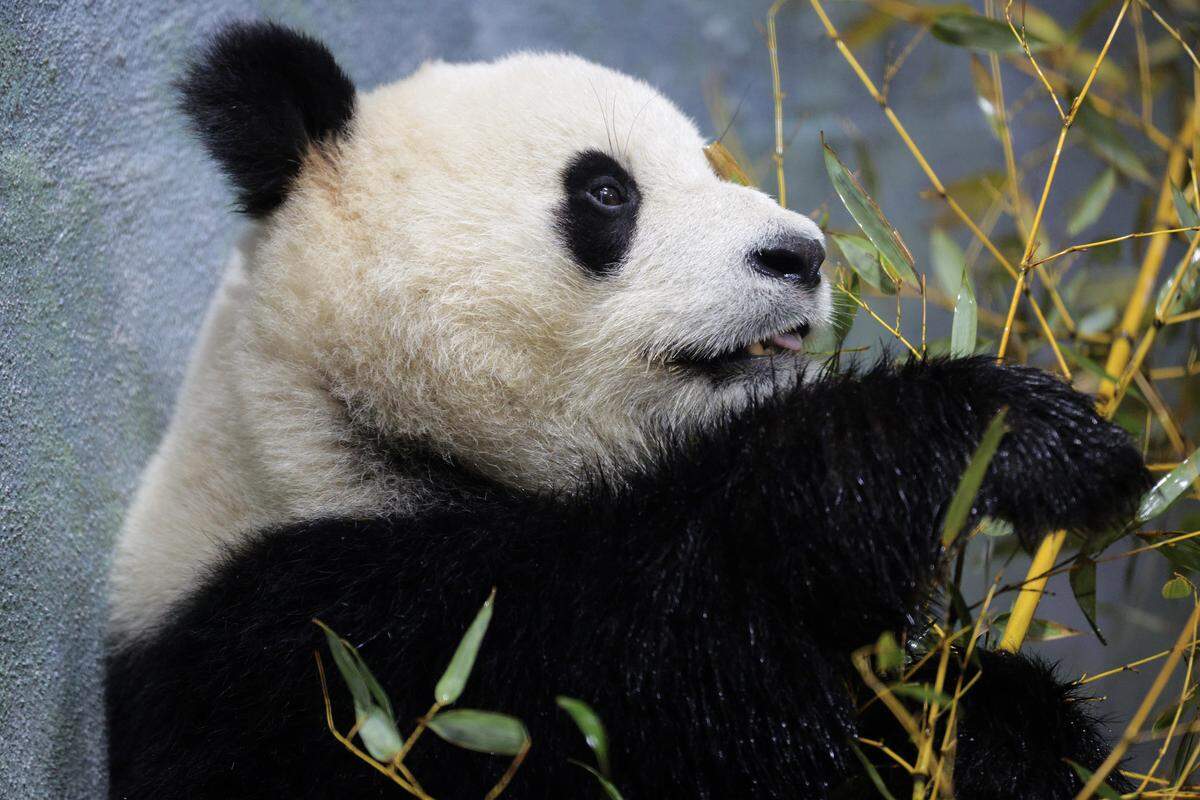
“Bao Li, he is amped up. His testosterone is very high and he is very active. He’s scent marking a lot. He’s looking for the ladies. Qing Bao has become very active. She started to look for Bao Li. She usually never wants anything to do with Bao Li, and she’s been vocalizing at him,” Lally added.
Zookeepers Know When Giant Pandas Are Ready
Scent marking is how pandas communicate in the wild. A gland under their tail secretes an oily substance that reveals the panda’s age, sex, fertility and more.
Zookeepers listen for “bleating” — a high-pitched sound similar to a sheep’s “baa” — as the key sign that Qing Bao has reached peak estrus.
Last year in 2025, Qing Bao experienced her first estrus cycle in March and April, followed by her first pseudopregnancy in August and September.
In February 2026, zookeepers noticed physical changes in Qing Bao indicating breeding season was approaching. As of the most recent update, she had not yet reached peak estrus.
Follow Bao Li and Qing Bao on National Zoo’s Panda Cam
The zoo’s giant panda conservation program dates back to the 1970s, when China gifted pandas named Ling-Ling and Hsing-Hsing to the U.S. following President Richard Nixon’s visit to the country.
In 2023, the zoo returned its last three pandas to China. Bao Li and Qing Bao arrived the following year in 2024 and are expected to live at the zoo for 10 years.
“We would love to be able to have a natural birth from Bao Li and Qing Bao,” Lally added.
Given the data — a more than threefold difference in birth rates between natural mating and artificial insemination — so would the science.
You can see more of Bao Li and Qing Bao on the Smithsonian’s National Zoo Giant Panda cam, which airs live every day from 7 a.m. to 7 p.m. ET.
This article was created by content specialists using various tools, including AI.