What Really Happens When You Play Green Noise At Bedtime and During The Night
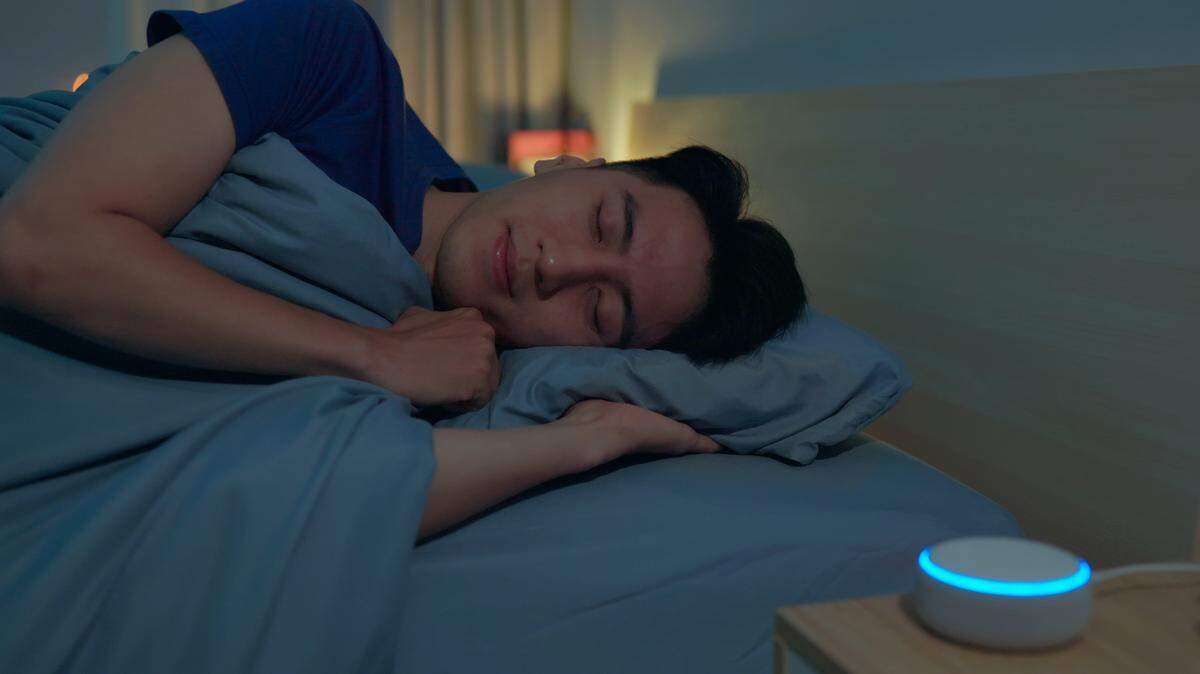
You’ve probably seen it by now. A soothing loop of static-meets-rainfall with text overlay promising the deepest sleep of your life. Maybe you saved it. Maybe you’ve already been falling asleep to it for weeks. Either way, green noise has officially entered the wellness conversation, and it’s worth asking whether the hype holds up.
The #greennoise hashtag has surpassed 1.1 million views on social media, and brands like Oura, Calm and BetterSleep are actively promoting green noise features. But here’s the part most sleep influencers leave out: a recent study suggests this nightly habit might actually be working against your rest.
What Green Noise Actually Is
Green noise is a mid-frequency sound profile centered around 500 Hz that mimics nature sounds like ocean waves, gentle rain and rustling leaves. It sits between white noise, which distributes all frequencies equally, and brown noise, which leans into a heavier low end.
One important caveat: green noise isn’t an official scientific term. It’s a label adopted by sleep apps and sound machine brands, which is partly why the science hasn’t caught up to the marketing.
The Research Gap Nobody’s Talking About
There are currently zero controlled studies testing green noise specifically for sleep, per the Sleep Foundation. That viral video with 400K likes? Not backed by a single controlled trial.
The sounds green noise mimics do have some research behind them, though. A 2017 fMRI study at Brighton and Sussex Medical School found that natural sounds activated the parasympathetic “rest and digest” response in the brain. So the appeal isn’t totally baseless. It’s just not specific to green noise as a defined category.
The 2026 Study That Changes the Conversation
Here’s the finding that should genuinely shift how you use sound at night. A February 2026 Penn Medicine study found that broadband noise played at 50 dB reduced REM sleep by nearly 19 minutes per night. That applies to all broadband sound colors, green noise included.
Nineteen fewer minutes of REM sleep is significant. REM is when your brain consolidates memories, processes emotions and supports cognitive function. Researchers also cautioned that all-night broadband noise may be especially harmful to children, who spend more time in REM sleep than adults.
That “play it all night” approach so many people swear by? It might be doing more harm than good.
Who Green Noise Can Still Help
Green noise isn’t useless. It just needs better guardrails. It could help city dwellers or shift workers dealing with environmental noise disruptions. It may also work for people with racing thoughts or nighttime anxiety who need something gentle to anchor their attention. And if you’ve tried white noise but found it too harsh, green noise’s softer profile could be a better fit.
What to Do Tonight
The Penn Medicine study gives us a practical playbook:
- Set a 30 to 60-minute timer instead of playing sound all night.
- Keep the volume below 50 dB. If you have to raise your voice over it, turn it down.
- Place the device across the room, not on your nightstand.
- Consider earplugs instead. They outperformed sound machines for blocking environmental noise in the same study.
Green noise isn’t the miracle sleep hack the internet promised, but it’s not worthless either. The key is treating it as a wind-down tool, not an all-night companion. Set a timer, lower the volume and let your brain do the rest on its own.
This article was created by content specialists using various tools, including AI.