Sunken Danish Warship Found 225 Years After Battle of Copenhagen — Why Excavation Is Urgent
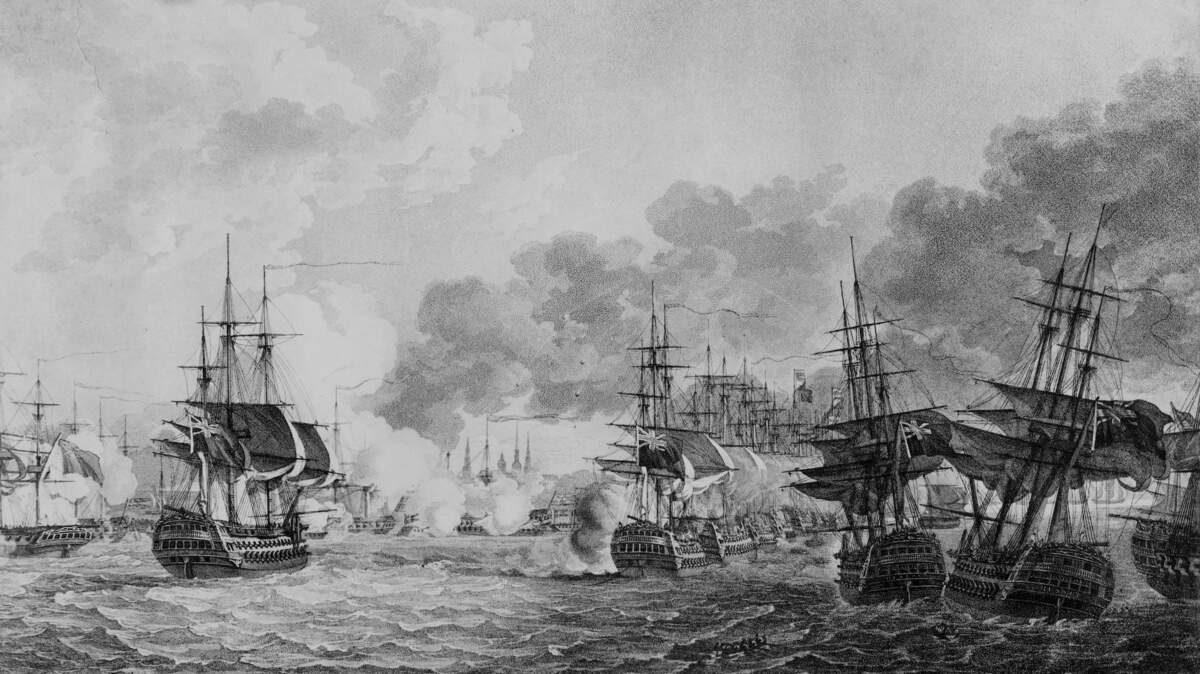
Marine archaeologists have located the wreck of the Dannebroge, a Danish warship that exploded and sank during a battle with a British fleet in 1801, on the seabed of Copenhagen Harbor.
The ship lay hidden for more than two centuries about 15 meters — roughly 50 feet — underwater in thick sediment and virtually zero visibility. The find was announced 225 years to the day since the Battle of Copenhagen on April 2, 1801 — the same day the warship sank.
Specialists from the Danish Viking Ship Museum, which has national responsibility for maritime archaeology in eastern Denmark, are conducting the excavation.
The Dannebroge Was a Flagship Lost in Battle
The Dannebroge served as the flagship of the Danish-Norwegian fleet and was central to Denmark’s defensive line during the Battle of Copenhagen. On April 2, 1801, a British fleet led by Admiral Sir Horatio Nelson attacked Denmark as part of broader efforts to break the League of Armed Neutrality — an alliance of Denmark, Russia, Sweden and Prussia that threatened Britain’s maritime interests during the War of the Second Coalition.
The clash lasted several hours in the shallow anchorage outside Copenhagen. Despite heavy resistance, the smaller Danish force was outgunned and outnumbered by the British ships. The Dannebroge was heavily bombarded, caught fire and eventually exploded, sending debris across the harbor and sinking with most of its crew aboard.
How Experts Were Able to Confirm the Missing Ship’s Identity
Wooden structural elements uncovered so far correspond with historic drawings of the Dannebroge, and dendrochronological dating matches the vessel’s 1772 construction year.
“We have no difficulty interpreting this as the remains of a large wooden warship. The dimensions of the timbers correspond exactly to the drawings of the ship that survive, and the dendrochronological dating matches the vessel’s year of construction in 1772. So we are stating this with a degree of certainty that borders on absolute,” Otto Uldum said in a museum press release.
Artifacts and Human Remains Were Found on Board the Dannebroge
Investigators have already recovered two cannons, uniform fragments, shoes, bottles, clay pipes, insignia and other personal items from the wreck site.
“Museum collections most often contain the fine things. Officers’ uniforms and prestigious objects. We have found a number of personal belongings. Shoes and fragments of clothing, and various small items the sailors would have carried with them—clay pipes, uniform insignia, and weapons. And we have also found remains of one of the 19 people who are listed as missing,” Uldum said.
These items provide a direct connection to the ordinary sailors who fought and died aboard the Dannebroge, not just the officers whose belongings typically survive in museum collections.
Among the most striking discoveries are human remains, including bones and a lower jaw, possibly belonging to one of the crew members who were never accounted for after the battle.
“We have found a lower jaw that is without doubt human, as well as several other bones, including ribs, which could very well be human. We are far from finished sorting and analyzing the material, but we are bringing everything up,” Uldum explained.
After the battle, lists were compiled recording the numbers of dead, wounded and missing. Those records show that 19 men from the crew of 357 were never found, neither dead nor alive. All other fatalities were recovered and recorded. The lists show that 53 people died on board the Dannebroge, while three wounded men later died at Søkvæsthuset — the naval hospital. Forty-eight men are listed as “wounded, but still alive” and 19 are recorded as “missing without further information.”
The discovery raises the possibility that some of those 19 missing sailors may finally be accounted for, more than two centuries after the battle.
Archaeologists Are Racing Against Development to Excavate the Ship
The excavation is urgent because the site will be transformed by construction of Lynetteholm, a large new housing and infrastructure project in Copenhagen Harbor. Divers operate in near-darkness amid silt and scattered cannonballs, progressing meter by meter to carefully retrieve what remains of the ship and its contents.
Historians know the Battle of Copenhagen from texts and paintings, but this is one of the first times archaeologists can physically study the battlefield from the water. Artifacts and remains could help researchers understand the daily lives, roles and fates of the sailors — moving beyond broad historical accounts to the personal level.
The battle remains a defining moment in Danish history and helped cement Nelson’s reputation. It is also linked to the phrase “to turn a blind eye,” attributed to Nelson during the battle when he purportedly ignored a withdrawal signal.
This article was created by content specialists using various tools, including AI.