Ancient Egyptians Left Behind 13,000 Notes About Their Everyday Lives on Pottery
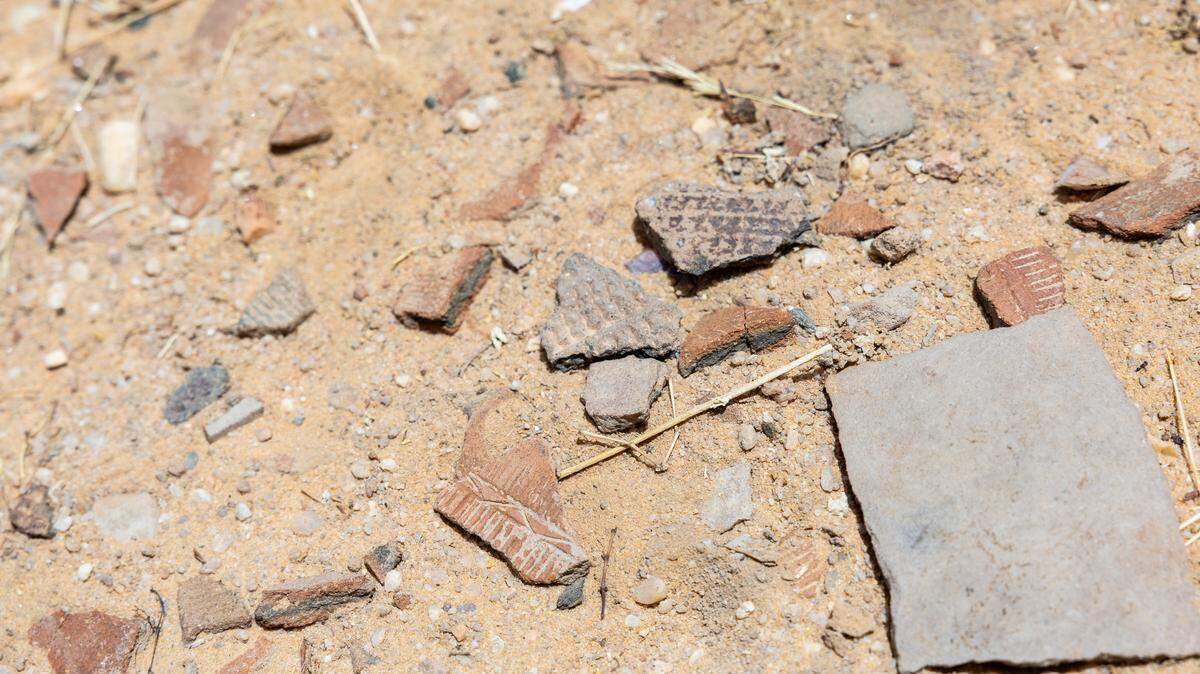
Imagine holding a piece of broken pottery inscribed by an ancient Egyptian student practicing their letters — or a tax collector tallying grain deliveries along the Nile.
Now imagine finding 43,000 such fragments, each one a small window into a world that flourished centuries before and after the time of Christ.
That remarkable trove is exactly what archaeologists have been unearthing at the ancient city of Athribis, where an Egyptian-German mission recently uncovered approximately 13,000 of those inscribed pottery fragments, known as ostraca.
The find brings the total number of ostraca discovered at the site to about 43,000 since 2005 — making it the largest collection from a single site in Egypt.
More than 42,000 of those pieces were found over just the past eight years of excavation, a pace that astonishes even the researchers leading the work.
More Than 1,000 Years of Ancient History
What makes this collection so extraordinary is its scope. The texts span over 1,000 years of history.
The oldest are tax receipts written in Demotic script dating to the 3rd century BC. The most recent are jar labels written in Arabic from the 9th–11th centuries AD.
Between those bookends lies an astonishing range of human activity scratched onto broken pottery.
Tax payments and receipts, delivery orders and accounts, administrative lists, student writing exercises, religious hymns and prayers, temple records and even astrology and zodiac-themed texts — more than 130 examples of those found so far.
“The ostraca show us an astonishing variety of everyday situations,” archaeologist Christian Leitz, director of the Egyptology department of the University of Tübingen in Germany, said in a statement.
“We find tax lists and deliveries, along with short notes about everyday activities, exercises by schoolchildren, religious texts, and priestly certificates attesting the quality of sacrificial animals,” he added.
The Ancient City of Athribis
Athribis sits about 10 kilometers west of the Nile River, opposite the ancient metropolis of Akhmim, in what is now Nagaa El-Sheikh Hamad — roughly 7 km west of the modern city of Sohag.
The city was part of the ninth administrative district of Upper Egypt, with its regional capital at nearby Akhmim.
The site was historically a worship center for the lioness goddess Repyt, who formed a religious triad with the fertility god Min of Akhmim and the child deity Kolanthes.
That religious significance helps explain the presence of so many priestly and temple-related inscriptions among the fragments.
The ostraca were written in a striking variety of scripts. Demotic accounts for 60–75% of the collection, making it the most common. Greek follows at 15–30%.
Smaller portions appear in Hieratic script (~1.5%), Hieroglyphic script (~0.25%), Coptic (~0.2%) and Arabic (~0.1%). Some fragments feature drawings or geometric designs rather than text.
Piecing Together Everyday Life in Ancient Egypt
The joint mission between the University of Tübingen and the Egyptian Ministry of Tourism and Antiquities continues to yield new material.
An international team organized by Professor Sandra Lippert in Paris — working under the project name “Ostraca d’Athribis” — has been analyzing the inscriptions and ceramics since the 2018–2019 excavation season.
Their goal is to better understand the economic, administrative and religious life of the ancient settlement.
“This everyday content gives us a direct insight into the lives of the people of Athribis and makes the ostraca an important source for a comprehensive social history of the region,” Leitz added.
The second most productive site for ostraca in Egypt is Deir el-Medina, a former workers’ village in the Valley of the Kings — but Athribis now stands far ahead.
“We expect to find many more ostraca. The high and ever-growing number of objects is encouraging, but it also presents us with challenges,” Leitz said.
For anyone captivated by how ordinary people lived in the ancient world, those challenges promise even more revelations to come.
This article was created by content specialists using various tools, including AI.