Scientists Discover Giant Spiderweb That’s 1,140 Square Feet Long in Sulfur Cave
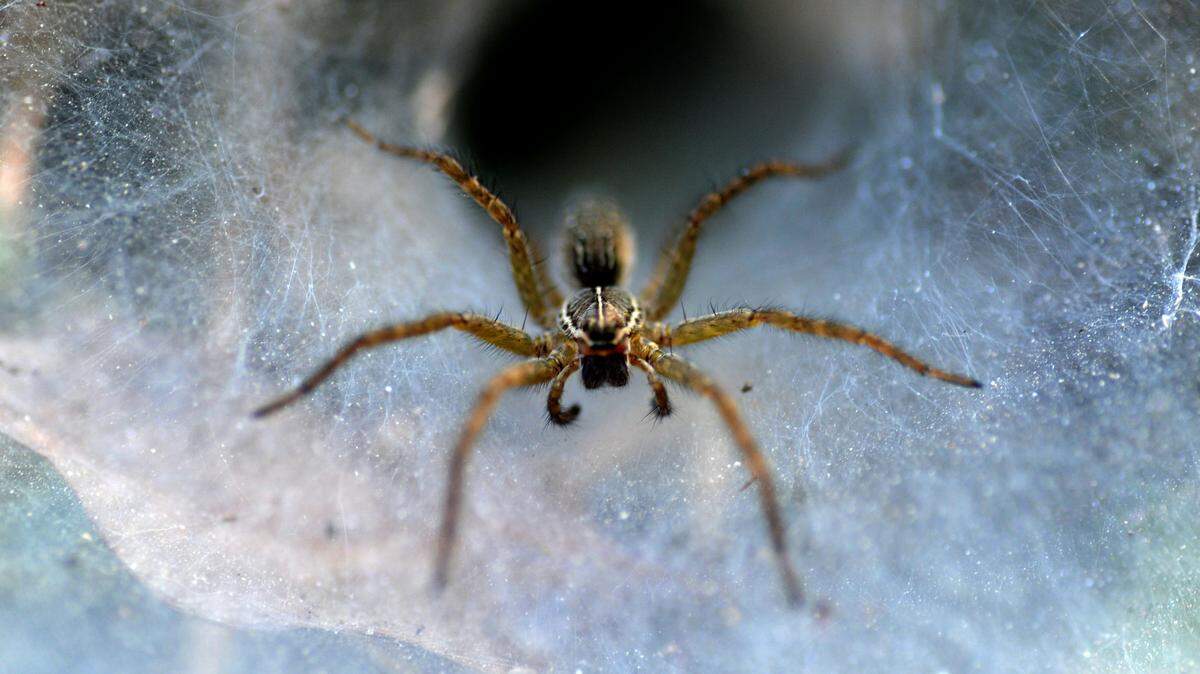
If you thought that big spiderweb in your garage was frightening, you’re not ready for this.
Researchers say they’ve uncovered what might be the world’s biggest spiderweb — a 106-square-meter (1,140-square-foot) silk mega-structure stretching across the border of Greece and Albania.
For reference, that’s roughly half the size of a tennis court. And it’s home to an estimated 111,000 spiders, all living under the same roof (or, in this case, webbing).
Inside the Sulfur Cave Spiderweb
The massive web was first observed in 2021 by cavers from the Czech Speleological Society exploring Vromoner Canyon, which straddles the Greek-Albanian border.
The web sits inside a section called the Sulfur Cave, about 50 meters (164 feet) from the entrance in a permanently dark passage with low ceilings.
Marek Audy, who originally discovered the web, described it as “dense” and “like a blanket.” It’s made from a multi-layered patchwork of individual funnel-shaped webs that together form a spongy mass lining the narrow passage.
“When there’s danger, the female crawls back and hides, and no creature of a higher order can dig her out of there,” Audy said.
Researchers estimated the spider population by counting individual web funnels and collecting specimens for further analysis.
The results, published in October 2025 in the journal Subterranean Biology, revealed the colony consists of roughly 69,000 Tegenaria domestica (barn funnel weavers, or common house spiders) and 42,000 Prinerigone vagans spiders.
Two Species That Shouldn’t Be Roommates
Here’s where it gets even wilder. Those two species don’t normally coexist peacefully. Barn funnel weavers typically prey on the smaller Prinerigone vagans. Under normal circumstances, one would be dinner for the other.
So what’s keeping the peace? Researchers believe the cave’s permanent darkness impairs the spiders’ vision, creating an unlikely truce between predator and prey.
“Spiders, in general, are not particularly good at seeing stuff … and that includes these two species,” Dr. Lena Grinsted, a senior lecturer at the U.K.’s University of Portsmouth who was not part of the study, told the Associated Press.
It also helps that the cave provides a never-ending buffet. An estimated 2.4 million midge flies buzz around the colony, giving both spider species more food than they could ever need.
Researchers think that abundance, combined with the darkness, limits hostility between the species.
“So often if you have spiders in close vicinity, they will fight and end up eating each other,” Grinsted said. “We can sometimes see that if there’s an abundance of food that they sort of become a bit less aggressive.”
A Spider Colony That Evolved on Its Own
The study’s DNA analysis added another twist. The cave spiders are genetically distinct from their surface-dwelling relatives — same species, different DNA.
“The DNA is interesting because they revealed that the species which live inside the cave is different from the one which lives outside the cave,” Dr. Blerina Vrenozi, a biologist and zoologist at the University of Tirana in Albania who co-authored the study, told the Associated Press. “So it’s the same species, but different DNA.”
Their sulfur-rich diet has also significantly reduced the diversity of their gut microbiomes. Both findings suggest the colony does not mix with outside spider populations — these spiders have adapted exclusively to cave life.
But while the spiders may coexist in building their sprawling web, Grinsted said it’s “highly unlikely that they cooperate in anything else like prey capture, in brood care, or looking after each other’s babies.”
So no, they’re not best friends. They’re just 111,000 near-blind spiders sharing a dark cave, gorging on 2.4 million flies and minding their own business across two countries. Totally normal stuff.
This article was created by content specialists using various tools, including AI.
This story was originally published March 31, 2026 at 11:30 AM.