Are Fungi Secretly Speaking to Each Other Underground? Here’s What Scientists Say
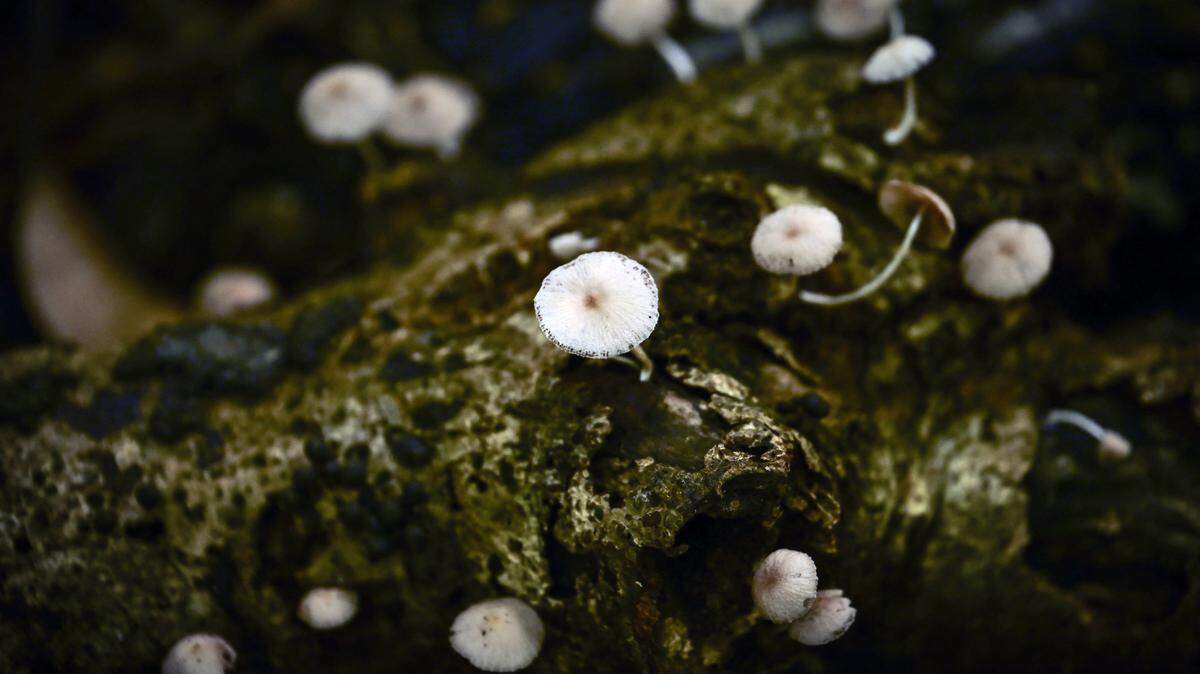
New research suggests fungi produce electrical spike patterns that bear a surprising resemblance to human language, though scientists caution the signals could mean different things.
A study published in Royal Society Open Science found that fungi generate clusters of electrical spikes — called “spike trains” — that can be grouped into patterns resembling a vocabulary of up to 50 “words.” Professor Andrew Adamatzky at the University of the West of England’s unconventional computing laboratory in Bristol conducted the research by inserting tiny microelectrodes into substrates colonized by four species of fungi: enoki, split gill, ghost and caterpillar fungi.
The lengths and distribution of these spike patterns showed similarities to human language. But Adamatzky himself was measured about the findings.
“We do not know if there is a direct relationship between spiking patterns in fungi and human speech. Possibly not,” Adamatzky said, per The Guardian. “On the other hand, there are many similarities in information processing in living substrates of different classes, families and species. I was just curious to compare.”
Previous research established that fungi conduct electrical impulses through hyphae, long thread-like filaments that make up their structure. The process resembles how nerve cells transmit information in humans. Scientists have also observed that these electrical signals become more active when the hyphae of wood-decomposing fungi come into contact with wood, suggesting fungi might use this signaling to relay information about nutrients or damage across their networks.
These spike trains often appear when fungi interact with their environment, such as encountering wood or other substrates. The signals may carry information about resources or damage. Researchers emphasize, however, that this does not mean fungi are consciously communicating. The electrical activity may instead function as a biological signaling system that coordinates growth and responses across the mycelial network or even with connected plants.
Some fungi produce more complex signal patterns than others, and different species may have different levels of signaling complexity.
Adamatzky offered another possibility entirely. “There is also another option – they are saying nothing,” he said. “Propagating mycelium tips are electrically charged, and, therefore, when the charged tips pass in a pair of differential electrodes, a spike in the potential difference is recorded.”
Major questions remain unresolved. A 2025 review in FEMS Microbiology Reviews highlights that although hyphae can generate action potential-like spikes, it’s unclear whether these reflect true communication or simply metabolic activity. The review emphasizes that measuring electrical activity in fungi is challenging due to their microscopic, complex structure. Current evidence for information transfer within a mycelial network or between organisms is still tentative.
The emerging field calls for more refined methods to determine whether fungal electrical signaling plays a functional, communicative role.
Beyond their own signaling, fungi connect entire ecosystems through their mycelial networks. Fungi can connect to plant roots, potentially enabling the transfer of nutrients and chemical signals — what ecologists call the “Wood Wide Web.” This system allows fungi to transfer nutrients like carbon and nitrogen between trees and even send chemical signals that warn plants of pests or stress.
While none of this amounts to conscious communication, the hidden network allows plants to share resources and information, helping forests survive as interconnected communities. Fungi exchange information through electrical and chemical signals, allowing them and the plants they connect with to coordinate growth, share resources and respond to threats.
Scientists need more refined research methods before they can determine whether fungal electrical signals are genuine communication or just a byproduct of biology — and what they find could change how we understand life beneath the forest floor.
This article was created by content specialists using various tools, including AI.