Octopuses Cycle Through a Sleep State That Looks a Lot Like Human REM
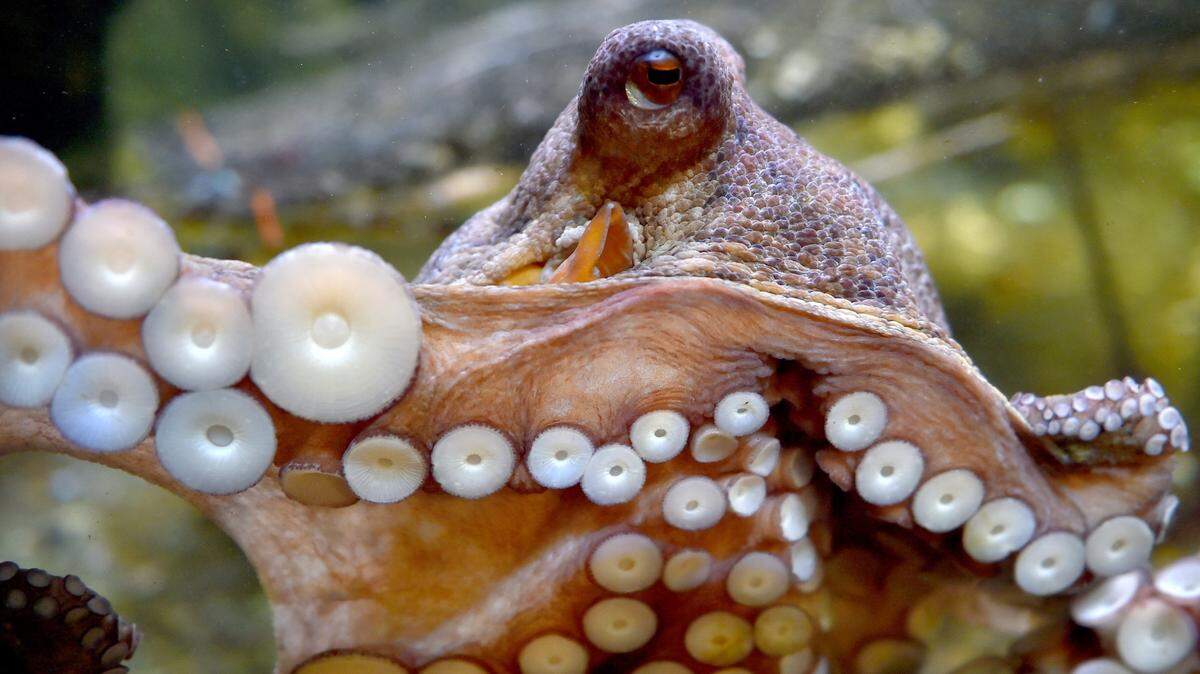
Researchers at the Okinawa Institute of Science and Technology have confirmed that octopuses experience a sleep state closely resembling REM sleep in humans — despite the two species being separated by more than 500 million years of evolution.
The finding is prompting new questions about which animals can dream, how complex brains evolve and what sleep actually does for a nervous system.
The 2 Distinct Sleep States
Octopuses cycle through quiet sleep and active sleep. During quiet sleep, the animal goes still and its skin turns pale. Active sleep is different. The octopus displays rapid skin color changes, shifts in breathing and eye and body movements. The Okinawa researchers confirmed the animals are genuinely asleep during this phase, not simply resting and that the state closely resembles vertebrate REM sleep, per The Guardian.
These active sleep episodes occur roughly every 30–60 minutes and last around 40–60 seconds, per NPR. Short as that window is, something striking happens inside it: the skin patterns octopuses flash during sleep often match patterns they use while awake — hunting, performing social displays, camouflaging against different environments.
Are They Dreaming?
Neuroscientist Sam Reiter described what his team observed: “We can associate certain skin patterns during wakefulness to specific situations: hunting, social displays, threat displays, camouflage to different sorts of environments. We show that these patterns reappear during active sleep.”
He added: “So, if we are looking at something like dream, and I repeat this is a possibility we do not prove in this study, they would resemble a pseudo random walk over different types of waking experiences.”
That framing is careful. Reiter presents dreaming as a possibility, not a conclusion. The observed activity could instead reflect internal neural processes such as refinement of camouflage abilities. But the behavioral parallels to vertebrate REM sleep are striking.
Neuroscientist Sidarta Ribeiro noted, “If they are dreaming, they are dreaming for up to a minute.” Graduate researcher Sylvia Medeiros described what that looks like: “For around 40 seconds, they dramatically change their color and their skin texture. Their eyes are also moving.” Medeiros explained that due to the brief duration, any potential dreams are unlikely to be complex or symbolic, though they may still support memory consolidation and learning.
Why It Matters for Brain Science?
REM sleep, as defined by the National Sleep Foundation, is characterized by rapid eye movements, irregular breathing and increased brain activity that closely resembles wakefulness. It alternates with non-REM stages and is strongly associated with dreaming, memory consolidation, learning and emotional processing.
Finding a REM-like state in an animal whose lineage split from ours half a billion years ago suggests complex sleep patterns may have evolved independently rather than being unique to vertebrates.
Marine biologist Carrie Albertin explained why cephalopods warrant this scrutiny: “It’s really hard to deny that something is going on, but it’s really important to actually quantify it and do the study … so that you can characterize it in a rigorous way.” She added that cephalopods are particularly valuable because “they are a separate example of the evolution of large brains,” offering insights into the biological requirements of complex nervous systems.
One more detail from the research: when octopuses are deprived of sleep, they enter active sleep more quickly and experience it more frequently. That’s homeostatic regulation — and it means this sleep state isn’t optional. The octopus brain needs it.
The research hasn’t proven octopuses dream. What it has established is that their brains cycle through a sleep state with behavioral and neurological echoes of human REM.
This article was created by content specialists using various tools, including AI.