A Giant, Yellow Spider Native to Asia Is Now Thriving in U.S. Cities. Nobody Can Stop It
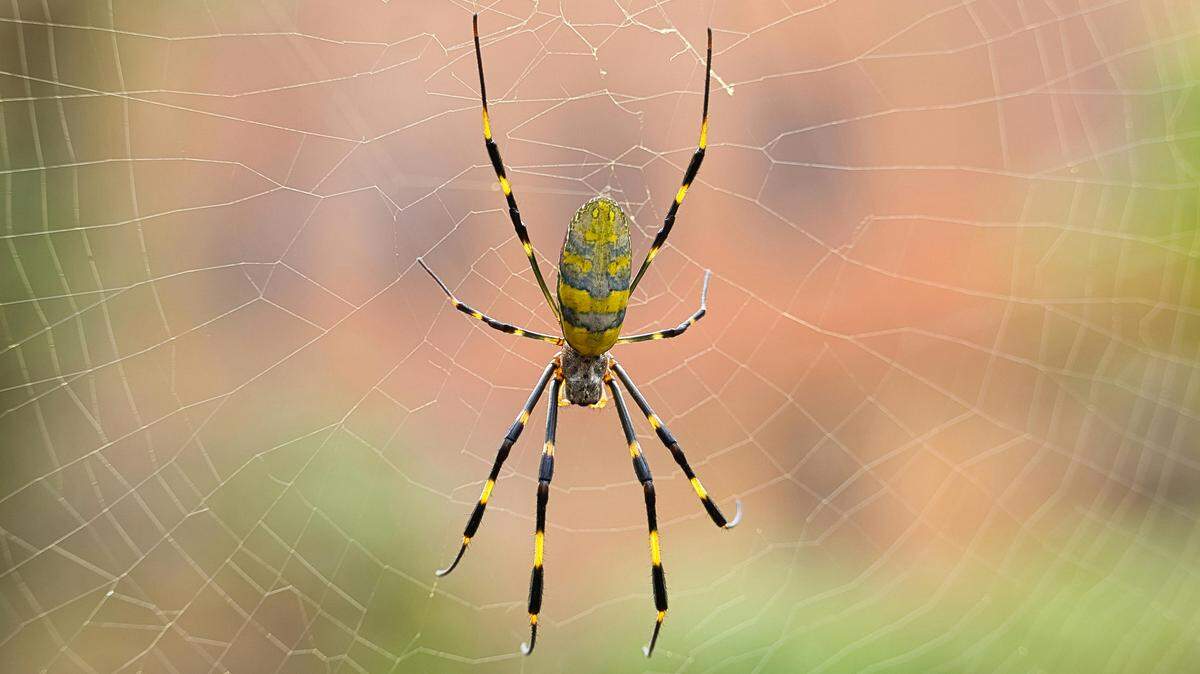
A bright yellow spider the size of a human hand, marked with blue stripes and red patches, is building webs on stoplights, gas station pumps, and power lines across the American Southeast.
Native spiders don’t live in these spots. This one does — and researchers are trying to figure out why.
The Joro spider, or Trichonephila clavata, is a golden orb-web spider native to Japan, China, Korea, and Taiwan, also found in other parts of Asia.
According to researchers from the University of Georgia, the species was first spotted in the U.S. in 2013 in northern Georgia. It has since spread across the Southeast and is now pushing past Mississippi.
Why Are Joro Spiders Appearing In Your Neighborhood?
The most revealing look at the Joro spider’s success came from a study by Andy Davis at UGA’s Odum School of Ecology.
The setup was simple: researchers used tuning forks to simulate the vibrations prey insects make when they get stuck in webs.
They deployed this technique near roadsides, environments saturated with noise and vibrations from passing vehicles — conditions that would typically suppress spider activity.
The spiders’ overall health was unaffected by urban stressors, the study found.
High metabolism, heart rate, and cold tolerance all contribute to rapid population growth, suggesting a species whose physiology is unusually well-suited to human-dominated landscapes.
The full study was published in the journal Arthropoda, and its findings describe an organism that tolerates urban noise and vibrations better than most animals — which is why the species is thriving in urban areas across the Southeast.
“But these Joro webs are everywhere in the fall, including right next to busy roads, and the spiders seem to be able to make a living there. For some reason, these spiders seem urban tolerant,” Davis said, per UGA Today.
Females, which are significantly larger than males, construct large webs that are often golden or yellow colored to capture prey. They build in locations between power lines, atop stoplights, over gas station pumps — places where native spiders are typically absent.
That absence raises questions: Is the Joro spider filling an unoccupied ecological niche, or is it beginning to reshape local spider ecosystems?
Will Joro Spiders Continue to Spread?
If urban tolerance explains how Joro spiders hold territory, their dispersal mechanism explains how they claim new ground.
Researchers believe the spiders will continue to spread across the U.S. through a process called “ballooning.” They “release sail-like trails of silk that lift them up and off into the wind,” per National Geographic.
The range of this aerial dispersal varies wildly. In some cases, they travel a few feet. In other cases, they can travel across oceans. It depends on where the wind takes them.
That ocean-crossing potential means the spread of Trichonephila clavata is not limited by conventional geographic barriers like rivers, mountain ranges, or highways that might slow a ground-dwelling species.
A single ballooning event, aided by the right atmospheric conditions, could deposit spiders in entirely new regions with no direct land connection to existing populations.
According to Joro Watch, they’ve been seen in Georgia, Tennessee, North Carolina, South Carolina, California, Virginia, Maryland, and Pennsylvania.
That California sighting, geographically disconnected from the southeastern core of the population, hints at the power of wind-assisted dispersal — or possibly other human-mediated transport pathways.
What Do Joro Spiders Eat and Look Like?
The spiders primarily feed on small insects caught in their webs and help regulate pest populations — a potentially useful ecological function in urban environments where pest management is a constant concern.
“When it’s fully mature, it has this big red patch on its underbelly and tends to have striped legs — black and yellow,” said Dr. David Nelsen, a biology professor at Southern Adventist University, per Local 3 News.
Despite not being native, some researchers warn that they’re here to stay.
“I don’t know how happy people are going to be about it, but I think the spiders are here to stay,” Alexa Schultz, co-author of the study, added.
Should You Worry About a Joro Spider Bite?
Due to their size and color, many people are fearful of these spiders. But the Joro spider is considered relatively timid and poses no significant threat to humans.
“Risk of being bitten is really, really minimal,” Nelsen added. “Even if you walk into a web, the spider is going to run away or drop out. That’s its first response.”
Other researchers are warning residents to not listen to the folklore surrounding these spiders.
“Joro spiders will likely continue to spread in the U.S., but they aren’t the ‘flying venomous spider invasion’ that’s been sensationalized in the media,” said Virginia Tech entomologist Theresa Dellinger.
“If Joro spiders become a nuisance around doorways, porches, or patios, they can be removed the same way as any other spider, using a broom or an aerosol insecticide spray,” Dellinger added.
When and Where to Spot a Joro Spider
Joro spiders’ eggs usually hatch between May and June, according to USA Today. They’re most visible between August and October, when they reach full size and start looking for mates.
That’s the window when golden webs start appearing between urban infrastructure in locations that would seem inhospitable to any other spider.
For anyone tracking invasive species, the Joro spider offers something unusual: a chance to watch an organism establish itself in real time, adapting to a built environment with a physiological resilience that continues to surprise researchers.
This is a species worth watching, in the scientific literature and, increasingly, in your own neighborhood. And if you come across one in the wild, don’t hesitate to snap a photo and report the sighting to Joro Watch.
Every photo helps researchers understand more about where Joro spiders are and where they might be headed next.
This article was created by content specialists using various tools, including AI.