Rare Pink ‘Fairy Club’ Fungus Discovered in Mainland Great Britain for the First Time
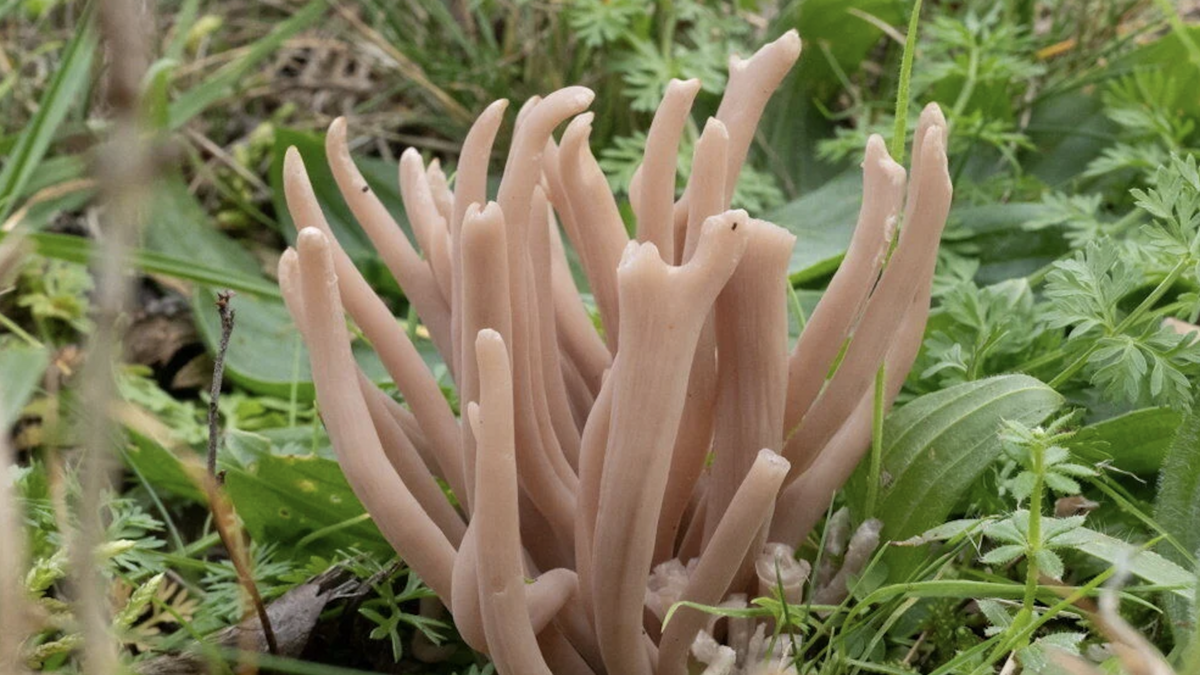
A small, pink fungus roughly the size of a tennis ball has turned up in southwest England — and it’s a species never before recorded on the British mainland. The organism, a rare species known as Clavaria calabrica, or “fairy club” fungus, was found by volunteers conducting a biodiversity survey at Haydon Batch, a grassland site near Radstock, in autumn 2025.
The discovery wasn’t made by professional scientists. A group of dedicated volunteers working with Somer Valley Rediscovered, a project focused on improving biodiversity and connecting communities to local landscapes, spotted the specimen during careful fieldwork. Their find was then subjected to rigorous scientific analysis.
DNA Analysis Confirmed the Identification
Verifying a rare fungus species isn’t as simple as matching it to a field guide. DNA from the specimen was extracted in Scotland, then sent to Aberystwyth University in Wales for sequencing. That genetic analysis confirmed the species was indeed Clavaria calabrica.
The species had previously been recorded in Northern Ireland. But it had not been confirmed anywhere in mainland Great Britain before the Haydon Batch find.
‘A Colorful Spectacle Right on our Doorstep’
Dan Nicholas, a local enthusiast who led the mushroom survey, expressed pride in what the discovery says about the ecological richness of the area. Nicholas told South West News Service, “This discovery further demonstrates that the South West is home to some of the most spectacular and diverse examples of these unique grassland fungi communities anywhere on the planet.”
“We are truly blessed to have such a colorful spectacle of nature’s calendar right on our doorstep, something we need to cherish and protect at all costs,” Nicholas added.
What Makes this Fungus Stand Out
The pink fairy club fungus typically grows in grasslands that have been gently managed over long periods — landscapes that support diverse wildlife and have not been subjected to intensive agricultural practices.
Fungi help break down organic matter and cycle nutrients through soil. The presence of rare fungal species in a given area can indicate a healthy, well-balanced environment. That makes the Clavaria calabrica find at Haydon Batch a potentially meaningful signal about the ecological health of the surrounding grasslands, beyond its appeal to mushroom enthusiasts.
The find came about through the Somer Valley Rediscovered partnership, which includes local town and parish councils and focuses on biodiversity conservation and community engagement with regional landscapes.
Regional Leaders Weigh In
Helen Godwin, mayor of the West of England Combined Authority, celebrated the discovery.
“Finding a species never before recorded in Great Britain here in the West is something we can all be proud of. This shows again just how rich and unique landscapes across our region can be,” Godwin said in a statement.
Godwin pointed to the importance of continued public engagement in protecting local habitats. “The work of the West of England Nature Partnership helps make sure these habitats are understood and protected. I encourage everyone to get involved in the West of England Wildlife Index, helping us record and safeguard the nature that makes our region so special,” she added.
Production of this article included the use of AI. It was reviewed and edited by a team of content specialists.
This story was originally published March 13, 2026 at 2:30 PM.