Scientists Found 38 New Species Hiding in Japan's Most Unexplored Ocean Regions
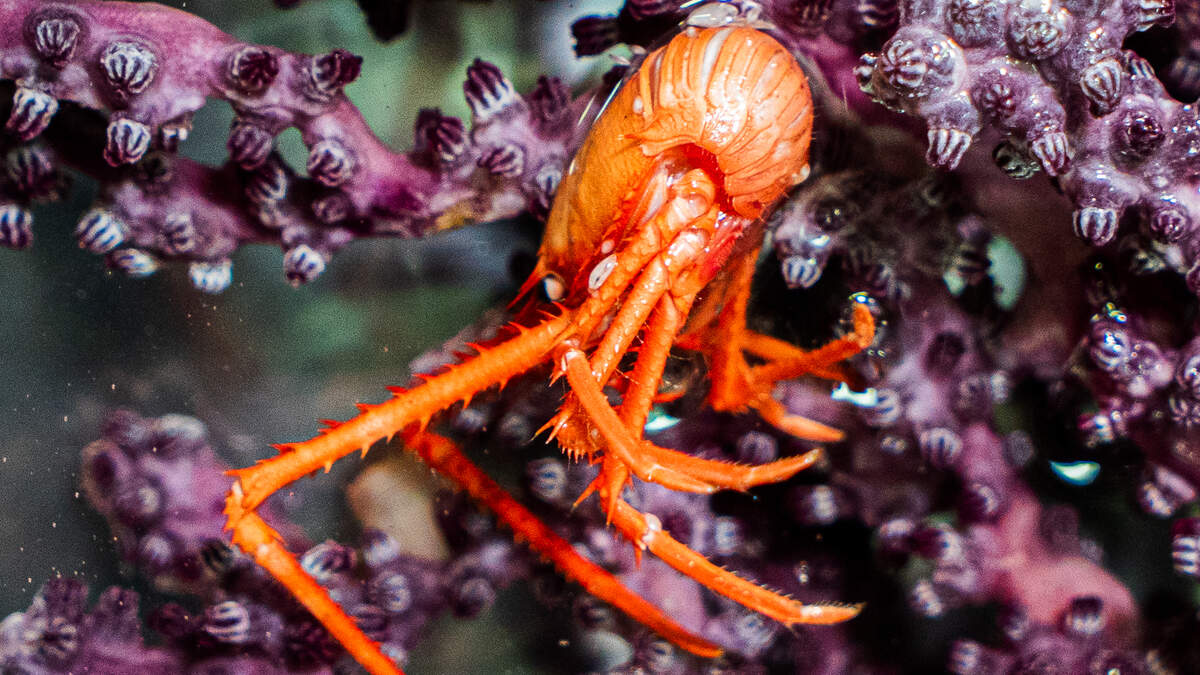
Two new worm species that no human had ever documented were found living inside a glass sponge on the deep ocean floor off Japan’s coast.
The sponge itself — a translucent, mesh-like structure built from silica — may also be new to science.
The worms were among 38 confirmed new species turned up by a single deep-sea expedition in June 2025, with 28 additional candidates still awaiting classification.
The findings offer a glimpse of just how much life remains undiscovered beneath the surface of the world’s oceans.
The Nippon Foundation-Nekton Ocean Census expedition was conducted in partnership with the Japan Agency for Marine-Earth Science and Technology (JAMSTEC).
Scientists traveled aboard the JAMSTEC research vessel Yokosuka, diving into two of Japan’s most understudied deep-sea regions: the Nankai Trough and the Shichiyo Seamount Chain.
They used the Shinkai 6500, a crewed submersible, to reach the depths. Over the course of the expedition, the submersible brought back more than 528 specimens for study.
After the voyage, taxonomists from around the world gathered at JAMSTEC headquarters for a Species Discovery Workshop. The effort produced two published studies.
Inside the Ocean’s Occupied ‘Glass Castle’
The expedition’s most vivid discovery centers on what scientists sometimes call a “glass castle” — a hexactinellid sponge, more commonly known as a glass sponge.
These organisms build intricate skeletons out of silica, the same material used to make glass.
“Some species of glass sponges produce extremely large spicules that fuse together in beautiful patterns to form a ‘glass house’—a complex skeleton that often remains intact even after the sponge itself dies,” writes the National Oceanic and Atmospheric Administration (NOAA).
That skeleton isn’t just ornamental. “The skeleton of the glass sponge, together with various chemicals, provides defense against many predators,” the NOAA adds.
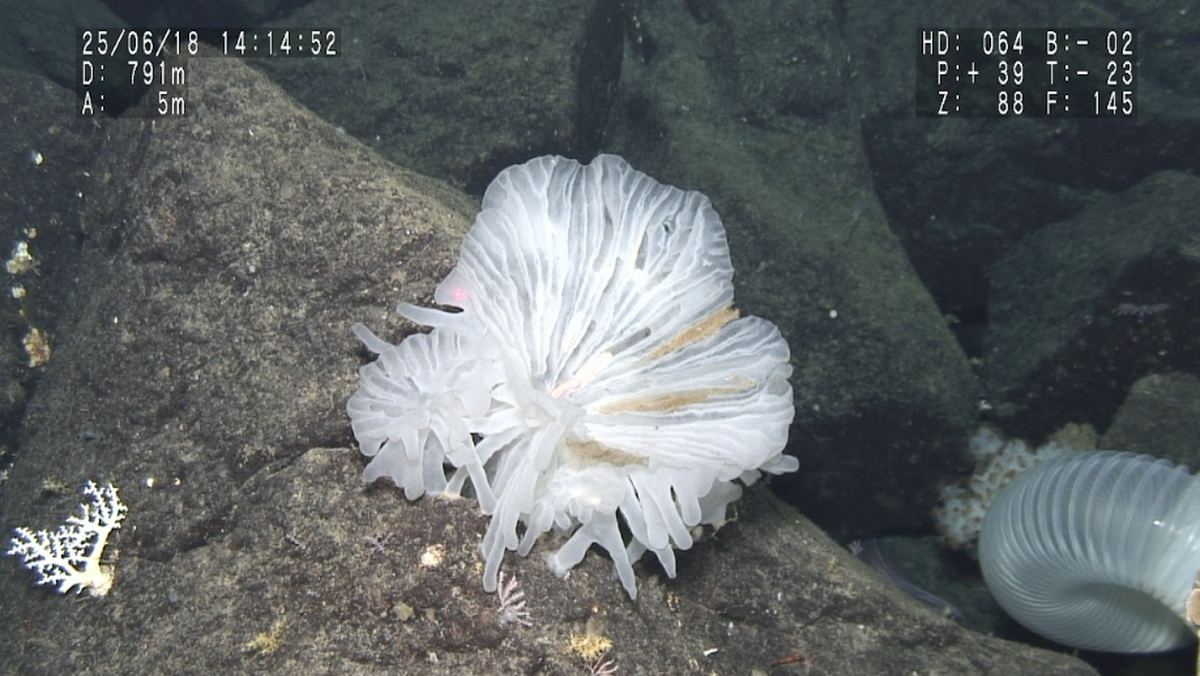
Living within the body of one such glass sponge, the expedition’s scientists found two entirely new polychaete worm species: Dalhousiella yabukii and Leocratides watanabeae.
Both have evolved to live inside the body of a glass sponge — an adaptation to one of the planet’s most extreme environments.
The study detailing their discovery, led by Dr. Naoto Jimi, was published in the Zoological Journal of the Linnean Society on March 9.
The host glass sponge discovered in 2025 may itself be a new, yet-to-be-named species, per the study. The castle may be as new to science as the creatures dwelling inside it.
Known Biodiversity Jumped Five-Fold in the Nankai Trough
The expedition’s second major study, led by JAMSTEC researcher Dr. Chong Chen, was published in Ecosphere on Nov. 18. It represents the most comprehensive biological survey of the Nankai Trough ever undertaken.
The Nankai Trough is one of Japan’s most geologically active deep-sea regions.
Before this expedition, only 14 animal species were known to inhabit the area’s cold seeps — places on the ocean floor where gases and fluids seep up from below. The new census documented 80 species.
The variety is striking.
Species documented in the Nankai Trough included 33 molluscs, 23 annelids, 11 arthropods, five ribbon worms, four echinoderms, three cnidarians, and one bryozoan — mollusks, worms, crustaceans, starfish relatives, and more, thriving in a place scientists barely knew anything about.
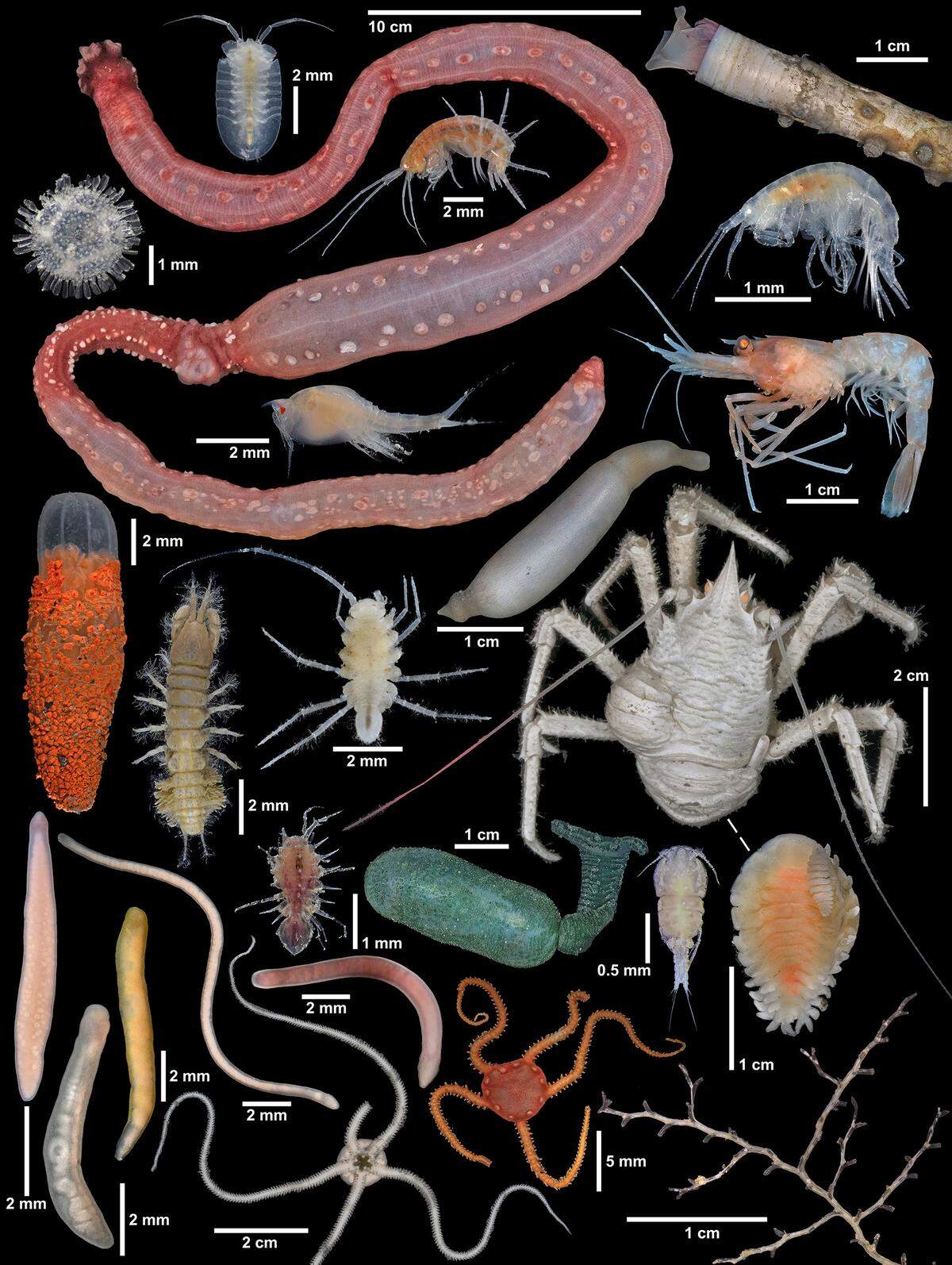
The Shichiyo Seamount Chain rewarded exploration, too.
Scientists discovered coral gardens, sponge-dense habitats, and five new squat lobster species there, alongside the two new worm species found in the glass sponge.
The Shichiyo Seamount Chain is now recognized as a region of special interest for Japanese marine science, a designation that could shape future research priorities and conservation efforts.
What One Voyage Reveals About the Unknown
In a single expedition to two understudied regions, scientists confirmed 38 new species and flagged 28 more candidates.
They increased the known biodiversity of the Nankai Trough by a factor of five. They found worms living inside a glass structure that might itself be unknown to science.
“The discoveries made in the Nankai Trough and the Shichiyo Seamount Chain remind us how little of our ocean has truly been explored,” Mitsuyuki Unno, Executive Director of The Nippon Foundation, said in a news release.
“Each new species discovery is a step toward understanding, valuing, and ultimately safeguarding our shared ocean,” he added.
The 28 candidate species still await formal classification. And the ocean floor off Japan — let alone the rest of the world’s deep seas — has barely been surveyed.
Production of this article included the use of AI. It was reviewed and edited by a team of content specialists.