Different Hair Types and Hair Thinning are Related: What To Know
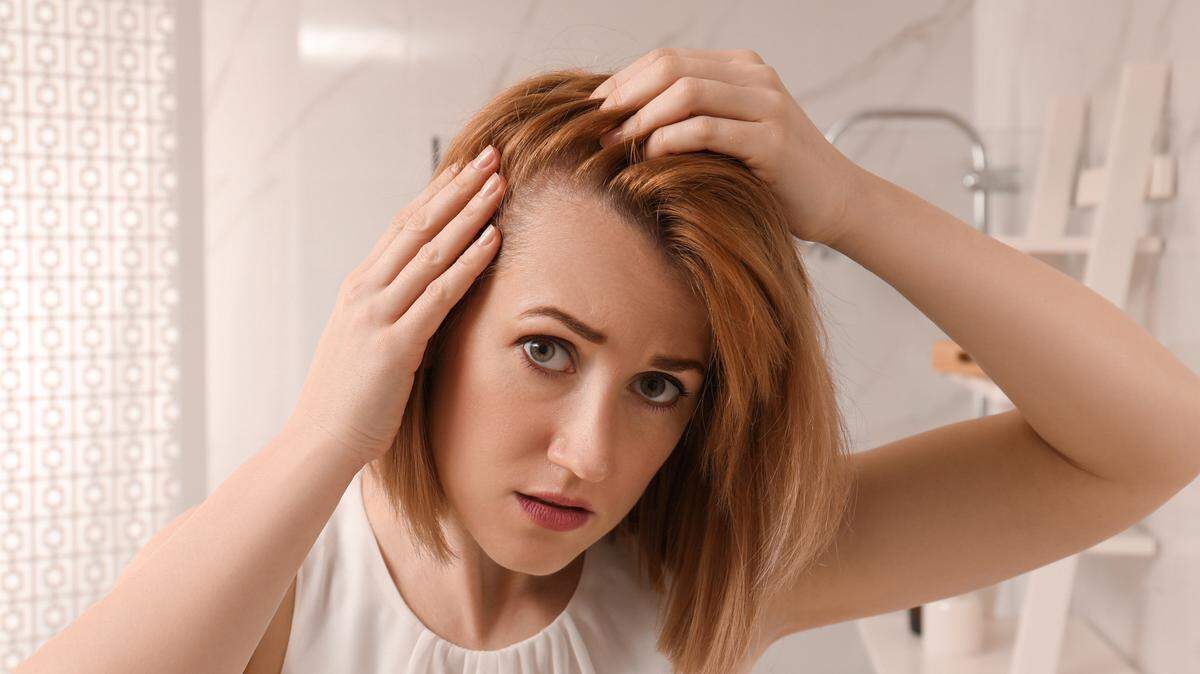
You may have noticed it in the mirror. Your part looks a little wider than it used to. Your ponytail feels thinner in your hand. Or your curls simply don’t behave the way they once did.
For many women, this moment happens during two major life stages: after pregnancy and again during midlife hormonal changes. Both can bring noticeable shifts in hair density, texture and growth patterns.
Hair loss is extremely common. Androgenetic alopecia, the most common form of hair loss in the U.S., affects roughly 50 million men and 30 million women, according to Dermatology Times. Postpartum shedding and hormone-driven thinning affect millions more women each year.
What fewer people realize is that your hair’s curl pattern and strand thickness strongly shape how thinning appears and what actually helps. Someone with fine, straight 1B hair and someone with tight 4C coils can lose the same percentage of density and see completely different results in the mirror.
Hair type vs. hair texture: Why the difference matters for thinning hair
Most people use these terms interchangeably, but they describe different things. Hair type refers to your curl pattern. The commonly used Andre Walker system ranges from Type 1 (straight) to Type 4 (coily).
Hair texture, on the other hand, refers to the thickness of each individual strand: fine, medium or coarse, according to OLAPLEX. Other factors also matter, including density (how many strands grow per square inch) and porosity (how easily hair absorbs moisture).
You could have Type 3A curls with fine strands and low density, which creates a very different thinning experience than someone with the same curl pattern but coarse, high-density hair. That is why generic advice about “thinning curly hair” often feels off. It assumes all curly hair behaves the same way when in reality several variables shape what you see.
Many people also have mixed patterns across the scalp, and those patterns can shift over time due to hormones, stress or chemical damage, according to Theradome.
Postpartum hair loss and hormonal hair thinning explained
If your hair has changed recently, there is real biology behind it.
During pregnancy, rising estrogen levels keep hair in the growth phase longer, which is why many women experience unusually thick hair. After birth, hormone levels drop quickly and many of those hairs shift into the shedding phase at once, a process called telogen effluvium. The result is the sudden shedding many women notice around three to four months postpartum.
Later in life, hormones influence hair again. Women tend to reach peak hair thickness around age 40, and about 38% of women over 50 experience noticeable thinning, according to UCLA Health.
As follicles gradually shrink with age, strands grow back finer and more fragile, which can make previously thick hair feel noticeably different. Stress can also accelerate the process. One Dermatology Times analysis found high stress increased the odds of severe sudden thinning by 1.41 times in women and 1.26 times in men.
How different hair types show signs of thinning
This is the part most haircare advice skips, but it is one of the most useful.
Straight and fine hair (Types 1A–1C) Fine hair lies flat against the scalp, so even modest density loss becomes visible quickly. A widening part or hair that disappears when pulled into a ponytail are common early signs. Heavy thickening products can backfire by weighing strands down and making hair appear flatter.
Wavy hair (Types 2A–2C) Thinning often appears as a loss of wave definition and overall body. Waves rely on neighboring strands for structure, so as density drops, hair may begin to look limp where it once had movement.
Curly hair (Types 3A–3C) Curly hair bends and twists along the shaft, which makes it naturally more fragile. Heat styling, tight styles or harsh treatments can increase breakage. Curls may gradually loosen as strands weaken, and frizz can sometimes mask thinning early on.
Coily hair (Types 4A–4C) Coily hair faces a unique risk called traction alopecia, where high-tension styles pull on follicles over time and can lead to permanent loss along the hairline. Because tight coils shrink and compress, density changes may be harder to notice at first.
The best hair care strategies for thinning hair by texture
Different textures respond best to different strategies.
Fine and straight hair: Look for lightweight shampoos and volumizing products that add lift without leaving residue.
Wavy hair: Balance moisture with lighter styling products. Heavy oils that work well for curlier textures can flatten waves and make thinning more noticeable.
Curly hair: Focus on deep conditioning, gentle detangling and minimizing heat. Preserving curl structure helps maintain visual volume.
Coily hair: Low-tension protective styles are key. Pair them with moisture-rich routines and regular scalp care to prevent breakage.
Across every hair type, one major shift in haircare is happening. There is increasing focus on scalp health. Dermatologists increasingly treat the scalp like facial skin. This includes barrier repair, anti-inflammatory ingredients and microbiome-friendly cleansing, according to MDhair.
When to see a dermatologist for hair thinning or excessive shedding
Routine changes can help, but they have limits. If shedding lasts longer than three months, or if you notice rapid thinning, patchy loss or scalp irritation, it is worth speaking with a dermatologist. Tools like trichoscopy allow specialists to examine follicles closely and determine whether you are dealing with breakage, which is often fixable, or follicle miniaturization, which typically requires medical treatment.
Hair changes can feel unsettling, especially during life stages like postpartum recovery or menopause. Understanding your hair type and texture can give you a clearer picture of what is happening and help guide the most effective next steps.
Production of this article included the use of AI. It was reviewed and edited by a team of content specialists.