Your Grocery Cart Might Be Full Of Marketing Claims — Here’s How To Tell
That jar of face cream says “eco-friendly.” The egg carton says “pasture-raised.” The protein bar wrapper says “clean.” You’re paying a premium for these products, and the language on the label is doing a lot of the selling. But how much of it actually maps to something verifiable?
“Greenwashing” refers to marketing that makes a product or company appear more environmentally responsible or ethical than it can reasonably substantiate. This term has become one of the trickiest consumer puzzles in the food and wellness space. The United Nations defines greenwashing as misleading claims that exaggerate or fabricate environmental benefits, slowing real progress and confusing consumers.
If you like making informed choices (and not overpaying for a story instead of a standard), this is the consumer skill worth sharpening right now.
The rules that exist and the gaps they leave
In the U.S., environmental marketing claims are primarily evaluated under guidance from the Federal Trade Commission. The FTC’s Green Guides serve as the framework for how environmental claims should be made to avoid misleading consumers. They’re guidance rather than formal rules, but they reflect how the FTC evaluates deception cases.
Three principles from the Green Guides matter most when you’re standing in an aisle reading a label:
Broad, unqualified claims like “eco-friendly” or “green” are difficult to substantiate and can mislead consumers.
Claims must reflect how reasonable consumers interpret them, not just how brands intend them.
Qualifications and limits must be clear and prominent, not hidden in fine print.
The FTC also offers a consumer-facing overview of these principles. Here’s the catch: the FTC sought public comment on updating the Green Guides in 2022, but as of 2026, no finalized update has been issued. The existing Guides remain the primary reference point.
That lag between the speed of marketing language and the pace of regulatory updates is exactly the gap greenwashing thrives in.
Five patterns to watch for on food and wellness products
Vague “green” language with no metrics behind it
Red-flag terms include “eco-friendly,” “sustainable,” “clean,” “planet-safe,” and “responsibly made.” These phrases often signal values rather than verifiable environmental outcomes. Under FTC guidance, broad claims without qualification are especially likely to mislead.
A useful test: Can the claim be rewritten as a measurable sentence? “We have reduced packaging weight by 30% since 2022” tells you something concrete. “We care about the planet” does not.
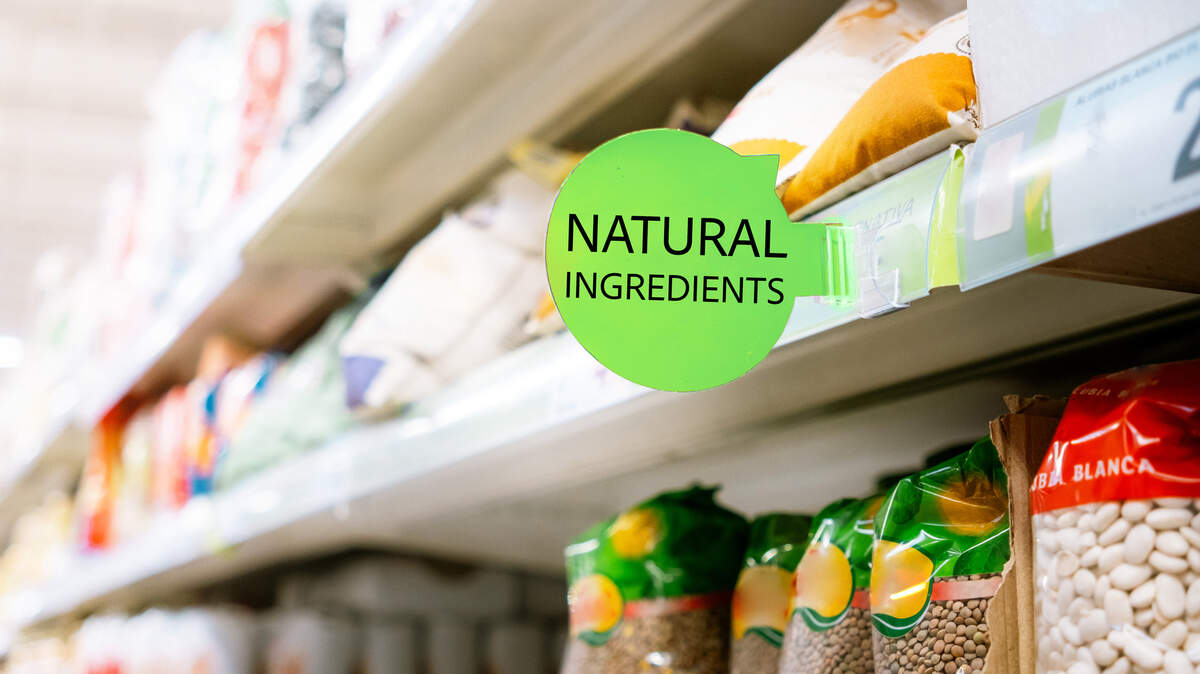
“Natural” doing more work than it should
In food labeling, “natural” does not mean organic, climate-friendly, or low-impact. The FDA has no formal regulatory definition tying “natural” to environmental benefit. It generally refers only to the absence of added artificial ingredients.
The disconnect is real: consumers often interpret “natural” as healthier or more ethical, even though it carries no sustainability standard. When “natural” is the hardest-working word on a label, that’s worth questioning.
Recycling and composting claims that don’t match real-world infrastructure
Claims like “recyclable,” “biodegradable,” or “compostable” can be misleading if recycling is not widely available where consumers live, if special facilities or disassembly are required, or if conditions for breakdown are not disclosed.
The FTC has brought enforcement actions over misleading biodegradability and recyclability claims. A “compostable” cup that requires an industrial composting facility you don’t have access to is technically accurate and practically useless at the same time.
Certification seals that imply more than they verify
The Green Guides caution against seals or certifications that imply broad environmental benefits without clear explanation. If consumers cannot easily understand what a seal certifies, it may be misleading.
Ask yourself: Can you find the certifier’s standards and a public database listing certified products? If the answer is no, the seal is decoration.
The gap between “ethical” branding and what labeling standards actually promise
This is the subtlest pattern, and a real-world example makes it concrete.
What the Vital Farms controversy revealed
In early 2026, premium egg brand Vital Farms became the focus of a viral consumer backlash accusing the company of greenwashing. Critics argued that Vital Farms’ marketing around “pasture-raised” and ethical production created assumptions about nutrition and animal feed that were not explicitly guaranteed.
Online discussion centered on third-party lab results showing relatively high linoleic acid levels in egg yolks, which critics associated with corn- and soy-based feed. While Vital Farms publicly defended its practices and transparency, the controversy highlighted how consumer expectations around “ethical” and “pasture-raised” claims often exceed what labeling standards actually promise.
Reporting on the controversy appeared across multiple outlets, including Parade and Yahoo Health.
The Vital Farms debate shows how even legally compliant claims can be perceived as misleading when marketing language fills in gaps that standards do not define. It also illustrates how “ethical” branding can blur into environmental or nutritional assumptions without explicit evidence. That’s a pattern worth watching across the entire food and wellness category, not just eggs.
Labels that actually have teeth
Not every label is a marketing exercise. Some come with federal standards, testing protocols, and public accountability. Knowing which ones carry weight helps you separate signal from noise.
Products labeled “organic” must meet federal standards through the USDA. At least 95 percent of ingredients must be organically produced for items labeled “organic,” with specific labeling rules governing how the claim is used.
The Non-GMO Project Verified label indicates compliance with a defined standard involving testing, traceability, and segregation. You can look up the standard yourself.
For supplements, two verification programs stand out, though they verify label accuracy and manufacturing quality rather than sustainability: the USP Verified Mark and NSF Certified for Sport. That distinction matters — a supplement passing USP verification tells you the label is accurate, not that the product is “green.”
Your quick greenwashing filter
Next time you’re evaluating a product making environmental or ethical claims, run through these questions:
- Is the claim specific, or is it vague language like “eco-friendly”?
- Does it include numbers or boundaries?
- Is the benefit about the product itself or the brand story?
- Can the claim be verified independently?
- Is “natural” doing most of the heavy lifting?
- Are recycling or composting claims qualified with real-world conditions?
- Is there a real certification behind the seal, with searchable standards?
- Would the claim still make sense without the green imagery on the packaging?
You don’t need to answer all eight every time you pick up a jar of almond butter. But running through even two or three of them shifts you from passive label reader to active evaluator. When in doubt, doing a quick scan of the ingredients list is always helpful too, for food products especially.
How to put this to work
The goal here isn’t cynicism. Plenty of brands invest real money and effort into better sourcing, lower emissions, and transparent supply chains. The problem is that the same vocabulary — “clean,” “natural,” “sustainable” — gets used by companies doing the work and companies borrowing the aesthetic.
Your edge is knowing the difference between regulated language (like “organic” or “Non-GMO Project Verified”) and unregulated language (like “clean” or “planet-safe”). Focus your trust and spending on claims you can trace back to a published standard, a searchable database, or a specific measurable outcome.
The brands doing real work tend to welcome that level of scrutiny. The ones relying on green-tinted packaging and feel-good copy tend not to.
Production of this article included the use of AI. It was reviewed and edited by a team of content specialists.