
A Psychology-Backed Guide to Making Your Space Feel Like Home
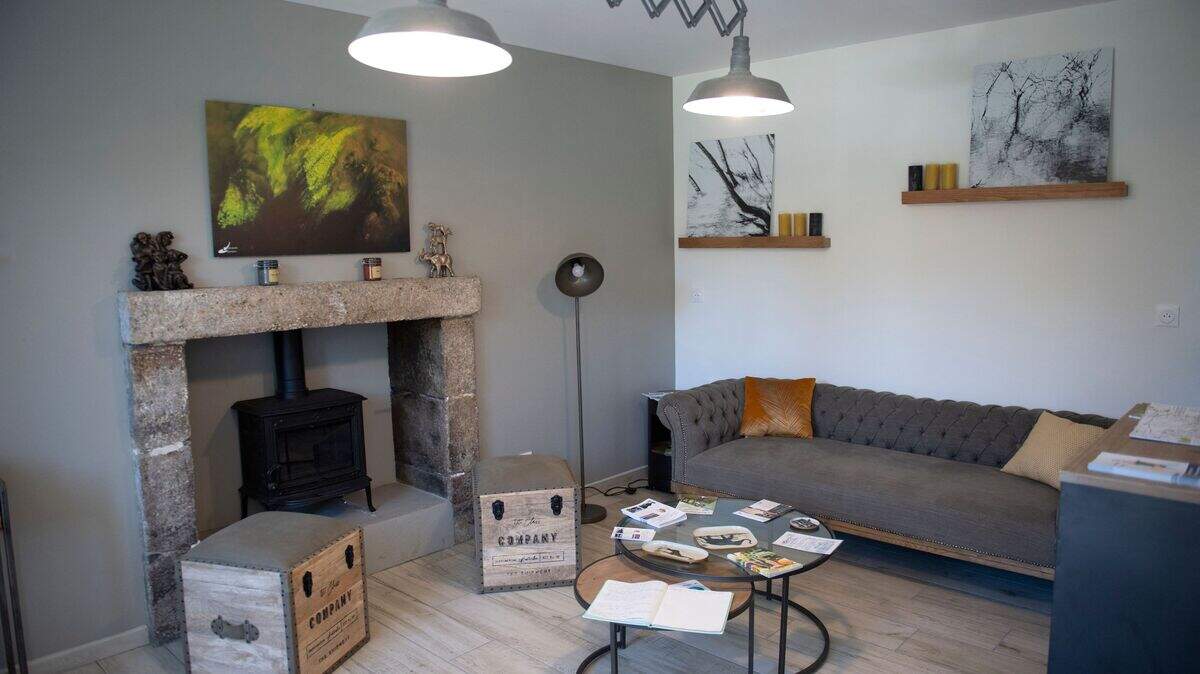
You just got the keys to your first apartment or house. Congratulations — seriously. Now comes the part nobody warned you about: staring at an empty room and having absolutely no idea where to start.
Should you paint the walls? What color? Does your furniture need to “match”? Why does your friend’s apartment feel so calm while yours feels like a storage unit with a bed in it?
Here’s the good news: there’s actual science behind why some spaces make you feel great and others drain you. You don’t need a design degree or a huge budget. You just need a few psychology-backed principles that will help you make confident choices — starting today.
Pick Your Colors by How You Want to Feel (Not Just What Looks Cool)
Before you grab a random paint swatch or throw pillow, consider this: the colors in your space directly affect your mood. It’s not just a vibe thing — it’s psychology.
Suzie Anderson from Suzie Anderson Home breaks down color psychology, which she describes as exploring “how different colours can impact human emotions, behaviours, and perceptions.” Here’s her room-by-room cheat sheet:
Blue: “Associated with calmness, tranquillity, and a sense of security. Blue is commonly used in bedrooms, living rooms, or spaces where relaxation is prioritised.”
Green: “Associated with harmony, growth, and peace. The soothing quality of green makes it suitable for bedrooms, living rooms, and home offices.”
Yellow: “Known for evoking feelings of happiness, energy, and positivity. Yellow can work well in kitchens, dining areas, or any space where a cheerful atmosphere is desired.”
Neutral colours (white, grey, or beige): “Can evoke a sense of calmness and balance. Neutrals work well as a base in any room and allow other colours to stand out as accents.”
Brown: “Represents stability, warmth, and a connection to the earth.”
So what does this actually mean for you? Think about each room’s purpose first. Your bedroom is for winding down, so blue or green tones make sense there. Your kitchen is where you want energy, so yellow accents could be a smart move. And if you’re renting and can’t paint? No worries — you can bring these colors in through pillows, throws, rugs, art, or even dish towels. Neutrals as your base with pops of intentional color is a strategy that works in any size space.
Get Organized Before You Get Decorated
This one is huge, especially if you’re working with a smaller apartment. That excitement to decorate can quickly turn into clutter — and clutter does measurable damage to how you feel at home.
Lauren Zarnke from Sansa Interiors puts it plainly: “A cluttered environment has been proven to drain energy and negatively impact our overall mood.”
Her advice? Build organization into your space from the start. “When thinking about interior design and mental health, a great way to make the most of your space is to have systems in place that facilitate organization and tidying. Choose furniture pieces that suit your needs, so you don’t end up fighting against your space.”
That last line is worth re-reading. “Don’t end up fighting against your space.” If you’re shopping for furniture, think about what each piece actually needs to do for you. A coffee table with storage underneath. A bed frame with drawers. A bookshelf that doubles as a room divider. Every piece should earn its square footage.
Zarnke also notes that “some principles of design including balance, proportion, symmetry, and rhythm can introduce a sense of harmony. Prioritizing good function as a part of your interior design plans will have huge benefits for your mental health, too.”
Translation: before worrying about whether something looks good on Instagram, ask yourself whether it works for your daily life. Function first, aesthetics second. You’ll end up with a space that looks better and feels better.
Let the Light In (Even if Your Windows Are Tiny)
If you’ve ever apartment-hunted, you know the struggle of dark rooms with one small window. But natural light isn’t just a nice-to-have — it directly affects your well-being.
Zarnke explains: “Studies have shown that mood and energy levels are directly related to how much natural sunlight we receive daily. In addition to boosting our mood, getting lots of natural light can help to improve our quality of sleep, increase levels of Vitamin D, strengthen our bones and lower blood pressure.”
That’s a lot of benefits from something as simple as rethinking your window setup. But what if your place just doesn’t get much sun? Zarnke offers four practical tricks you can use right now:
Use mirrors: “A strategically placed mirror is a great way to bounce some natural light into the darkest corners of any room.”
Choose a door with a window: “Doors take up prime real estate in any entryway and often lead to an interior hallway that simply doesn’t get enough light. Choosing a door with a window is a quick, easy and beautiful way to brighten the space.”
Keep your colours light: “Choose light coloured walls, furniture, flooring, and accents. Obviously, the darker the finishes, the darker the room.”
Skip the blinds: “If privacy allows, opt for sheer curtains or no curtains at all! The open window will allow that much more light into the room.”
For renters who can’t swap out doors or repaint, focus on what you can control: mirrors placed across from windows, light-colored bedding and rugs, and sheer curtains instead of heavy drapes. These small moves can make a dark studio feel dramatically more open.
Add Natural Wood for a Calmer Space
You might be drawn to natural wood furniture or accents without quite knowing why. Turns out, there’s research behind that instinct.
Lily Bernheimer for Psychology Today writes about a 2017 study led by Xi Zhang at the Shanghai Jiao Tong University. In that study, “participants were less stressed and fatigued in wooden indoor spaces than non-wooden ones. Using measures that included blood pressure, skin temperature, near-distance vision, and heartbeat, the researchers concluded that wood-filled environments had positive benefits for the respiratory and nervous systems and helped facilitate restoration after work—something most of us desire from our homes.”
So when you’re browsing for a desk, shelving, or a dining table, natural wood is worth considering. It doesn’t have to be expensive — even small wooden accents like frames, trays, or a cutting board displayed on a counter can bring some of that warmth into your space.
Go Curvy With Your Furniture (Seriously)
Here’s one that might surprise you when you’re furniture shopping: the shape of your furniture and room features can change how your brain responds to a space.
Bernheimer points to a 2017 study led by Maryam Banaei at Iran University of Science and Technology that “found that rooms with curvature were rated more pleasurable and stimulating than rooms defined by angular geometry.”
It goes deeper than just preference. “This finding has been confirmed by researchers, including Vartanian and his colleagues, who found that curvilinear rooms activated the brain’s anterior cingulate cortex, a region dealing with emotional learning and motivation. Rectilinear spaces did not.”
Why? Bernheimer offers a compelling explanation: “Curvature may delight because it reminds us of pleasant natural forms like eggs, plums, and puddles, while sharp shapes may invoke thorns, fangs, and jagged rocks, things we associate with riskier situations.”
Next time you’re deciding between a round coffee table and a sharp-edged rectangular one, or choosing between an arched mirror and a boxy one, this research gives you a reason to lean into the curves. It’s not just a trend — your brain genuinely responds differently to softer shapes.
The Bottom Line
Setting up your first place is one of those rare chances to build a space from scratch that actually supports how you want to feel every day. You don’t need to do it all at once, and you definitely don’t need to spend a fortune. Start with the basics: choose colors intentionally, organize before you decorate, maximize your light, bring in natural wood where you can, and consider curves when you’re picking out furniture. Each of these choices is backed by research — and each one is something you can start doing today.
Production of this article included the use of AI. It was reviewed and edited by a team of content specialists.