Scientists Found 91 New Species in a Single Chinese Quarry, Rewriting What We Know About Life After Mass Extinction
A limestone quarry in Hunan province, China, has yielded more than 150 species dating back approximately 512 million years — 91 of which have never been documented before — reshaping scientific understanding of how life rebounds after a mass extinction.
The research, published in the journal Nature, documents fossils collected between 2021 and 2024 from a single quarry measuring 12 meters high, 30 meters long and eight meters wide. That’s a modest footprint for what turned out to be a staggering haul.
50,000 Specimens From a Space Smaller Than Many Apartments
Han Zeng of the Chinese Academy of Sciences described the site as “extraordinary.”
“We have collected over 50,000 fossil specimens from a single quarry that is 12 meters high, 30 meters long and eight meters wide,” he told AFP. Among those specimens, researchers identified more than 150 different species, 91 new to science. The collection has been named the Huayuan biota after the county where it was found.
Han said there were “wonderful experiences when we realized that those animals were right there on the rock.”
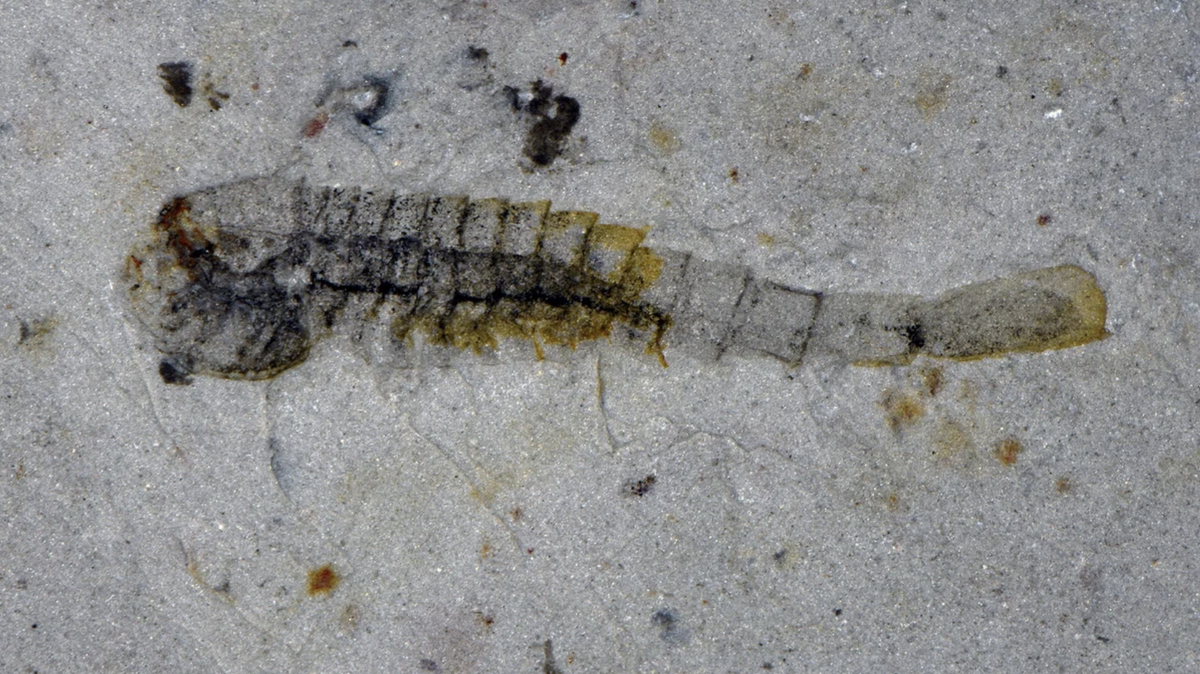
What makes the Huayuan biota unusual isn’t just the volume. It’s the preservation quality. These aren’t just shells and hard parts, the typical fare for fossils of this age. Han noted: “Many fossils show soft parts including gills, guts, eyes and even nerves.”
Soft tissue rarely survives the fossilization process, so when it does, it gives scientists a far more complete picture of ancient organisms than bones or exoskeletons alone can provide.
What Lived 512 Million Years Ago
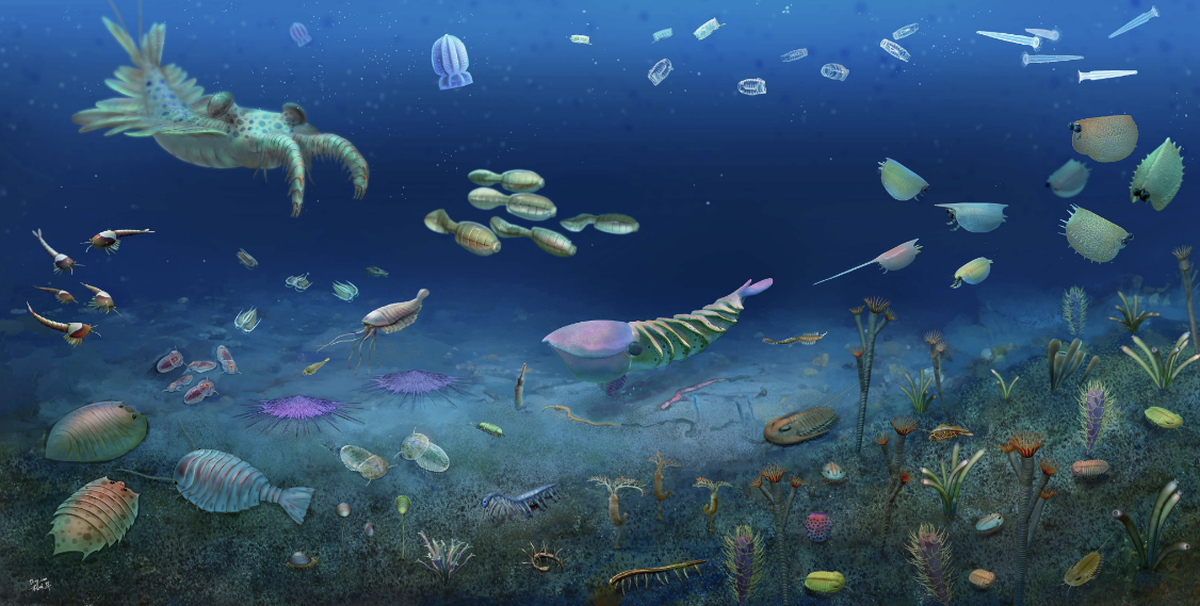
The species discovered include ancient relatives of worms, sponges and jellyfish. Researchers also identified numerous arthropods, including radiodonts, described as apex predators of the time.
Radiodonts were among the largest and most fearsome animals swimming in Cambrian seas. Finding them here tells scientists something about the food chains that existed just after a catastrophic die-off.
Why the Timing Changes Everything
The fossils date to around 512 million years ago, placing them shortly after the Sinsk event, a mass extinction that occurred approximately 513 million years ago and is associated with declining oxygen levels. The Sinsk event ended a period known as the Cambrian explosion, which began roughly 540 million years ago and marked a rapid diversification of animal life.
According to Han, the Huayuan biota represents the first major discovery of soft-bodied organisms that lived directly after the Sinsk event. Until now, the fossil record for this specific post-extinction window has been thin, especially for soft-bodied creatures.
Han said the fossils “open a new window into what happened.”
Deep Water Kept Species Alive
Michael Lee, an evolutionary biologist at the South Australian Museum who was not involved in the research, offered an explanation for how so many species appear to have survived the extinction event.
“The new fossils from China demonstrate that the Sinsk event affected shallow water forms most severely,” Lee said.
He compared the survival patterns to the coelacanth, a deep-water fish that survived the mass extinction that eliminated non-avian dinosaurs. “The deep ocean is one of the most stable environments through geological time, in a similar way to how the cellar of a house is buffered from daily and seasonal changes and has less temperature fluctuations than the attic,” Lee said.
While shallow marine ecosystems collapsed under falling oxygen levels, deeper-water species weathered the crisis in more stable conditions, then persisted into the post-extinction world that the Huayuan biota captures.
A Surprise Link to Canada
One of the more surprising findings connects the Huayuan site to Canada’s Burgess Shale, one of the most famous fossil deposits on Earth, which dates to an earlier phase of the Cambrian explosion.
“It surprised us when we found the Huayuan biota shared various animals with the Burgess Shale, including the arthropods Helmetia and Surusicaris that were previously only known from the Burgess Shale,” Zeng told Reuters. “As larval stages are common in extant marine invertebrates, the best explanation of these shared taxa shall be that the larvae of early animals were capable of spreading by ocean currents since the early days of animals in the Cambrian.”
The same species showing up in both China and Canada suggests a surprisingly interconnected early ocean half a billion years ago, with currents carrying larvae across vast distances and connecting ecosystems now separated by entire continents.
What This Means for Understanding Extinction
Han said there is evidence of 18 or more mass extinctions over the past 540 million years. The Sinsk event is not classified among the “Big Five” mass extinctions in Earth’s history, yet it still ended one of the most consequential periods of biological innovation the planet has ever seen.
The Huayuan biota fills a gap in the fossil record that has made it difficult to study recovery after the Sinsk event. With 50,000 specimens, 91 new species, and soft-tissue preservation, researchers now have a detailed snapshot of the biological community that existed in the immediate aftermath.
BOTTOM LINE: A single quarry in a single Chinese county just produced the first clear evidence of what thrived after one of the earliest known collapses of complex life on Earth — and the answer turns out to be far more than anyone expected.
Production of this article included the use of AI. It was reviewed and edited by a team of content specialists.