Scientists Found a New Lime-Green Lizard With Dagger-Like Spines Sleeping In a Vietnamese Forest
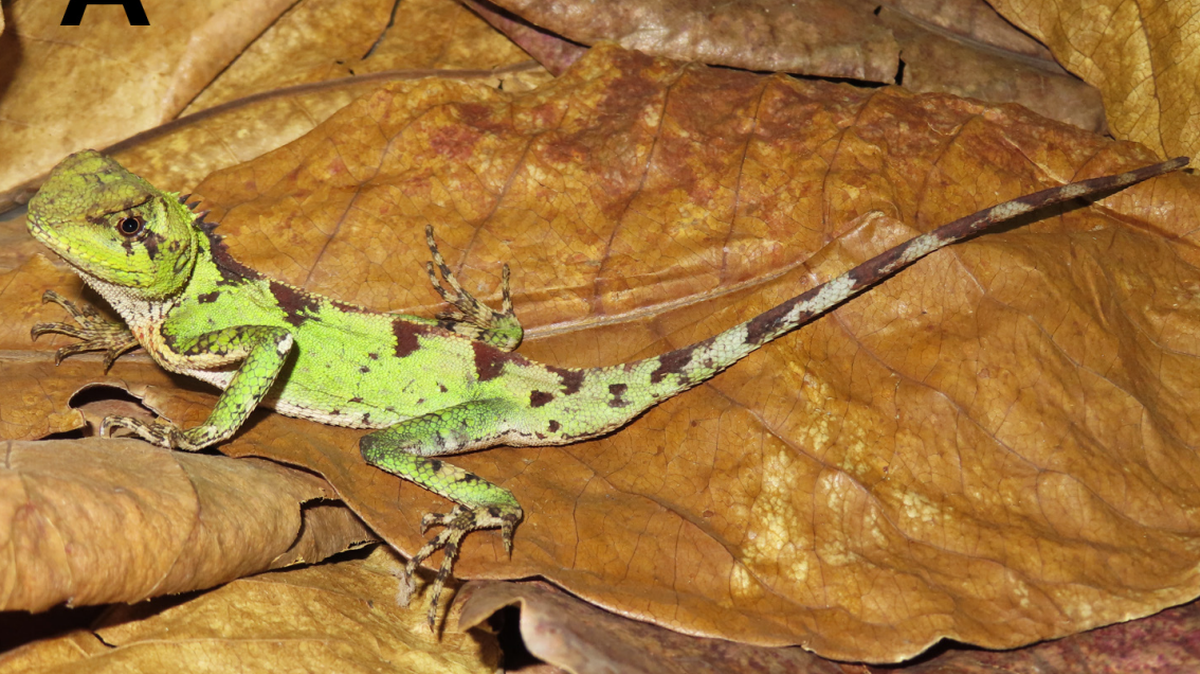
Researchers scanning tree branches with flashlights in a dense Vietnamese forest in the middle of the night spotted a lizard clinging to a shrub, fast asleep. It was bright lime green, lined with spines down its back, and completely unknown to science.
The species turned out to be one of the most striking new reptiles described in 2025 — so vivid and unusual it almost doesn’t look real.
A New Species with ‘Dagger-Like’ Spines
The new species, officially named Acanthosaura grismeri and commonly known as Grismer’s pricklenape lizard, was described in a study published Aug. 28, 2025, in the peer-reviewed journal Zootaxa. Researchers conducted biodiversity surveys in a forest in Dak Lak Province, Vietnam, during multiple visits in 2023 and 2024, according to the study.
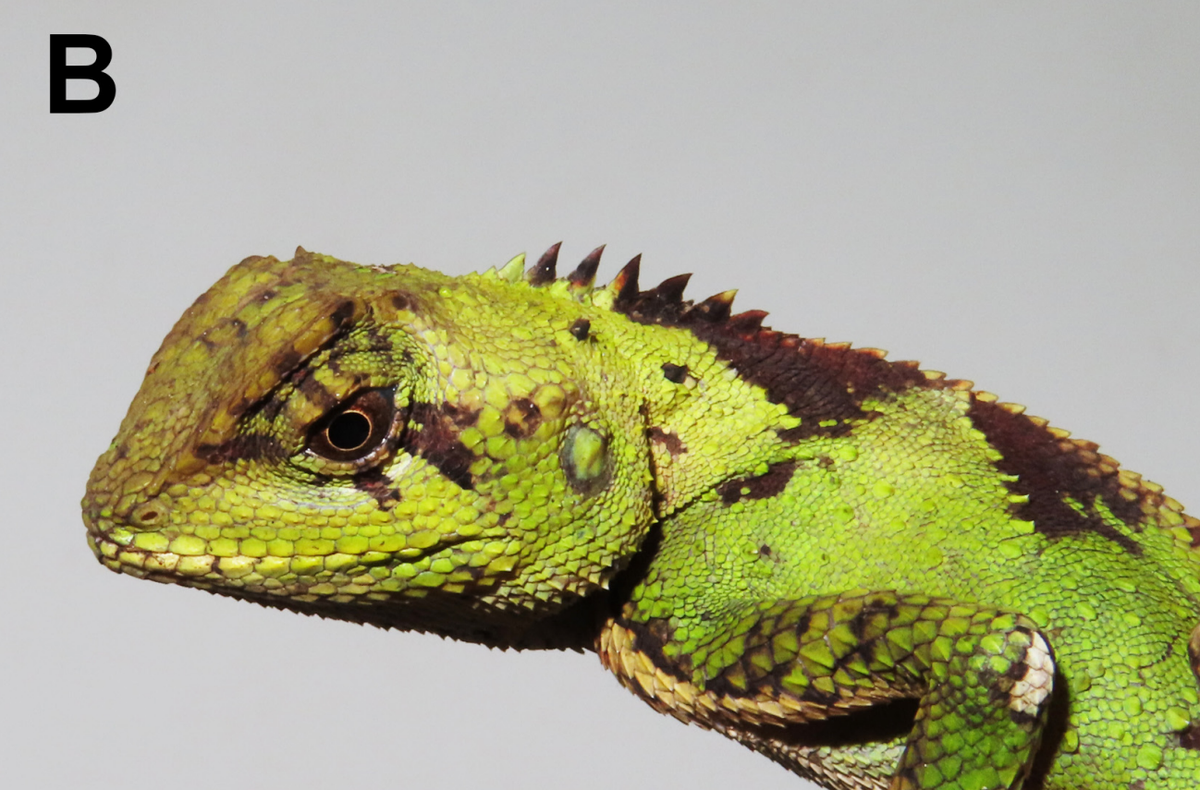
“Pricklenape” is exactly what it sounds like. A row of spines runs down the lizard’s back, including “elongated, dagger-like scales,” the study said.
The study described Grismer’s pricklenape lizards as “moderately sized,” reaching about 10 inches in length. They have “triangular” heads, “large” eyes, a “light orange” tongue, and “relatively long” limbs and tails.
Males and Females Look Like Two Completely Different Animals
Male and female Grismer’s pricklenape lizards don’t just look a little different from each other. They look dramatically different, almost like separate species entirely.
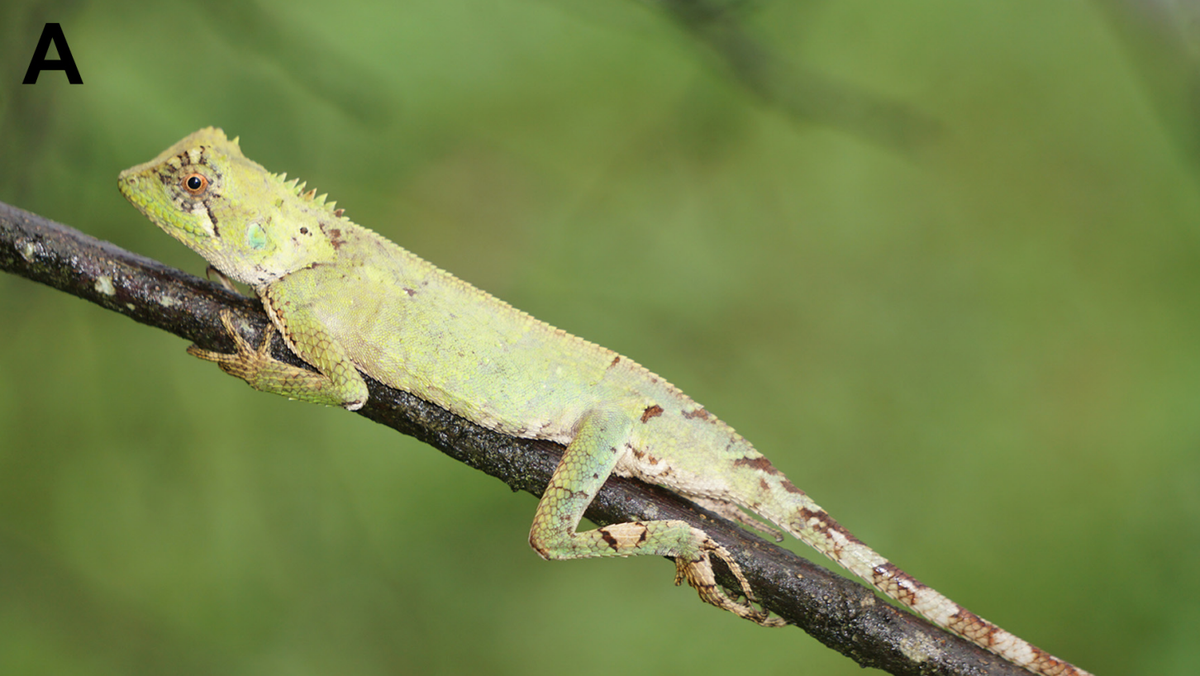
The males are the showstoppers. According to the study and accompanying photo, they are “light-lime green with four brownish black rhomboidal bands” on their backs and white elbow and knee patches. Their eyes are “dark brown,” and their throats are “pearl white.” Picture the brightest green you’ve ever seen on a reptile, accented with geometric dark bands and crisp white patches.
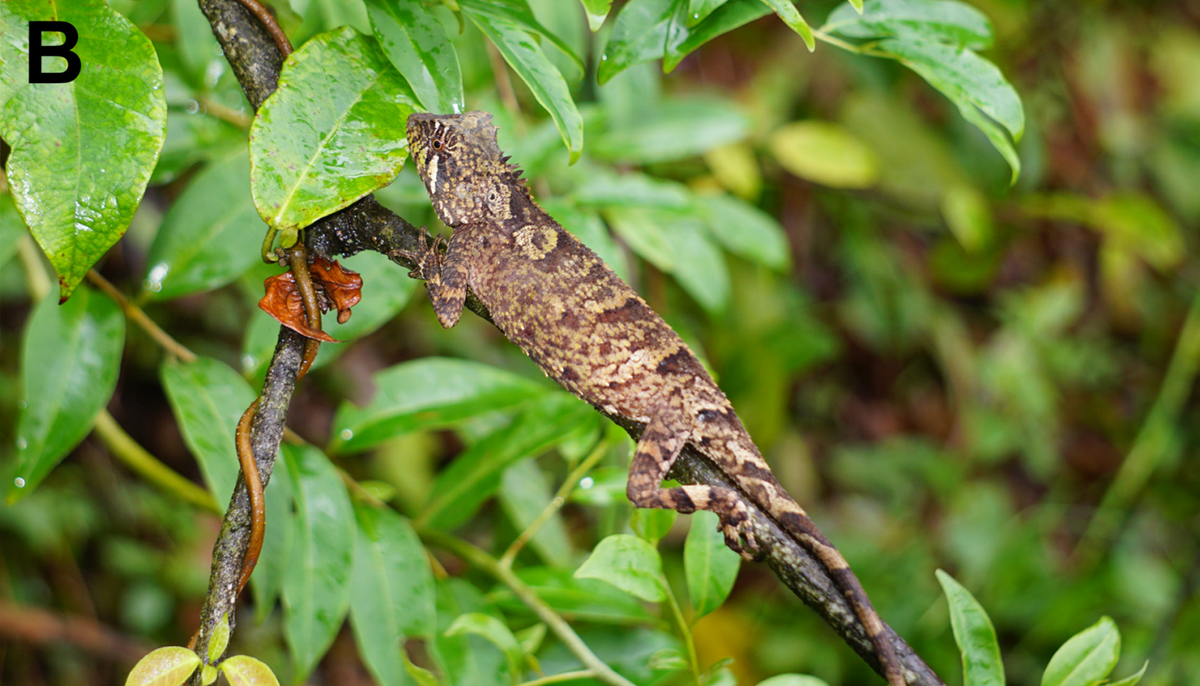
The females take a more understated approach. They are “significantly larger” than the males and “predominantly dark brown with scattered black or green mottling,” the study said. Their eyes are “light orange,” and their throats range from “light brown” to “dark orange.” Where the males are flashy and vivid, the females are muted and earthy — but no less impressive in size.
This kind of dramatic difference in appearance between males and females of the same species is known in biology as sexual dimorphism. Generally speaking, it’s relatively common in lizards, but the contrast between the electric green males and the dark brown females of this species is particularly eye-catching.
Found Mid-Nap in the Middle of the Night
The story of how researchers actually found these lizards is worth knowing. During nighttime searches, researchers found several lizards on branches and shrubs that they initially believed were a known species, the study said.
The lizards were found “clinging to, and sleeping in shrubs or on thin trunks of small trees beneath dense forest canopy” at night, according to the study. Researchers stumbled upon these animals mid-nap, holding onto branches in the darkness of a tropical forest.
It wasn’t until later, when the team ran DNA analysis and “detailed” physical examinations, that they realized these weren’t just any lizards — they represented a species entirely new to science.
They were “frequently encountered” during the rainy season but “rarely observed” in the dry season, the study said. That seasonal pattern suggests the lizards may be more active, or at least more visible, when the forest is wet and lush.
Only Found in One Forest on Earth
Grismer’s pricklenape lizard has only been found in one place so far. According to the study, that place is one forest in Dak Lak Province, located in central Vietnam approximately 220 miles northeast of Ho Chi Minh City.
One forest. One known population. As far as science currently knows, this single patch of dense forest canopy is the only place on the planet where this lime-green, spine-backed lizard exists.
When a species is only known from a single location, its long-term survival can be particularly vulnerable to habitat changes. For now, the focus is on documenting what researchers have found.
How Scientists Confirmed It Was New
The research team — which included Linh Tu Hoang Le, Tao Thien Nguyen, Truong Quang Nguyen, Thomas Ziegler, Dang Trong Do and Hai Ngoc Ngo — didn’t just rely on the lizard’s unusual appearance to declare it new. The study said the new species was identified based on body proportions, spines, scale pattern, coloring and other physical features.
DNA analysis showed at least 7% genetic divergence from other lizard species. Generally speaking, even a few percentage points of genetic divergence between populations can indicate separate species, so 7% represents a substantial gap. This lizard is genetically distinct from its nearest relatives.
A Name That Honors a Career in Reptile Research
Researchers named the species after L. Lee Grismer “in recognition of his great contributions to herpetological research in Southeast Asia,” the study said. Herpetology is the branch of zoology focused on reptiles and amphibians.
Grismer’s pricklenape lizard carries the name of a scientist whose work has helped expand understanding of the reptile diversity found across Southeast Asia.
Production of this article included the use of AI. It was reviewed and edited by a team of content specialists.