Wide-Eyed, Canyon-Climbing Critter With White Spikes Spotted Hiding On Sandstone Cliffs
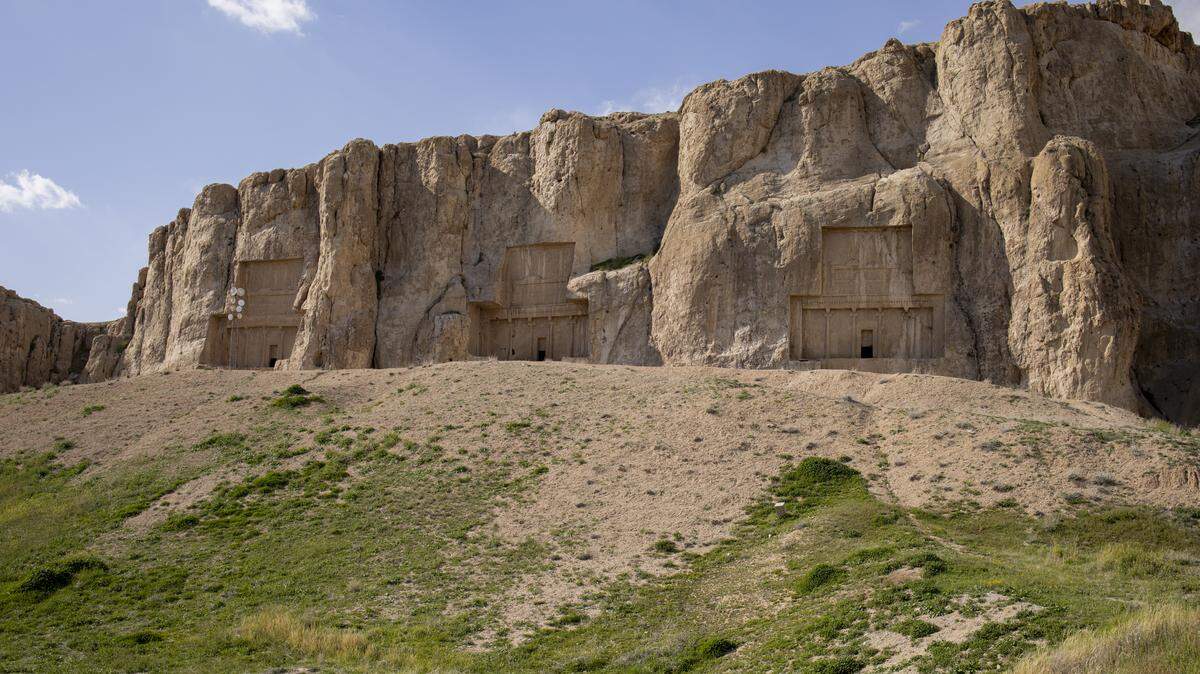
A nighttime survey in a remote, dry canyon in southern Iran led scientists to a small, spike-covered lizard with oversized eyes, hiding in plain sight on the face of a sandstone cliff.
After years of analysis, researchers confirmed it is a new species, one that stands genetically apart from every other known relative in its family.
A Canyon Surprise Yields a New Species
The lizard, now formally named Asaccus authenticus, or the Bandar-e Jask leaf-toed gecko, was first spotted by researchers in 2018.
A group of the small reptiles were found clinging to the walls of a canyon near Bandar-e Jask, a city in southern Iran, according to a 2024 study published in the peer-reviewed journal Zootaxa.
The geckos weren’t confined to the cliff faces alone. They were also found “on the ground under the Acacia trees and bushes,” per the study.
Their presence in both habitats suggests the species occupies a range of microenvironments within its canyon home.
Nighttime surveys are a common technique used by herpetologists — scientists who study reptiles and amphibians — because many gecko species are nocturnal, becoming active after dark when they hunt insects and other small prey.
It was during one of these after-dark expeditions that the research team encountered the wide-eyed creatures pressed against the sandstone.
What the New Gecko Species Looks Like
The Bandar-e Jask leaf-toed gecko is characterized by its “big” eyes, “slender” bodies covered in white spikes and “elongated limbs” with claws, according to the study.
Despite its dramatic appearance, the gecko is not large. It is medium-sized, only growing to about 4.5 inches in length.
That compact frame, paired with its spiny texture and long, clawed limbs, makes it well-suited for gripping rough rock surfaces — exactly where the researchers found it.
.png "asaccus-authenticus-new-species-gecko (2).png")
The combination of features gives the gecko a distinctive look that sets it apart visually from its closest relatives, but deeper genetic analysis ultimately confirmed just how unique this creature is.
A Genetic Outsider
DNA analysis proved key in establishing Asaccus authenticus as a distinct species.
The research found the new species had at least 23% genetic divergence from other related geckos — a gap that confirmed its separation from the rest of the family tree.
That genetic distance is reflected in the gecko’s name. Its species name comes from the Latin word authenticus, meaning “genuine” or “authentic,” due to its distant genetic relationship to other Iranian leaf-toed geckos.
The name is a nod to the animal’s originality — a creature that is genuinely its own, not a variation of something already known.
Prior to the discovery, there were 19 known species in the Asaccus genus throughout Iran, Arabia and the United Arab Emirates (UAE). Asaccus authenticus is now the 20th known species, per the study.
The locality where the new species was discovered lies away from the Zagros Range and distant from all other known Iranian Asaccus species, representing the easternmost distribution limit of the genus in Iran.
That geographic isolation helps explain the genetic divergence. Separated from other populations by considerable distance and rugged terrain, the Bandar-e Jask leaf-toed gecko appears to have evolved along its own independent path for a long time.
What the Researchers Said
The team behind the discovery — which included Roman Nazarov, Hossein Nabizadeh, Mehdi Rajabizadeh, Daniel Melnikov, Valentina Volkova, Nikolay Poyarkov and Eskandar Rastegar-Pouyani — pointed to broader implications for science and conservation.
“Further studies on the diversity and evolutionary relationships of Asaccus geckos is important both for achieving a better understanding of speciation and phylogeography patterns in the region, as well as for the environmental and conservation issues,” the researchers wrote in the study.
Understanding how species like Asaccus authenticus came to be, and how they are distributed across the landscape, can help scientists piece together the evolutionary history of the region and identify areas that may need protection.
The team also stressed urgency.
“The high level of endemism in the genus Asaccus indicates the existence of yet underestimated diversity and lineages that need to be protected,” the team concluded.
Endemism refers to species found in only one specific geographic area and nowhere else on Earth. When a genus shows a high level of endemism, it signals that many of its member species have evolved in isolation, often in small ranges.
That makes them especially vulnerable to habitat loss and environmental change, because they have no other populations elsewhere to fall back on.
Still More to Discover
The discovery of the Bandar-e Jask leaf-toed gecko is a reminder that even now, unknown species are still waiting to be found — sometimes clinging to the wall of a canyon, just out of reach of a flashlight’s beam.
With at least 23% genetic divergence from its nearest relatives and a home at the far eastern edge of its genus’s known range in Iran, Asaccus authenticus is both a scientific novelty and a conservation priority.
Production of this article included the use of AI. It was reviewed and edited by a team of content specialists.
This story was originally published February 20, 2026 at 8:55 AM.