
Deep-Sea Expedition Unveils 28 New Species in Coral Reef the Size of Vatican City
Production of this article included the use of AI. It was reviewed and edited by a team of content specialists.
A landmark deep-sea expedition off the coast of Argentina has produced a stunning catalog of new marine life — and a sobering reminder that human pollution has already reached some of the most remote ecosystems on Earth.
Alongside 28 suspected new species and the largest known deep-sea coral reef of its kind, researchers discovered fishing nets, garbage bags and a well-preserved VHS tape with a Korean sticker on it scattered across the deep ocean floor.
The findings, documented during an Argentinian-led expedition aboard the research vessel R/V Falkor (too), underscore both the richness of life in the deep sea and the threats it faces from human activity.
The research was conducted by the Schmidt Ocean Institute, which released photos and videos of the findings on Feb. 3. Scientists surveyed deep-sea ecosystems along the entire length of Argentina’s continental margin, from Buenos Aires to waters near Tierra del Fuego.
Human Pollution in the Deep-Sea Abyss
Among the expedition’s most striking revelations was the presence of human debris in deep-sea areas that few people will ever see firsthand.
Fishing nets, garbage bags and a VHS tape — remarkably intact — were observed during the survey.
The durability of plastics allows trash to persist even in remote deep-ocean environments, according to the expedition’s findings.
The discovery of fishing nets is particularly notable given the threat that bottom trawling and other fishing activities pose to the fragile ecosystems documented during this same voyage.
Items like these serve as tangible evidence that pollution generated by human industry does not stay near the surface or close to shore. It sinks, it drifts and it endures — arriving in environments where life has evolved over millennia in near-total isolation from the world above.
A Coral Reef the Size of Vatican City — and Why It’s Vulnerable
The expedition documented the largest known reef of Bathelia candida in the world.
The reef covers at least 0.4 square kilometers — about the size of Vatican City — and provides habitat for fish, crustaceans, octopuses and more.
Scientists also found Bathelia reefs 600 km farther south than their previously known range, expanding the scientific understanding of where these corals can survive.
Deep-sea coral ecosystems like these are considered Vulnerable Marine Ecosystems (VMEs) because they support high biodiversity but are threatened by human activities like bottom trawling.
The VME designation, established under frameworks by the Food and Agriculture Organization of the United Nations, is meant to flag ecosystems that require protection precisely because of their ecological significance and fragility.
The fact that fishing nets were found in these same deep-sea survey areas sharpens the urgency of that designation.
“We collected an unprecedented number of chemical, physical, and biological samples that will be used to understand connections in our waters for years to come,” said Dr. Melisa Fernández Severini of Instituto Argentino de Oceanografía and CONICET, in a Feb. 3 press release.
“These samples represent a unique opportunity to understand not only how extraordinary these extreme ecosystems are, but also how vulnerable they can be,” she added.
28 Suspected New Species and a Deep Sea Teeming With Life
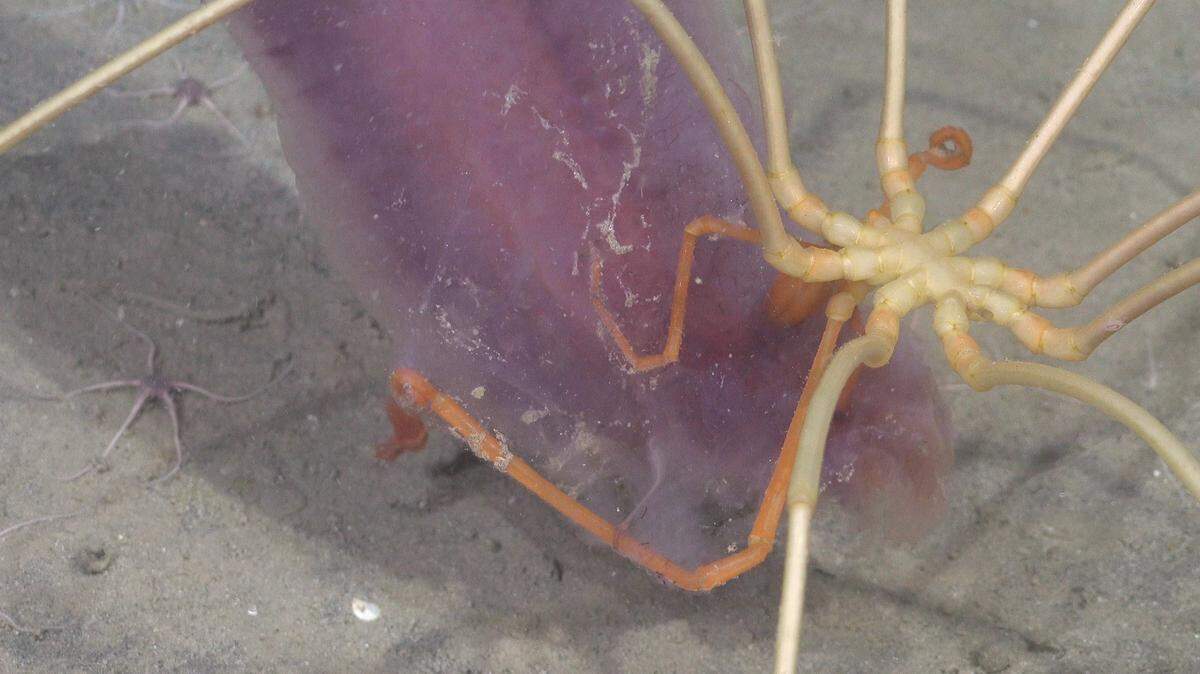
Researchers documented 28 suspected new species, including worms, corals, sea urchins, sea snails and sea anemones. The sheer number of potential new species illustrates just how little of Argentina’s deep-sea biodiversity has been explored — and how much there is left to protect.
“We were not expecting to see this level of biodiversity in the Argentine deep sea, and are so excited to see it teeming with life,” said the expedition’s chief scientist, Dr. María Emilia Bravo of the University of Buenos Aires and CONICET.
“Seeing all the biodiversity, ecosystem functions, and connectivity unfolding together was incredible. We opened a window into our country’s biodiversity only to find there are so many more windows left to be opened,” she continued.
The expedition also produced two rare sightings that add to the picture of a complex, interconnected deep-sea environment.
Scientists documented a rare giant phantom jellyfish, whose arms can reach up to 10 meters (33 feet) — about the size of a school bus.
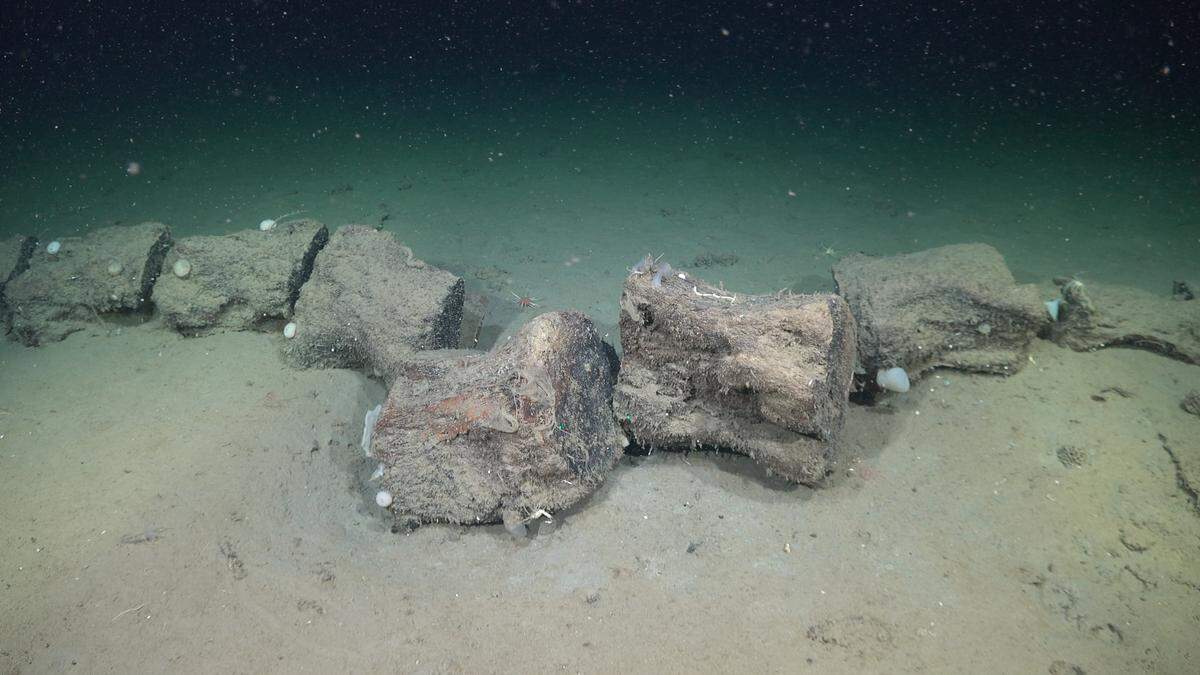
They also recorded Argentina’s first deep-water whale fall, found at 3,890 meters depth. Whale falls, which occur when a whale carcass sinks to the ocean floor, create temporary ecosystems that feed octopuses, sharks, crabs, microorganisms and more.
These accidental habitats demonstrate the deep sea’s capacity to turn even death into a foundation for biodiversity — ecosystems that could be disrupted by the same human debris and bottom-trawling activity documented nearby.
Cold Seeps, Methane and Ancient Coral Gardens
The expedition observed additional deep-sea ecosystems that further expand the scientific record of what lives along Argentina’s continental margin.
Researchers documented ancient bubblegum coral gardens (Paragorgia arborea) at around 3,000 meters depth. They also identified a large active cold seep about 1 square kilometer in size.
Cold seeps are areas where methane and chemicals leak from the seafloor. These chemicals fuel microbes that support animals such as clams, mussels, tube worms and more.
The presence of a large methane-leaking cold seep raises its own set of questions for those tracking the intersection of ocean ecosystems and climate.
The expedition collected an unprecedented number of chemical, physical and biological samples that will help scientists understand ecosystem connections, biodiversity patterns and how vulnerable these deep-sea environments may be.
What Comes Next
The scale of this expedition — spanning the full length of Argentina’s continental margin — makes its data set unusually comprehensive. But as the researchers themselves emphasized, this is only the beginning.
“With every expedition to the deep sea, we find the Ocean is full of life—as much as we see on land, and perhaps more because the Ocean contains 98% of the living space on this planet,” said Schmidt Ocean Institute’s executive director, Dr. Jyotika Virmani.
“We have been privileged to work with outstanding scientists across three expeditions in Argentinian waters, and look forward to seeing their research continue to unfold, unlocking new understanding and inspiration,” she added.
The juxtaposition at the heart of this expedition is difficult to ignore: a deep ocean brimming with life scientists had not expected, sharing space with fishing nets, garbage bags and a VHS tape that never should have been there.
The samples collected will be studied for years to come, but the evidence of human impact on these remote ecosystems is already visible on the seafloor.