A Rare Glimpse: Camera Captures One of Only 400 Northern Hairy-Nosed Wombats Left on Earth
Production of this article included the use of AI. It was reviewed and edited by a team of content specialists.
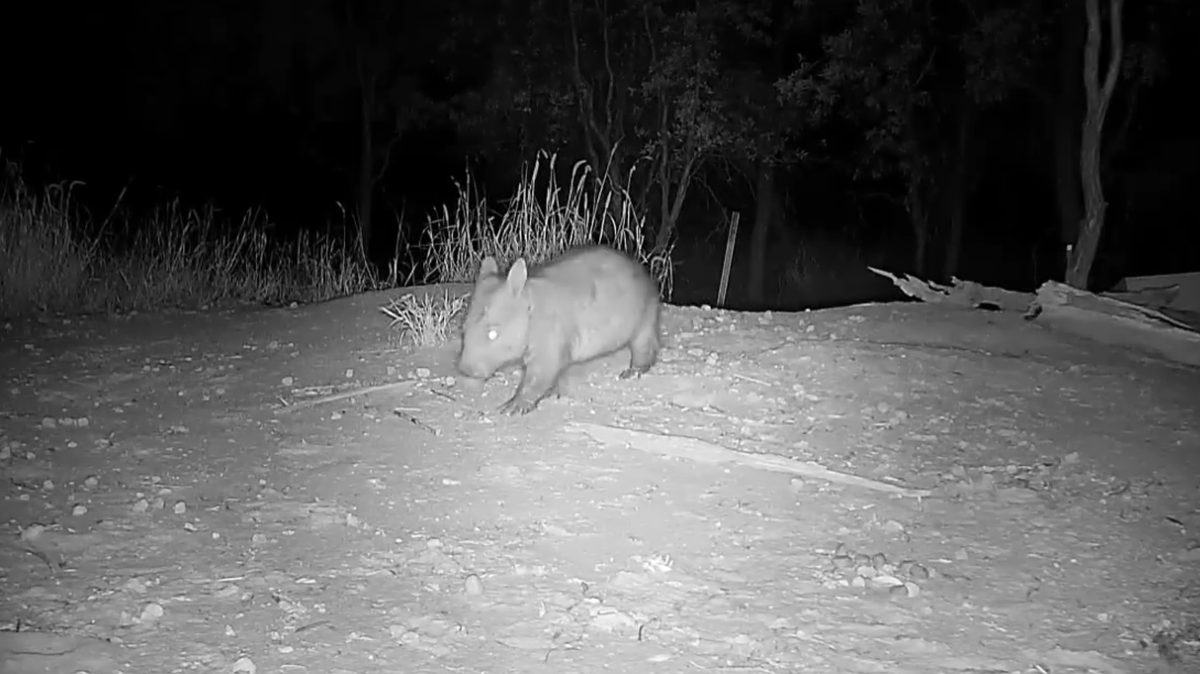
Somewhere in the quiet darkness of an Australian nature refuge, a young wombat emerged from its burrow, padded across a rocky landscape, and wandered into the night — never knowing it had just delivered one of the most hopeful wildlife moments of the year.
The animal caught on camera was a northern hairy-nosed wombat, “one of Australia’s rarest mammals” and one of only 400 individuals left in the world, according to the Australian Wildlife Conservancy. For anyone who follows the planet’s most endangered species, that number alone underscores how extraordinary this footage truly is.
A Discovery Hidden in 100 Hours of Footage
The sighting almost didn’t happen — at least not for human eyes.
Ecologist Andy Howe “was scrolling through over 100 hours” of footage from wildlife cameras stationed at the Richard Underwood Nature Refuge when something caught his attention, the Australian Wildlife Conservancy said in a Sept. 3, 2024 news release.
In the two clips, the creature was a young animal who emerged from a small burrow and walked a few seconds into the distance. The young wombat was filmed on two nights in June, according to video footage shared with the Miami Herald.
What Howe found was far more than a charming animal video. It was evidence that one of the most critically endangered mammals on the planet is not just surviving — but thriving and reproducing in a protected habitat.
“The wombat is quite robust, indicating that it is feeding well and getting enough nutrition,” Howe said in the release. He also described the wombat as healthy and young, likely about 2 years old.
Meet the Northern Hairy-Nosed Wombat
For those unfamiliar with this elusive species, the northern hairy-nosed wombat is a remarkable creature by any measure. These animals are the “largest burrowing marsupial in the world,” reaching over three feet in length and over 60 pounds, according to an article from the conservancy.
They have “a broad nose, pointy ears, soft greyish fur and faint black eye patches,” according to Australian Wildlife. Those distinctive features give the species a look that is at once gentle and unmistakable — a face that, for the wildlife community, has become a symbol of how close a species can come to vanishing entirely and still find a path back.
The backstory of this species is one that makes the recent camera-trap footage all the more resonant for anyone who cares about wildlife conservation.
The species’ population declined for decades due to predation and habitat destruction. “The northern hairy-nosed wombat could once be found from southern New South Wales through to central Queensland, but clearing of their preferred open eucalypt woodland habitat for grazing, competition with livestock and rabbits, and predation through the 20th century led to a dramatic decline in populations,” per Discover Wildlife.
By 1982, the species had been restricted to a single population of just 35 individuals at Epping Forest National Park in Queensland.
That number bears repeating: 35. An entire species, reduced to a population smaller than a classroom of students. The northern hairy-nosed wombat was teetering on the very edge of extinction.
Today, that number has grown to approximately 400 — a recovery that has taken decades of careful work and dedication from conservationists across Australia. While still critically endangered, the trajectory from 35 to 400 represents an extraordinary arc of survival.
Expanding the Species’ Footprint
A central part of that recovery effort has been the strategic establishment of new colonies to ensure the species is not confined to a single location — a vulnerability that could prove catastrophic in the event of disease, wildfire or other disaster.
In 2009, a second colony of the rare wombat was established at Richard Underwood Nature Refuge. And in 2024, a third colony was created at Powrunna State Forest.
It is at Richard Underwood Nature Refuge — that second colony site — where Howe’s cameras captured the young wombat on its nighttime excursions. The footage holds particular significance because it suggests this population is reproducing successfully within the fenced, protected area.
Why This Footage Matters So Much
Ecologists at Australian Wildlife Conservancy (AWC) say the video footage provides exciting evidence wombats are breeding in the refuge again.
For a species with only 400 individuals remaining worldwide, every birth matters. Every healthy young animal represents a measurable gain for the entire population. Howe explained the broader significance of the sighting in his assessment of the footage.
“Overall, this bit of footage tells us a lot about the state of the (nature reserve’s) population, showing us that the wombats have the right conditions and feel comfortable enough to breed,” Howe said. “It’s very gratifying to know that one of the world’s most critically endangered animals is doing well and breeding within the safety of the fenced area.”
The fact that the young wombat appeared robust, well-fed and healthy at an estimated 2 years old signals that the habitat within the refuge is providing the resources these animals need to not only survive but to raise their young successfully.
Looking Ahead: Genetics and Future Populations
The conservation work is far from over. AWC will also develop a Genetic Management Plan with the University of Adelaide by collecting and analyzing wombat hair from burrow entrances — this research will be critical to inform future translocations for the species.
Managing the genetic health of such a small population is essential for the species’ long-term viability, and the hair-collection method offers a noninvasive way to gather vital data without disturbing the wombats in their burrows.
“Government funding enables AWC and its partners to improve the trajectory of the species by reducing key threats, commencing a genetic management plan and increasing data knowledge – all of which will support a growing and sustainable population at RUNR and hopefully, assist with the establishment of future populations,” concludes Andy.
A Moment Worth Celebrating
In a world where wildlife news too often centers on loss, the sight of a healthy young northern hairy-nosed wombat padding confidently across a rocky landscape offers something different: genuine hope. From a low of 35 individuals in 1982 to 400 today, with three colony sites now established and evidence of active breeding at the Richard Underwood Nature Refuge, this species’ story is one of painstaking recovery — measured not in sweeping victories but in quiet moments caught on camera in the Australian night.
For those 400 wombats, every step forward counts. And thanks to a wildlife camera and an ecologist willing to sift through more than 100 hours of footage, the world gets to witness one of those steps for itself.