Rare ‘Fire Tiger’ of Thai Legend Captured on Camera in Stunning National Park Footage
The creation of this article included the use of AI and was edited by human content creators. Read more on our AI policy here.
A creature steeped in Thai mythology has emerged from the shadows of a southern Thailand forest, offering wildlife enthusiasts and nature lovers a rare glimpse of one of Southeast Asia’s most elusive predators.
The remarkable encounter, captured by a trail camera in Khao Luang National Park, has captivated viewers and reminded the world of the mysterious wildlife still roaming the region’s dense forests—animals so rarely seen that they’ve become the stuff of legend.
A Golden Ghost Appears
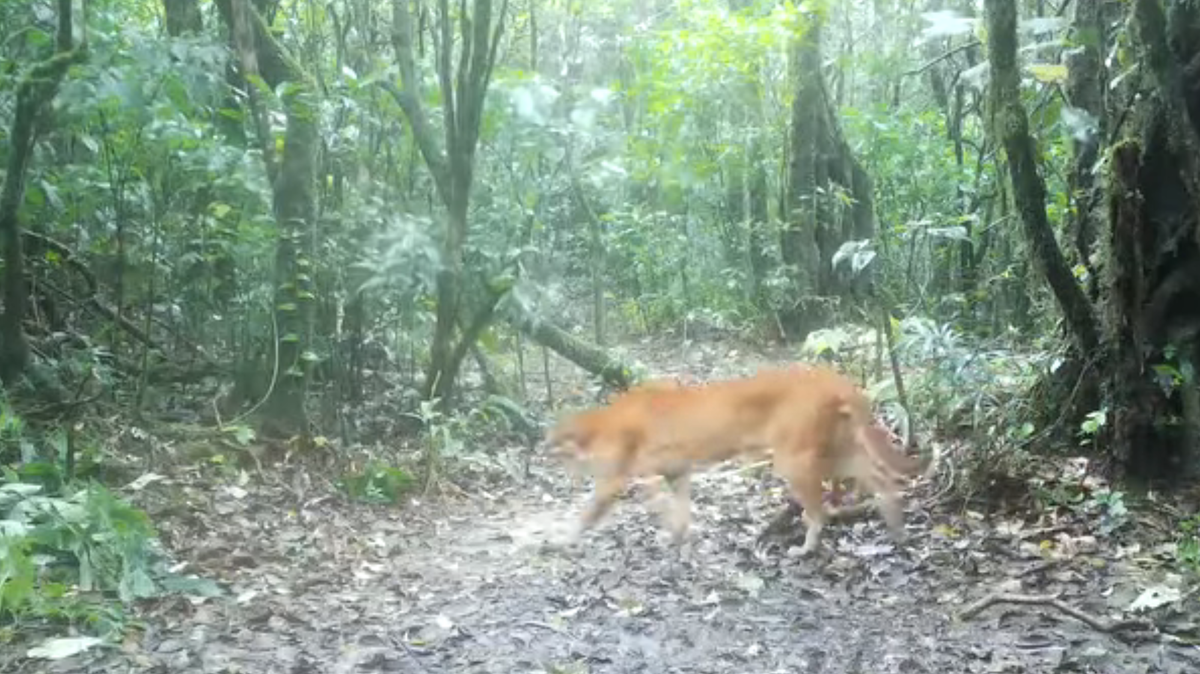
In a forest in southern Thailand, a “golden” predator emerged from the trees and walked across a sunlit trail, unaware it was being filmed.
The footage, lasting just 10 seconds, shows an Asian golden cat calmly walking near the camera before pausing at the edge of the woods. After a brief moment, the cat disappeared back into the forest, leaving behind only the digital evidence of its presence.
Wildlife patrols had entered Khao Luang National Park to check trail cameras and review recent footage as part of routine monitoring, park officials said in a July 7 Facebook post. The video, filmed on June 20, immediately stood out to officials who recognized the significance of what their camera had captured.
Park officials described the recent Asian golden cat sighting as rare—and for good reason. These solitary hunters have earned a reputation for being nearly impossible to spot in the wild, making any confirmed sighting a noteworthy event for conservationists and wildlife researchers alike.
The Mysterious ‘Fire Tiger’
What makes this sighting particularly fascinating extends beyond the animal’s rarity. The Asian golden cat holds a special place in the cultural imagination of Thailand, where it has been woven into regional folklore for generations.
Asian golden cats appear in mythology in “some regions of Thailand” and are referred to as “Seua fai,” or “fire tiger,” officials said.
The name evokes images of power and mysticism, and the legends surrounding the creature are equally dramatic. “According to a regional legend, the burning of an Asian golden cat’s fur drives tigers away,” officials noted, highlighting the supernatural significance that local communities have long attributed to this striking predator.
This connection between wildlife and folklore speaks to the deep relationship that communities throughout Southeast Asia have maintained with their natural environment. For centuries, animals like the Asian golden cat have inspired stories, beliefs, and traditions that continue to resonate today.
A Formidable Hunter
Despite its relatively modest size compared to its larger feline cousins, the Asian golden cat is far from a pushover in the predator hierarchy of Southeast Asian forests.
The Asian golden cat, scientifically known as Catopuma temminckii, is a “medium-sized wild cat” found across Southeast Asia with distinctive tan coloring, according to Thai National Parks.
The species is described as “rather elusive” and known to be “territorial and solitary” predators “capable of bringing down prey much larger than themselves.”
This hunting prowess, combined with their secretive nature, makes the Asian golden cat a particularly intriguing subject for wildlife researchers. Unlike more commonly observed predators, these cats prefer to remain hidden, conducting their hunts and daily activities far from human eyes.
Their solitary lifestyle means that even in areas where populations exist, individual cats may never encounter one another except during mating season. This territorial behavior further reduces the chances of human observation, as each cat maintains and patrols its own distinct range within the forest.
A Species Under Threat
The excitement surrounding this trail camera footage carries an undercurrent of concern. The Asian golden cat faces significant challenges to its long-term survival, making each confirmed sighting both a cause for celebration and a reminder of what could be lost.
Due to hunting and habitat loss, Asian golden cats are considered vulnerable and at risk of extinction, officials said.
The threats facing these cats are unfortunately common to many wildlife species across Southeast Asia. As human development continues to expand into previously wild areas, the dense forest habitats that Asian golden cats depend upon are shrinking. Simultaneously, illegal hunting continues to pressure populations that are already struggling to maintain viable numbers.
Conservation efforts in protected areas like Khao Luang National Park represent one of the most important strategies for preserving species like the Asian golden cat. These parks provide refuge where wildlife can live and reproduce without the immediate pressures of habitat destruction and hunting.
The Value of Trail Cameras
The technology that captured this remarkable footage plays an increasingly vital role in modern wildlife conservation. Trail cameras, also known as camera traps, allow researchers to monitor wildlife populations without disturbing the animals or requiring constant human presence in sensitive habitats.
For elusive species like the Asian golden cat, trail cameras often provide the only reliable method of confirming their presence in a given area. The routine monitoring that led to this discovery demonstrates how consistent, patient observation can yield extraordinary results.
Each piece of footage collected helps scientists better understand population distributions, animal behavior, and habitat use patterns. Over time, this data becomes invaluable for making informed conservation decisions and measuring the effectiveness of protection efforts.
Where the Magic Happened
Khao Luang National Park is located in southern Thailand and is roughly a 480-mile drive south of Bangkok.
The park represents one of Thailand’s important protected natural areas, providing habitat for a diverse array of wildlife species. For visitors and nature enthusiasts, such parks offer opportunities to experience
Thailand’s remarkable biodiversity, though spotting creatures as elusive as the Asian golden cat remains extraordinarily unlikely even for the most dedicated wildlife watchers.