
FYI Book Club: ‘The Girl on the Train’
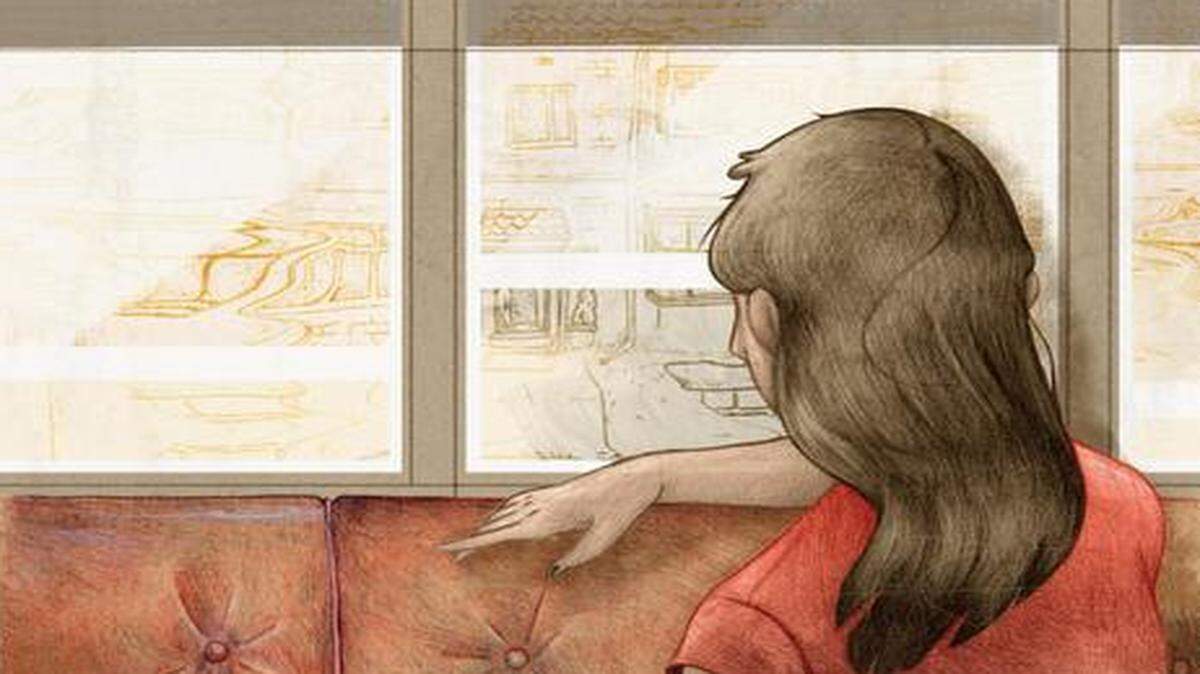
Rachel Watson takes the train into the city every day, pretending to go to a job she lost.
She obsesses about her cheating husband — ex-husband — and his blissful new life. He’s a big reason she’s an over-imbibing commuter, wine from small bottles, pre-mixed cans of gin and tonic.
Pathetic, she knows, and in Paula Hawkins’ novel, “The Girl on the Train,” the title character willingly soaks up the blame for her personal collapse. The psychological thriller by the British author is the current selection of the FYI Book Club.
A saving distraction for Rachel during the useless rides into London: her Hitchcockian penchant to spy on a lovely young couple as the train rolls past their house and backyard.
They clearly have everything she and her former husband once had. They’re storybook perfect.
Until, and it’s all over the news, the stylish young wife disappears. As a regular voyeur, Rachel may know something. But she also plays loosely with the truth, and through the train window and the fog of alcohol, how much can she know?
Hawkins provides two other narrators, but their accounts — colored, too, by perception, by love, by hurt — might be nearly as suspect as Rachel’s.
We reached Hawkins at London’s Euston train station, which happens to be Rachel’s destination each morning. Here are edited excerpts of our conversation.
Q. What was the idea that sparked your story?
A. I’ve done commutes similar to the one Rachel is doing on the train, the above-ground subway. I loved doing that thing of staring out into people’s houses, and there are times you go very close. You can see right into their living rooms.
I wondered what I would do if I saw something shocking or surprising or an act of violence, that “Rear Window” idea. Much later I was thinking about this character, this unreliable, alcoholic character. I put her on the train, and the story developed.
This is usually a harmless game, like watching people from a park bench and making up stories about them.
Absolutely. I think it can be tempting as a commuter. You see a lot of the same houses and you might see the same people, and you might get the feeling you’ve gotten to the know them. You don’t really know them, of course, but you have that feeling of familiarity.
Have you always been a fan of the thriller?
Yes, not necessarily police procedurals or stories of serial killers, but more low-key domestic situations, where everything looks normal on the surface but underneath there’s this tension, suspense and darkness.
Rachel could have been a well-adjusted, normal commuter on the train. Why did you decide otherwise?
I’m a sucker for an unreliable narrator, and she is basically the ultimate unreliable narrator. She’s not reliable even to herself. She can’t trust her own judgment and her own memories.
I think unreliable narrators pull the reader in. The reader can’t trust the person telling the story, so they have to fill in the gaps and try to figure things out for themselves. And I’m drawn to flawed protagonists. The flaws make them compelling.
Rachel had hit rock bottom, and she’s behaving very badly. But the person she once was is still in there, fighting to come back.
Despite everything she is, I felt sympathetic toward her. How did you do that?
She knows better than anyone how bad she is. She’s self-loathing. From that point of view, you can pity her, but you also want to give her a slap in the face. “Just put down the bottle and you’ll be all right.” Enough of us have known someone with an addiction, or experienced it ourselves, to realize how it’s something that touches a lot of lives.
Have you been close to people dealing with alcoholism?
I know people who have struggled with it, of course. We live in a quite a booze-soaked culture in the U.K. I also think that everyone can recognize someone who is walking quite a fine line, the person who often has one too many, and you can see that it wouldn’t take much in their lives to tip them over the edge. A job loss. A breakup of a relationship. And that’s exactly what happened to Rachel.
Rachel experiences alcoholic blackouts. How did you get interested in that?
I know someone who suffered from them, and it’s a really strange thing. Not everyone who drinks heavily gets them, and not everyone who has them gets them every time they drink. Some people can’t remember getting into a taxi, say. Some lose a couple of hours, or they do extraordinary things and wake up the next morning and have absolutely no idea.
Of course, other things can affect your memory. Rachel also has a head injury, and she can’t remember how it happened. She has a traumatic experience. All of those things can affect memory.
And it’s a useful device for a thriller.
Yes, it’s a commonly used thing in crime thrillers, people losing their memory. For one reason or another, people don’t have a good recall of what’s happened.
Another device here is the use of multiple narrators, three in all: Rachel, Megan (the missing woman) and Anna (the wife of Rachel’s ex-husband). How did you decide that?
Actually I had thought I would write the whole thing from Rachel’s point of view. But we needed to hear Megan’s story, and she’s the only one who knew it.
Later still I thought it would be really interesting to bring Anna in as well, to have all three women looking at each other — a triangulation of viewpoints, each jumping to conclusions about each other’s actions. Plus we get to see events from different perspectives.
But doesn’t it complicate the writing process?
Yes, it’s tricky, especially here. These are all women of a similar age, similar experiences, so to differentiate their voices was quite difficult. And it’s not just the narration that jumps around, it’s also the timeline. That takes a lot of careful plotting.
You want to keep readers on edge in a thriller. Does shifting narrators help with that?
I think it does. Readers think they know a situation but then they get a different viewpoint and have to reassess their own views and expectations, which increases the tension.
One of the disturbing themes here is the question of how well we know the people closest to us.
That’s part of it. A lot of people in relationships at some point wonder how much they really know the person closest to them. We hear of people living double lives or duplicitous lives, and it must cross everyone’s mind. What if this person is not who I think they are?
The book is also all about perception, our perception of others, and the layers you have to get through before you really know somebody. There are so many factors that can influence that. Drinking can blind you to things. Being very much in love can blind you to things.
And perhaps an even more disturbing consideration, how little we know ourselves.
For Rachel, she casts herself in an even worse light than she really should be, whereas Megan refuses to look at herself properly. Megan likes to be seen through others’ eyes rather than spend any time looking at herself. That way she doesn’t have to examine the horrible things that have happened to her.
Memory plays a part, and that’s something I want to explore further. We tell stories about ourselves based on how we remember things. When you meet someone, you tell about your upbringing, your family, and these stories become our truths. But they aren’t completely true. We embellish, we leave things out. But they become our new memory.
People often have vivid memories of things that happened to them in childhood, until someone tells them, No, you weren’t actually there. Or, you weren’t even born yet.
And so we’re left to think, What else am I misremembering?
THE PAULA HAWKINS FILE
Age: 42
Hometown: Lives in London, grew up in Harare, Zimbabwe
Education: Bachelor’s in politics, philosophy and economics at Keble College, Oxford University
Earlier career: Worked as a journalist for 15 years
Other books: Four novels under the pseudonym Amy Silver
EXCERPT
From “The Girl on the Train” by Paula Hawkins, published by Riverhead Books, a member of Penguin Group. From the train Rachel likes to spy on a couple she doesn’t know but has named Jess and Jason. Later she learns that Jess’ name is Megan.
MONDAY, JULY 8, 2013
MORNING
It’s a relief to be back on the 8:04. It’s not that I can’t wait to get into London to start my week — I don’t particularly want to be in London at all. I just want to lean back in the soft, sagging velour seat, feel the warmth of the sunshine streaming through the window, feel the carriage rock back and forth and back and forth, the comforting rhythm of wheels on tracks. I’d rather be here, looking out at the houses beside the track, than almost anywhere else.
There’s a faulty signal on this line, about halfway through my journey. I assume it must be faulty, in any case, because it’s almost always red; we stop there most days, sometimes just for a few seconds, sometimes for minutes on end. If I sit in carriage D, which I usually do, and the train stops at this signal, which it almost always does, I have a perfect view into my favourite trackside house: number fifteen.
Number fifteen is much like the other houses along this stretch of track: a Victorian semi, two storeys high, overlooking a narrow, well-tended garden that runs around twenty feet down towards some fencing, beyond which lie a few metres of no-man’s-land before you get to the railway track. I know this house by heart. I know every brick, I know the colour of the curtains in the upstairs bedroom (beige, with a dark-blue print), I know that the paint is peeling off the bathroom window frame and that there are four tiles missing from a section of the roof over on the right-hand side.
I know that on warm summer evenings, the occupants of this house, Jason and Jess, sometimes climb out of the large sash window to sit on the makeshift terrace on top of the kitchen-extension roof. They are a perfect, golden couple. He is dark-haired and well built, strong, protective, kind. He has a great laugh. She is one of those tiny bird-women, a beauty, pale-skinned with blond hair cropped short. She has the bone structure to carry that kind of thing off, sharp cheekbones dappled with a sprinkling of freckles, a fine jaw.
While we’re stuck at the red signal, I look for them. Jess is often out there in the mornings, especially in the summer, drinking her coffee. Sometimes, when I see her there, I feel as though she sees me, too, I feel as though she looks right back at me, and I want to wave. I’m too self-conscious. I don’t see Jason quite so much, he’s away a lot with work. But even if they’re not there, I think about what they might be up to. Maybe this morning they’ve both got the day off and she’s lying in bed while he makes breakfast, or maybe they’ve gone for a run together, because that’s the sort of thing they do. (Tom and I used to run together on Sundays, me going at slightly above my normal pace, him at about half his, just so we could run side by side.) Maybe Jess is upstairs in the spare room, painting, or maybe they’re in the shower together, her hands pressed against the tiles, his hands on her hips.
EVENING
Turning slightly towards the window, my back to the rest of the carriage, I open one of the little bottles of Chenin Blanc I purchased from the Whistlestop at Euston. It’s not cold, but it’ll do. I pour some into a plastic cup, screw the top back on and slip the bottle into my handbag. It’s less acceptable to drink on the train on a Monday, unless you’re drinking with company, which I am not.
There are familiar faces on these trains, people I see every week, going to and fro. I recognize them and they probably recognize me. I don’t know whether they see me, though, for what I really am.
It’s a glorious evening, warm but not too close, the sun starting its lazy descent, shadows lengthening and the light just beginning to burnish the trees with gold. The train is rattling along, we whip past Jason and Jess’s place, they pass in a blur of evening sunshine. Sometimes, not often, I can see them from this side of the track. If there’s no train going in the opposite direction, and if we’re travelling slowly enough, I can sometimes catch a glimpse of them out on their terrace. If not — like today — I can imagine them. Jess will be sitting with her feet up on the table out on the terrace, a glass of wine in her hand, Jason standing behind her, his hands on her shoulders. I can imagine the feel of his hands, the weight of them, reassuring and protective. Sometimes I catch myself trying to remember the last time I had meaningful physical contact with another person, just a hug or a heartfelt squeeze of my hand, and my heart twitches.
JOIN THE DISCUSSION
The Kansas City Star partners with the Kansas City Public Library to present a “book of the moment” selection every six to eight weeks. We invite the community to read along.
Members of FYI and the library staff chose “The Girl on the Train” by Paula Hawkins.
If you would like to participate in a discussion of the book scheduled for 7 p.m. April 22 at Union Station, email kaitestover@kclibrary.org.
This story was originally published March 13, 2015 at 7:00 AM.