
The Classical Beat: KC Ballet takes on the ethereal challenge of ‘Giselle’
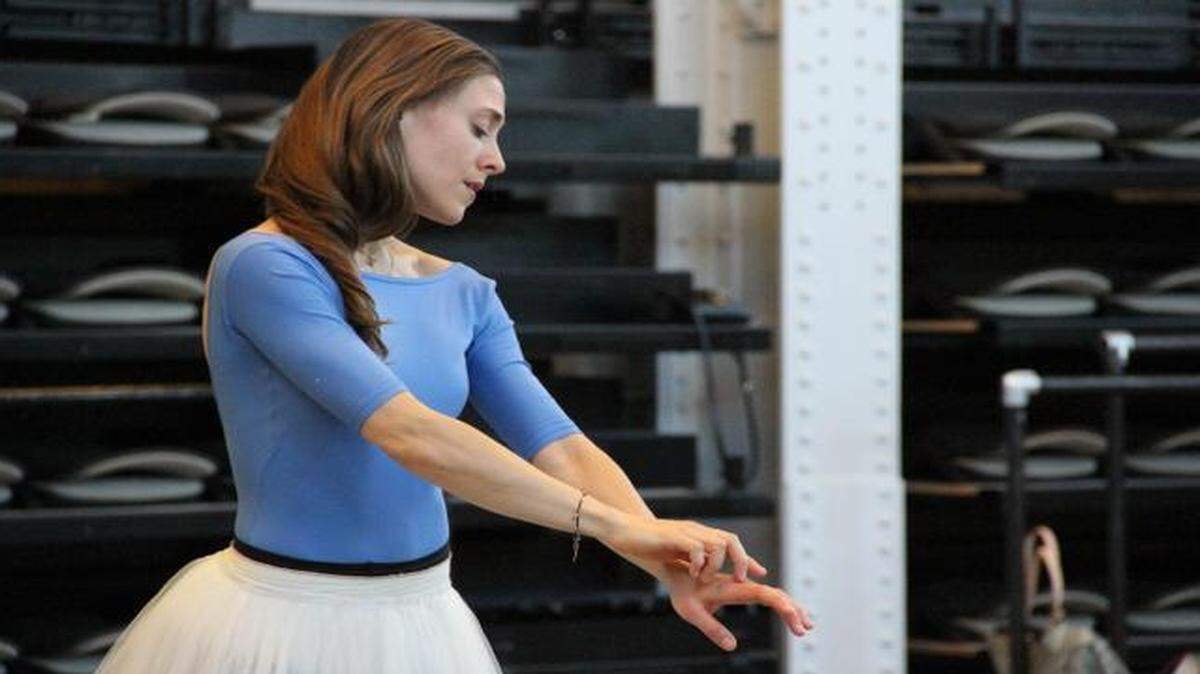
The 19th century French ballet “Giselle” is unlike anything in contemporary American entertainment.
It’s a fragile art form from another time and place: The dreamlike tale of revenge-minded ghosts forcing men to dance to their deaths, told through ethereal music and the subtlest of movements.
With these supernatural elements and a celebration of eternal love, “Giselle” is a true product of the romantic era. The music is by Adolphe Adam, who is perhaps best known for “O Holy Night.” The plot comes from a story by Heinrich Heine and a poem by Victor Hugo.
The Kansas City Ballet will present “Giselle” for six performances beginning Friday at Muriel Kauffman Theatre. Dancers Molly Wagner and Tempe Ostergren will alternate the title role. “Giselle” is the only piece on the program.
Devon Carney, the company’s artistic director, is basing this version closely on that of Marius Petipa, whose brother, Lucien, danced the role of Albrecht in the original production in 1841.
“This is the version I knew as a young dancer, passed down to me from Freddie Franklin, who was a big star with the Ballets Russes de Monte Carlo,” Carney said. “It had a lasting impression on me.
“I did other versions as well, but I still go back to that Petipa version that I learned from Frederick Franklin back at Boston Ballet in the late ’70s, early ’80s.”
There are probably few people who know “Giselle” as intimately as Carney. He has danced every male role in the ballet, from a peasant to Hilarion, the gamekeeper in love with Giselle, to Albrecht, the Duke of Silesia, who also has fallen in love with the tragic heroine. Carney has danced in more than 200 performances of the work.
“Devon has had a lot of experience with Giselle,” Ostergren said. “He’s seen a lot of people do it. He’s worked with a lot of different directors, including Rudolf Nureyev, so he has added all of those little touches that I think he felt were special or crucial. They’re little details, little gestures, different intentions for things.”
The details are all-important for Carney, who wants to present “Giselle” in the most authentic romantic style as possible. This approach is far less flashy than the ballets that would be created in what Carney calls “the golden age of ballet” in the late 19th century.
But, according to Carney, this earlier style, while more subtle, is every bit as challenging and artistic as what would follow.
“Legs did not go very high,” he said. “That was considered vulgar for the time, to do big splits, jumps and all that stuff. To do high arms was considered vulgar.
“It’s an intimate work, with a small village environment and a graveyard. It doesn’t have big, huge open spaces to it, so it much more allows the dancers to be actors and actresses on stage, which is what I’m all about with ‘Giselle.’”
The role of Giselle is one of the most coveted in the repertoire and demands a dancer of superlative technique who is also able to act. With his years of experience with the ballet, Carney has a clear idea of what kind of dancer makes a great Giselle.
“She has to have a look that hearkens back to the romantic era, a kind of gentle placidness in the face,” he said, “and, of course, good, solid technique. The wonderful thing is that no two Giselles are ever, ever going to be alike. Tempe and Molly have very unique and different interpretations.
“Tempe has done it before, so she has a more mature approach, whereas Molly is very fresh and new to this. She doesn’t know the steps, she doesn’t know which way you’re supposed to look.
“Honestly, it can be enjoyable to watch someone who has never done ‘Giselle’ before and see what comes out.”
Ostergren, who is in her fifth season with the Kansas City Ballet, says that even though she has danced the role of Giselle before, she is approaching this production as “a blank slate.” She wants to learn from Carney’s wealth of experience and discover a new depth to the character. Ostergren relishes the challenges of the role, such as conveying Giselle as a spirit in the second act.
“You really have to lose your sense of solid form,” she said. “You can no longer be a solid form. I’m a strong dancer, so I dance a lot from my musculature, and the second act requires you to lose all of that. You have to be so ethereal and such a vapor. You’re a ghost.”
Wagner, who is in her third season with the Kansas City Ballet, agrees with Ostergren that the second act of Giselle presents specific difficulties for the dancer.
“Oh, man, it is so, so challenging,” she said. “In order to get this sense of ghost-like spirit that’s floating effortlessly across the stage and effortlessly moving from one side to another, it takes an extreme amount of control that you hope won’t be recognized by the audience. It takes so much effort to make it look effortless.”
To help his Giselles master the style, Carney has brought in Elaine Bauer to coach them. Bauer was a principal dancer with the Boston Ballet and Carney considers her one of the great Giselles of the 20th century and her interpretation to be “flawless.”
“She’s just phenomenal,” Wagner said. “Elaine knows all about the style and she’s really developed that. The amount of time we’ve spent just doing an arabesque, when our arms float up and float down, trying to figure out exactly how to create that line and length and floating quality is amazing. It’s mind-blowing how many pique arabesques I’ve done in one rehearsal.”
This dedication to perfection is required if “Giselle” is to connect with an audience. The dancing, the acting, the costumes, even the hair, must be just right if a performance is to do justice to this rare flower of a work. “Giselle” is not your everyday American entertainment, but Wagner believes that its beauty is not to be missed.
“I teach ballet at Studio J in Independence, and I was telling the girls about the story and why they should all come,” Wagner said. “I told them they’re never going to see a more true classical ballet. That’s something we always have to return to and almost pay homage to, in these modern times.
“You have to see a ballet of this magnitude. It’s a special moment. It’s special for the dancers and extremely special for the audience.”
7:30 p.m. Friday and Saturday; 2 p.m. March 15; 7:30 p.m. March 20 and 21 and 2 p.m. March 22. Muriel Kauffman Theatre, Kauffman Center for the Performing Arts. $25-$119. 816-931-8993 or www.kcballet.org.
Joshua Bell
The Harriman-Jewell Series, which has been celebrating its 50th anniversary season in grand style, will present one of America’s biggest classical superstars Saturday at Helzberg Hall.
Violinist Joshua Bell, always an audience favorite, will perform sonatas by Ludwig van Beethoven, Edvard Grieg and Johannes Brahms, plus a Bela Bartok rhapsody for violin and piano. The acclaimed British pianist Sam Haywood will accompany Bell.
8 p.m. Saturday. Helzberg Hall, Kauffman Center for the Performing Arts. $30-$80. 816-415-5025 or www.hjseries.org.
Friends of Chamber Music
Marc-Andre Hamelin is well known for his powerhouse performances of romantic heavyweights such as Franz Liszt and Leopold Godowsky.
But he also has a lighter touch and brings a highly refined sensibility to music of the classical era. The Friends of Chamber Music will present Hamelin and the outstanding early music string ensemble Les Violons du Roy on Friday at the Folly Theater.
Hamelin will be the soloist for a piano concerto by Franz Joseph Haydn and a Concert-Rondo by Wolfgang Amadeus Mozart. Les Violons also will perform Haydn’s Symphony No. 45, the “Farewell Symphony,” and an instrumental suite from Jean-Philippe Rameau’s opera “Les Boreades.” Based on an ancient Greek legend, “Les Boreades” contains some of Rameau’s most tuneful, toe-tapping music.
8 p.m. Friday. Folly Theater, 300 W. 12th St. $30-$40. 816-561-9999 or www.chambermusic.org.
Kansas City Chorale
Charles Bruffy and his two ensembles, the Kansas City Chorale and the Phoenix Chorale, have recorded several critically acclaimed and award-winning recordings of Russian choral music. On March 10, however, they will release the greatest Russian choral masterpiece of all.
Sergei Rachmaninoff’s “All-Night Vigil (the Vespers)” is the crowning jewel in Bruffy’s series of Russian recordings. There are many great recordings of the “All-Night Vigil,” and I’ve heard most of them, but this is a benchmark for both sound and performance.
The Chandos Records sonics are, of course, superb. Listening to the recording on my surround sound stereo was an incredibly powerful experience.
The acoustics of the Cathedral of St. Peter the Apostle in Kansas City, Kan., are numinous and Bruffy’s ensembles have never sounded so lush and full-bodied — and that’s saying something. I’ve also listened to the disc in two-channel stereo, and the sound still knocked me out.
This is not just a recording of pretty sounds, however. Bruffy’s singers capture the fervent faith behind the words. Rachmaninoff considered the “All-Night Vigil” one of his greatest works, and, after listening to this outpouring of divine beauty, it’s hard to disagree.
Kudos to Bruffy, the Kansas City Chorale and the Phoenix Chorale for doing justice to this sacred masterpiece and giving us a recording certain to be a classic.
Available Tuesday from music retailers. For more information, visit www.kcchorale.org.
Patrick Neas is the program director for RadioBach.com. To reach him, send email to pneas@jccc.edu.
This story was originally published March 7, 2015 at 6:00 PM.