
Kansas City Friends of Chamber Music takes a bold step in choosing new leadership
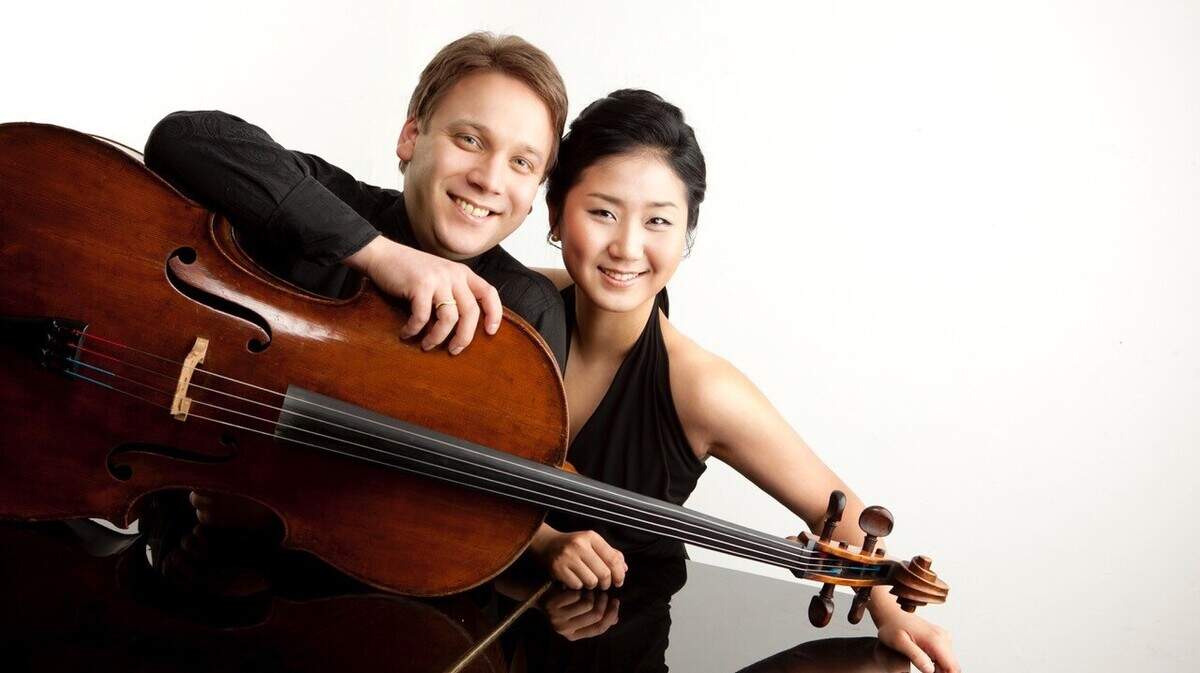
The board of the Friends of Chamber Music had a daunting task: Choose an artistic director to replace Cynthia Siebert. Siebert founded the Friends in 1975 and built it into one of the most highly regarded chamber music series in the country before stepping down last year.
The board has made its decision and it’s bold and creative. Two people will fill the position, and they’re husband and wife.
Adela Hyeyeon Park and Dmitri Atapine have impeccable musical credentials. They are both professional concert musicians, Park a pianist and Atapine a cellist, and they are both on the musical faculty of the University of Nevada, Reno.
Here’s where things get interesting. Both co-artistic directors will maintain their home base in Nevada and will commute to Kansas City for their Friends of Chamber Music job.
“The fact that the two of us can be in two places at once is a great bonus,” Atapine said. “We are already looking at all the guest rooms we can occupy, as well as checking out every hotel in Kansas City. In our view, we will be spending a lot of time in Kansas City.”
Park is originally from Korea and came to the States in 2003 to study at Peabody and Yale. Atapine was born in St. Petersburg, Russia, and moved with his parents to Spain when he was just a boy. He met Park when they were both studying for their doctorates at Yale.
“The first pianist he got to play with was me and the first cellist I got to play with was Dmitri,” Park said.
The couple also have a 4-year-old son.
“His name is Felix,” Atapine said. “Named after Felix Mendelssohn.”
Siebert served as artistic and executive director, but those duties will now be split. For the past several months, Leia Barrett has served as interim executive director for the Friends and will continue to do so for the time being. According to Atapine, the executive director is responsible for working with the staff, budgeting, logistical planning and working with the venues.
“We see our job as co-artistic directors as working with the managers, working with guest artists, organizing their visits, organizing their repertoire, envisioning the artistic direction of the entire organization,” Atapine said.
And what is that artistic direction?
“Only with a deeper perspective can we truly know which direction we would like to move,” Atapine said. “We have several ideas we’ve already discussed with the board about thematic programming, so we can build a theme throughout the season. And moving Friends of Chamber Music to a national scene. It’s very important to investigate how we can have partnerships around the country, perhaps by collaborating on commissions of new music.”
For those who cherish the high quality of the organization molded by Siebert over the years and who might be concerned about wholesale changes being made to that legacy, Park and Atapine say not to worry.
“There are so many things that Cynthia has done right, so many things that the organization has fulfilled,” Atapine said. “The Master Pianists Series, the commitment to early music, as well as the International Chamber Music Series. The halls are great, the venues are great. We do not have the spirit of coming in like a wrecking ball. We want to come in and build on this very solid foundation.”
Park says that she and Atapine have eclectic tastes in music, a quality which will serve them well as artistic directors of an organization that features a wide variety of musical eras and styles.
“One day I listen to Monteverdi and the next day the most recent percussion music,” Park said.
But Park and Atapine definitely agree about their favorite type of classical music.
“There’s something magical about the art of chamber music,” Atapine said. “You get just a few incredible artists on the stage, interacting, responding to each other as though they were in a play. The repertoire is so vast. It’s also extremely nimble. You can go everywhere. Put a clarinetist in a subway, and you’ve got your chamber music. The possibilities are limitless.”
To learn more about the Friends of Chamber Music, 816-561-9999 or chambermusic.org.
New Moves
“Ballet Is woman,” George Balanchine once said. He was referring to female dancers, who often served as muse to his creativity. But women have also been making profound contributions to choreography since the days of Isadora Duncan and Martha Graham.
The Kansas City Ballet will showcase world premieres by female choreographers on this year’s edition of New Moves, March 24 to 27 at the Bolender Center.
The choreographers include company members Heather Nichols, Emily Mistretta, Courtney Nitting, Sophie Hod and Brooke Amundrud. There will be works by other choreographers, as well, like Caroline Dahm, who has done extensive work with companies around the country and is currently an adjunct instructor in dance at the University of Missouri-Kansas City’s Conservatory of Music and Dance.
There’s nothing quite as visceral as experiencing ballet up close and personal. The intimacy of the Michael and Ginger Frost Theater allows one to fully appreciate the athleticism and intensity of the company’s dancers. The fact that they are performing world premieres will only add to the electricity.
7:30 p.m. March 24, 25 and 26 and 2 p.m. March 26 and 27. Michael and Ginger Frost Theater at the Todd Bolender Center for Dance & Creativity, 500 W. Pershing Road. $50. 816-931-8993 or kcballet.org.
Kansas City Symphony — La Mer
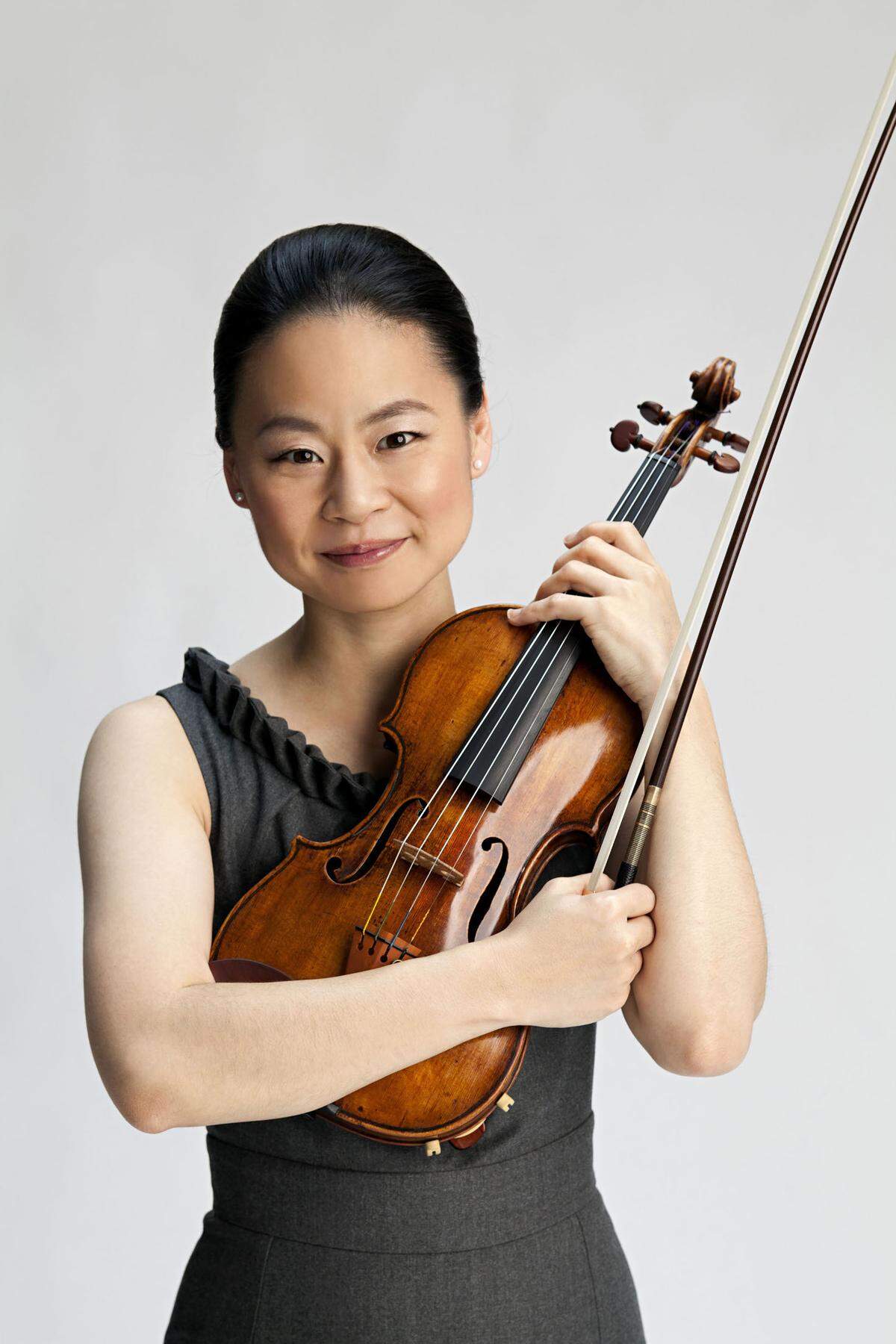
The Kansas City Symphony will be joined by one of our greatest violinists, who will perform one of the greatest violin concertos. Midori will be the soloist for Brahms’ Violin Concerto in D March 25 to 27 at Helzberg Hall. The concert will open with “This Midnight Hour” by Anna Clyne, a work inspired by the poetry of Juan Ramón Jiménez and Charles Baudelaire. Also on the program is Debussy’s orchestral showpiece “La Mer.”
The brilliance of Japanese-born Midori has been recognized since she made her debut at the age of 11 at the New York Philharmonic’s 1982 New Year’s Eve Gala. She has gone on to record an extensive discography and garner numerous awards, including the Avery Fisher Prize in 2001 and Musical America’s Instrumentalist of the Year award in 2002. In 2006, Midori was named a United Nations Messenger of Peace.
8 p.m. March 25 and 26 and 2 p.m. March 27. Helzberg Hall, Kauffman Center for the Performing Arts. $25-$92. 816-471-0400 or kcsymphony.org.
You can reach Patrick Neas at patrickneas@kcartsbeat.com and follow his Facebook page, KC Arts Beat, at www.facebook.com/kcartsbeat.