
The ‘amazing, amazing’ Marian Anderson: Celebrating the singer’s artistry and bravery
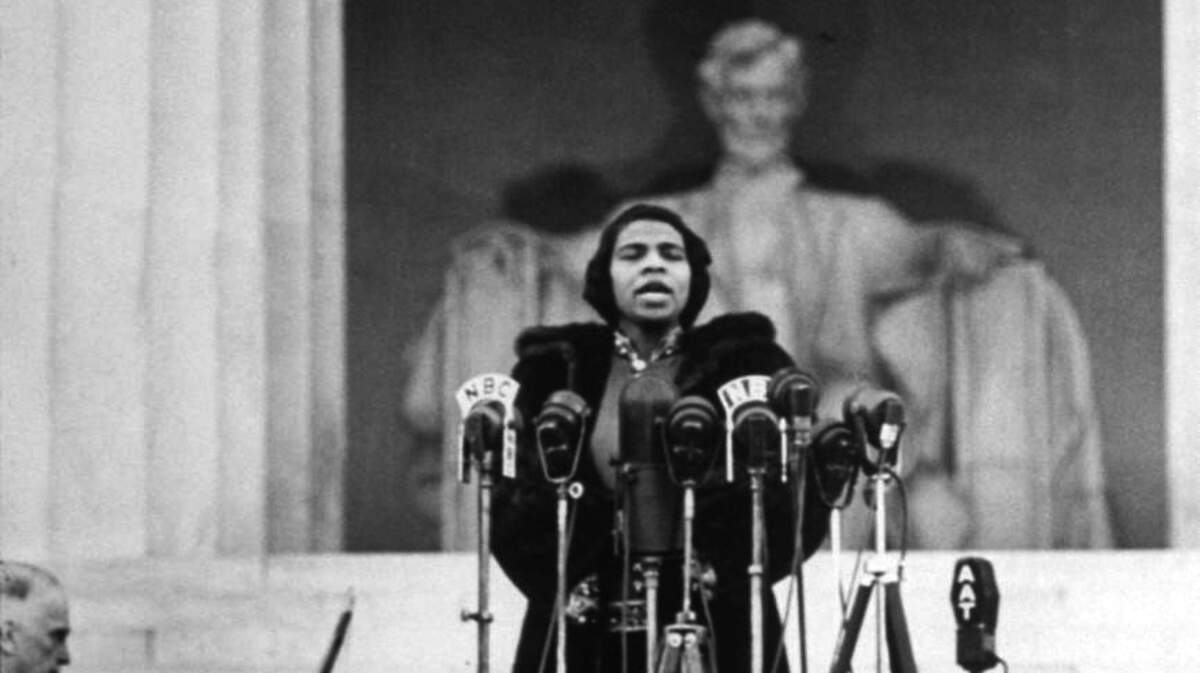
Feb. 27 will mark the 125th anniversary of the birth of singer and civil rights champion Marian Anderson.
As a Black woman growing up in the early 20th century, Anderson encountered innumerable challenges, especially for a woman who wanted to pursue a career in opera.
But in spite of the bigotry, Anderson became one of the most acclaimed American singers of her era, performing at the Metropolitan Opera and throughout Europe. She also did what she could to improve the lives of other Black Americans facing segregation and bitter race hatred.
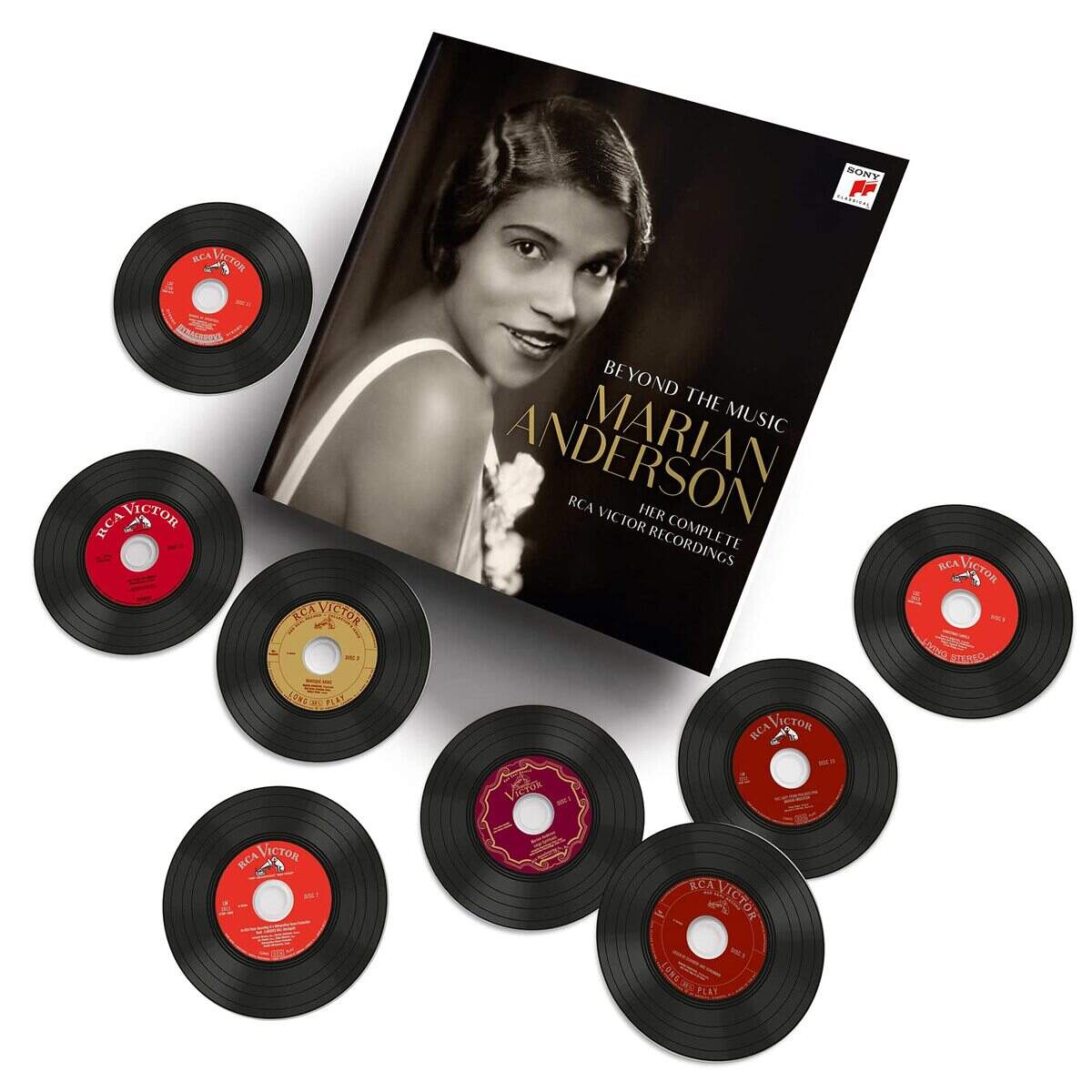
To celebrate this remarkable woman’s life and accomplishments, Sony Classical and the Grammy-winning German classical producer Robert Russ have put together a definitive 15-CD collection of Anderson’s RCA recordings. The box also includes a 228-page coffee-table book.
“It finally gives people around the world access to Marian Anderson’s complete recorded legacy in state-of-the-art remastering and preserves it for eternity,” Russ said.
The project of restoring Anderson’s recordings was challenging but rewarding, he said.
“If we realize that we are dealing with recordings from the years 1923 to 1966, then one can compare such a project with the restoration of the frescoes in the Sistine Chapel,” Russ said. “The aim is to make the artistry of the past century come alive again with the help of today’s technology.”
Anderson was one of three children in her Philadelphia family. Her two sisters, Alyse and Ethel, were also singers, and an aunt encouraged Anderson’s love of music by taking her to many church and community concerts. Her parents were of very modest means and couldn’t afford to send Anderson to high school or music classes. But that didn’t stop her.
Anderson would sing every chance she got, in church choirs and community organizations. She would also beg lessons from any music teacher who could help her. Recognizing her extraordinary talent, the pastor of her church and other leaders in the Black community raised enough money so Anderson could start taking music lessons and attend high school.
After graduating, Anderson was rejected by the all-white Philadelphia Music Academy. She continued to study privately with voice teacher Giuseppe Boghetti, who was brought to tears when he heard Anderson sing “Deep River.”
Anderson got a big break in 1925 when she won a singing competition sponsored by the New York Philharmonic. She started to give concerts across the United States but was always hobbled by the endemic racism she encountered. She fared much better in Europe, where she began touring in 1930. Arturo Toscanini, who heard Anderson perform in Salzburg in 1935, declared that she had a voice “heard once in a hundred years.”
Despite her acclaim in Europe, when Anderson returned to America, she was unable to stay in many hotels or perform in many theaters. After performing at Princeton University, Anderson was unable to find a hotel which would allow her to stay. None other than Albert Einstein let Anderson stay with him. He would host Anderson many more times through the years.
In 1939, this humble singer from Philadelphia was to shake the musical world and inspire millions. When Anderson asked to sing at Constitution Hall, the Daughters of the American Revolution, who were in charge of the venue, turned her down because of the hall’s “whites only” policy.
The DAR’s denial created a firestorm. First lady Eleanor Roosevelt was so outraged that she resigned from the DAR and sent them a blistering letter:
“I am in complete disagreement with the attitude taken in refusing Constitution Hall to a great artist. … You had an opportunity to lead in an enlightened way and it seems to me that your organization has failed.”
Roosevelt would use her influence to arrange a concert for Anderson at the Lincoln Memorial; 75,000 people came to the performance, and millions more listened on their radios. It was a true watershed moment in American history.
Anderson would continue to perform on television, at the Metropolitan Opera and on goodwill tours for the United States government. She would also continue her civil rights work, performing benefit concerts for the National Association for the Advancement of Colored People and the Congress of Racial Equality. In 1963, she sang at the March on Washington.
“She’s an amazing, amazing person,” said soprano Roberta Gumbel, who is professor of voice at the University of Kansas and also the librettist for the opera “dwb (driving while black).“
“She had lots of family support but very little resources. Yet the community banded together to make her happen. And she didn’t give up. She clearly had to sing to be happy. Whether she’s Black or white or any other color, to persevere is inspiring.”
Anderson died in 1993 at the age of 96. Hers is truly one of the great American stories. She experienced the best and the worst of America, and in return she shared her musical gifts.
“Marian Anderson’s impact on society still resonates, and in my opinion, it is irrelevant whether you are American, or whether you live in Asia or Europe, where Anderson became equally popular,” Russ said. “She will continue to be an example for us how to oppose rejection and hatred with dignity and endurance and ultimately overcome it.”
Bach Aria Soloists and Wylliams-Henry dance
Bach Aria Soloists and Wylliams-Henry Contemporary Dance Company can always be counted on for exquisite performances. Put both groups together and the results should be sublime.
They will present a program of dance and music Feb. 26 at Musical Theater Heritage.
Mary Pat Henry, artistic director and co-founder of Wylliams-Henry, has choreographed works by Bach, Vivaldi and Monteverdi. Some of classical music’s best dance music comes from the Baroque era, so this promises to be delightful. There’s another treat on the program, too, the “Appalachian Waltz” by Mark O’Connor.
7:30 p.m. Feb. 26. Musical Theatre Heritage at Crown Center, 2450 Grand Blvd., Suite 301. $20-$40. bachariasoloists.com.
Musica Sacra
If you love Mozart and Handel, Musica Sacra has the concert for you. The excellent choral ensemble directed by Timothy McDonald will perform two of Mozart’s church sonatas and two of Handel’s Chandos anthems on Feb. 29 at Arrupe Auditorium on the campus of Rockhurst University.
Mozart composed his church sonatas for Salzburg Cathedral when he was only 16. These short, single-movement sonatas are quite festive, scored for brass, timpani, winds and strings. The Chandos Anthems rank among some of Handel’s greatest sacred music.
“They were written for ‘Cannons,’ the estate of James Brydges, who was named Duke of Chandos in 1719,” McDonald said. “Each of the anthems begins with an instrumental overture and then follows with seven vocal movements, alternating soloists and the trio. Handel had already gained success as an opera composer, and the vocal music demonstrates his brilliance and dexterity in writing lyrical melodies.”
Musica Sacra will be joined by three of Kansas City’s finest singers: soprano Kayleigh Aytes, tenor David Adams and baritone Joshua Lawlor. John Schaefer is the organist.
7:30 p.m. Feb. 20. Arrupe Auditorium, Rockhurst University, 1100 Rockhurst Road. Free. rockhurst.edu/center-arts-letters/musica-sacra.
You can reach Patrick Neas at patrickneas@kcartsbeat.com and follow his Facebook page, KC Arts Beat, at www.facebook.com/kcartsbeat.