
Kansas City baroque ensemble wants to whisk you away to Italy and France, in concerts
Remember travel? Like flying off to Tuscany to stay at an ancient villa and bask in the sunshine amid the vineyards and olive groves? Or dashing off to Paris to be boggled by its gilt splendor?
Happy times.
While the waning pandemic might still make us hesitant to undertake international travel, Kansas City Baroque Consortium is offering a musical escape to Italy and France.
“Italian Landscapes” on July 16 at St. John’s Methodist Church will feature music by some of the greatest composers of the Italian baroque. “Molière’s Versailles” on Aug. 13 at Visitation Catholic Church will celebrate the 400th anniversary of a playwright known as the Shakespeare of France.
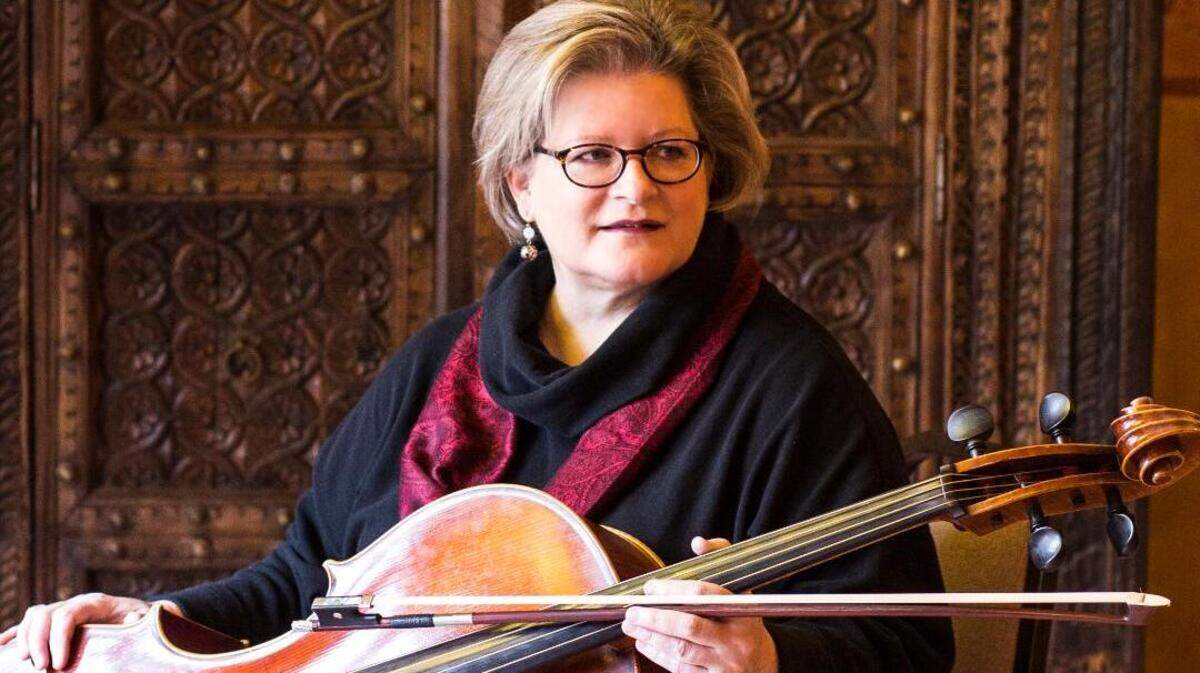
The Kansas City Baroque Consortium is an orchestra made up of period instruments. Its artistic and executive director, cellist Trilla Ray-Carter, is a musicologist whose performances are informed by her research into authentic historical style.
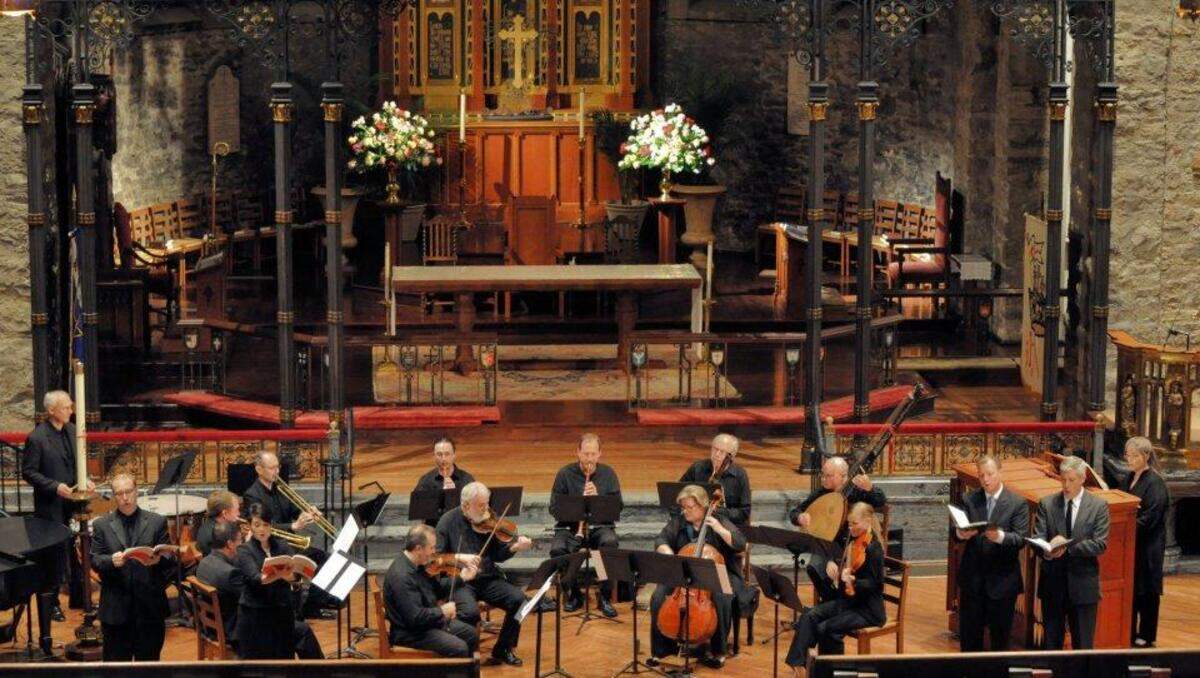
“Italian Landscapes” will focus on composers from the early 1600s through the mid-1700s, including Vivaldi, Arcangelo Corelli and Domenico Scarlatti. Ray-Carter says she chose works which reflect the changing musical landscape of the 17th and 18th centuries.
“It’s beautiful music, some of it very unusual,” Ray-Carter said. “The music will evoke the beautiful vistas of Italy. We find that the Italians had such a profound influence on the development of our harmonic language. Of course we see incredibly fantastic advances in opera, but we’re going to focus on the important changes in instrumental forms, such as the sonata and the concerto grosso.”
The consortium’s newest member, recorder player Trevor Stewart, will be the soloist for recorder concertos by Diogenio Bigaglia and Andrea Falconieri.
“Trevor is the principal clarinetist for the Wichita Symphony and also for the Symphony of Northwest Arkansas in Fayetteville,” Ray-Carter said. “We have had such a great time playing lots of wonderful repertoire with him.”
On Jan. 15, the world will celebrate the 400th anniversary of the birth of Molière, considered one of the greatest writers in history, French or otherwise. Molière’s comedies were extremely popular with French aristocrats, even though they and the church were often the butt of his jokes. A local organization, KC MOlière, has been inviting area arts organizations to take part in celebrations. Ray-Carter thought it was a great idea.
“We were quite excited,” she said. “So we decided to end our summer season with a Molière-inspired concert to launch the citywide activities.”
Molière employed some of the greatest composers of his day to write music for his plays. “Molière in Versailles” will feature three of them: Jean-Baptiste Lully, Marc-Antoine Charpentier and Pierre Beauchamp, who not only was a composer but also a dancer and choreographer.
“Beauchamp was primarily Molière’s choreographer and best known for his historical influence on dance forms, the position of the hands and arms, for instance,” Ray-Carter said. “But he was also a wonderful composer, so we’re going to present a dance suite that he wrote for one of Molière’s plays called “Les Fâcheux.” It translates to ‘The Bores.’”
Charpentier will be represented by his music for Molière’s play “Le mariage forcé” (The Forced Marriage). Charpentier is such an extraordinary composer, Ray-Carter decided to make an exception for him and add a work outside her Molière theme.
“Charpentier was a prolific composer and wrote such remarkable sacred music, I just had to include his Magnificat,” she said.
Lully was another giant of the French baroque. Ray-Carter will conduct his music for Molière’s comedy “Le Bourgeois gentilhomme” (The Middle Class Gentleman).
“These composers who were writing for Molière were writing dance selections to break up the acting and the movement around the stage,” Ray-Carter said. “Like the fantastic ending of ‘Gentilhomme’ with the clown, Scaramouche, and the wonderful cleverness of the dancing and the writing that goes together with that.”
Lully, following French baroque custom, would conduct by beating time with a large wooden staff rather than a small, sporty baton, like those favored by conductors today. Once, when conducting his Te Deum to celebrate Louis XIV’s recovery from surgery, Lully brought the staff down on his foot, severely wounding himself. He eventually developed gangrene and died two months later. Let’s hope that Ray-Carter’s devotion to authentic period instruments does not extend to batons.
For tickets and more information, kcbaroque.org.
▪ “Italian Landscapes”: 7:30 p.m. July 16. St. John’s United Methodist Church, 6900 Ward Parkway. $22-$40.
▪ “Molière’s Versailles: 7:30 p.m. Aug. 13. Visitation Catholic Church, 5141 Main St. $22-$40.
The concerts will also be available to view online until Aug. 30. Virtual season tickets are $55-$65. Virtual single tickets are $22-$25.
You can reach Patrick Neas at patrickneas@kcartsbeat.com and follow his Facebook page, KC Arts Beat, at www.facebook.com/kcartsbeat.