For 52 years, KC Ballet has dazzled crowds with ‘The Nutcracker.’ See behind the curtain
Celebrated as one of the city’s most cherished holiday traditions, Kansas City Ballet’s “The Nutcracker” is a dazzling display of costumes, choreography and artistry.
Since the first performance in 1972, the annual production has grown into a masterpiece featuring the talents of the Kansas City Ballet, its Second Company, and students from the Kansas City Ballet School. Behind the curtain, an intricate world of creativity and craftsmanship brings the ballet to life this holiday season at the Kauffman Center for the Performing Arts.
A Beloved Tradition Re-imagined
When Devon Carney was named Artistic Director in 2013, Kansas City Ballet’s “The Nutcracker” was due for a major overhaul.
“The Kansas City Ballet had an incredible run with the former version of “The Nutcracker,” but the sets and costumes were showing tremendous signs of fatigue and were quite threadbare,” Carney said via email.
Tasked with remaking the production, he embraced the challenge wholeheartedly. “As we began the necessary process of envisioning an entirely new production of sets and costumes, it became clear that with that, it should also come along with reimagined choreography,” he said.
The ambitious $2 million redesign took over a year to complete. Holly Hynes, renowned director of costumes for the New York City Ballet, created stunning new costumes, while an international team of designers collaborated on new sets. Four studios built the sets and 27 costume studios across the U.S. contributed to the wardrobe. Carney’s reimagined “Nutcracker” debuted in December 2015 to widespread acclaim, achieving over 95% capacity, $2.56 million in ticket sales, and $700,000 more revenue than the previous year.
“I am proud of this organization for supporting my vision of a production which thoroughly engages audiences of all ages,” Carney shared.
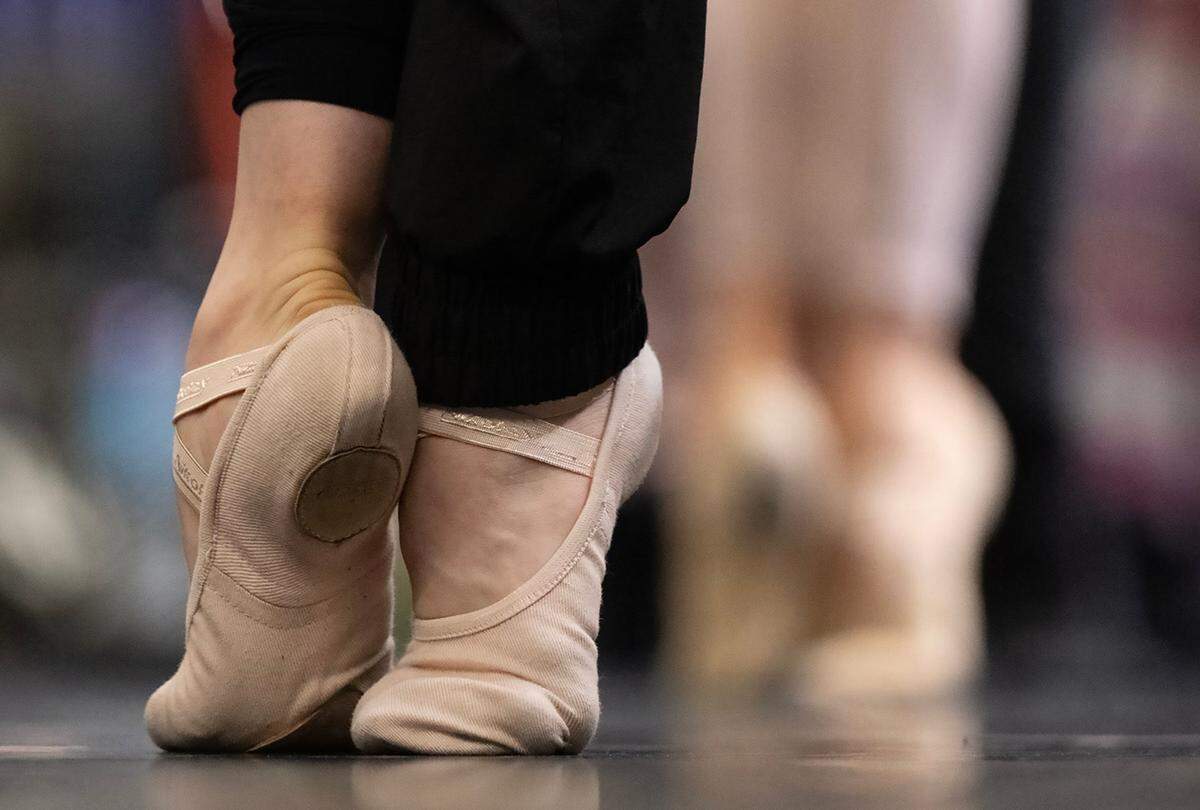
Each season, the Kansas City Ballet spends approximately $1.872 million to stage “The Nutcracker,” including approximately $90,000 on pointe shoes for its ballerinas. Every dancer is provided with 65 pairs for the entire ballet season, with around 224 pairs used during the run of “The Nutcracker” alone.
A Collaborative Effort
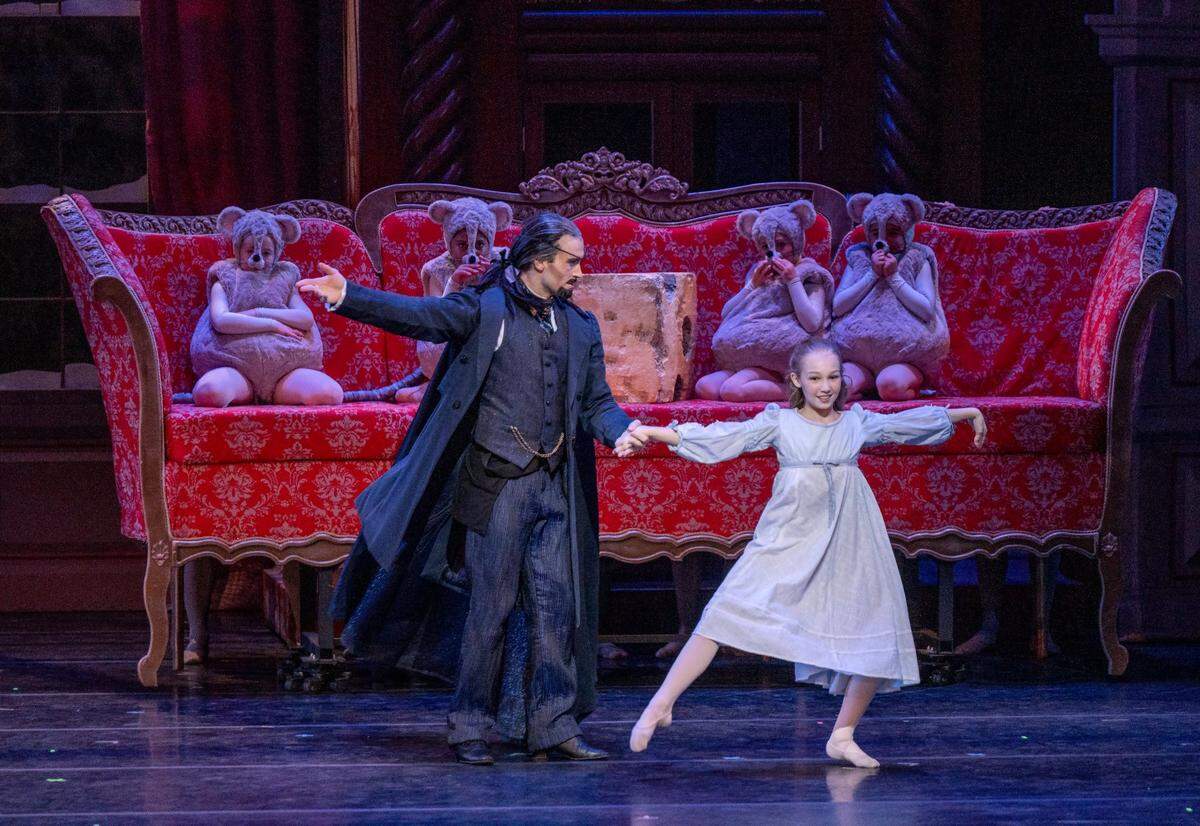
Bringing “The Nutcracker” to the stage every year requires extraordinary teamwork. More than 200 students from the Kansas City Ballet School perform in roles ranging from mice to party guests, rehearsing for months under the guidance of artistic staff.
Jennifer Carroll, the costume director, leads the year-round effort to ensure the production’s 223 costumes, 150 for students, are flawlessly fitted and stage-ready. “Kids are all different sizes, so we have to figure out how to make a costume fit two casts of children,” Carroll explains. Ingenious solutions like snap-adjustable cuffs and multiple rows of hooks allow costumes to adapt to varying sizes for the two rotating casts.
In late November, Carroll and Betti Jo Diem, the costume shop manager, and their team unpacked rolling crates loaded with costumes, props, heads, wigs, shoes, and accessories. The process involves stitching, altering, and expanding pieces to fit this year’s dancers, while tags help manage the logistics of sharing outfits among performers.
Maintaining costumes is both a challenge and a labor of love. Frequent use, especially in partnering scenes, takes a toll on delicate pieces like the Snow Queen tutu, requiring constant care. Carroll, Diem, and shop assistant Becci Jo Kelbaugh refurbish details on the nearly 10-year-old costumes, mending ruffles and lace to preserve their freshness and structure. Removed from a specially built storage cabinet, Carroll’s favorite piece, the Sugar Plum Fairy tutu, is a $10,000 masterpiece adorned with 254 stones, velvet leaves hand-pressed over fire and intricate lace, featuring 10 yards of $100-per-yard material. “It made me cry the first time I saw it,” said Carroll, who added that she also loves the bear costume. “He’s just so stinkin’ cute.”
Backstage before “ The Nutcracker” final dress rehearsal, makeup artist Katie Wasicko works her magic applying makeup and using Q-tips to glue facial hair to Gavin Abercrombie, cast as Uncle Drosselmeyer, Clara’s enigmatic uncle. Using a plastic cut-out pattern, Wasicko also meticulously adorned the female dancers with nearly identical eyebrows and rosy-red cheeks, ensuring a uniform look for the nights’ performance.
Nearby, as curtain call looms, Blaine Shepherd, a member of the makeup crew, works fitting dancers with hairpieces and hats and assisting ballerinas with their tiaras. In the days leading up to the show, he meticulously rolls, dries, and styles every hairpiece to ensure they are perfect for each performance.
Though dress rehearsals help streamline the process, Carroll describes the environment as “controlled chaos,” with quick changes, wig fittings, makeup applications, and intricate backstage choreography—especially before demanding scenes like the battle sequence, where mice, soldiers, and oversized props are lined up moving to stage right or left. Carroll emphasizes the backstage choreography adds energy to the production.
Young dancers are aided in costuming by dressers who finish buttoning, zipping, tying, and handling last-minute tasks—like gluing the heels back onto a dancer’s shoes. The performers, giggling and chatting, line the hallways, standing on pieces of green tape marked with their names and cast assignments, waiting for “kid wranglers” to guide them to the stage for their scenes. Each performance features a cast of 110 children.
Carroll notes that while opening night is typically less hectic after dress rehearsals, the intensity remains high. Reflecting on her role, she adds, “Costumes are the thread that ties the magic together.”
A production from the heart
The Muriel Kauffman Theatre glows in red and gold as stagehands fill troughs with “snow,” made from specially coated and cut paper, using about 50 pounds per performance. The snow falls gently to the stage during the “Kingdom of the Snow” scene, featuring the Snow Queen and Snow King, along with Ice Crystal and Snowflake ballerinas.
Scott Parks, technical director for KC Ballet, carefully raises and lowers the hot air balloon, monitoring its flying effects. Parks explains that the flying effects are delicate and complex. “Since it carries dancers, it is worth being very particular to ensure it works correctly during the performance,” Parks said. Stagehands manage larger-than-life-size props, such as the giant Christmas tree and the 10-foot-tall Mother Ginger, ensuring they are smoothly maneuvered on and off the stage for their scenes.
Before the dress rehearsal, Carney moves between the makeup area and the bustling hallways, chatting with Carroll amid the flurry of activity.
“I’m proud of all the company’s artists who give their all in every performance, as well as our students in the KCB School, who deepen their understanding of this beautiful art form each year they participate in “The Nutcracker,”” said Carney. “It’s a collective effort that not only brings holiday magic to life but also fosters the next generation of dancers.”
When asked how such a massive collaboration is managed, Carney emphasized the critical role of his team. “I have a tremendous artistic staff with decades upon decades of experience behind them who work out the schedule of all the rehearsals for company and school,” he explained. “And we have an amazing production department who work out all the details and the backstage navigation necessary to move so many cast members around from dressing rooms to backstage to onstage to perform and then back to dressing rooms. It is all elaborately orchestrated at every moment.”
“It fills me with such a sense of joy to see the production that came fully from my heart as a gift to Kansas City,” Carney said.
As “The Nutcracker” continues to captivate audiences, Carney hints at future innovations. “There is always room for new ideas of refining the choreography and production aspects,” he says. “We’ll unwrap that package with the next holiday season.”
The show runs through Dec. 24, with two shows on several dates. There will be no shows on Mondays or Tuesdays except Dec. 23 and 24. “The Nutcracker” is at the Muriel Kauffman Theatre in the Kauffman Center for the Performing Arts, 1601 Broadway Blvd.
This story was originally published December 12, 2024 at 5:00 AM.